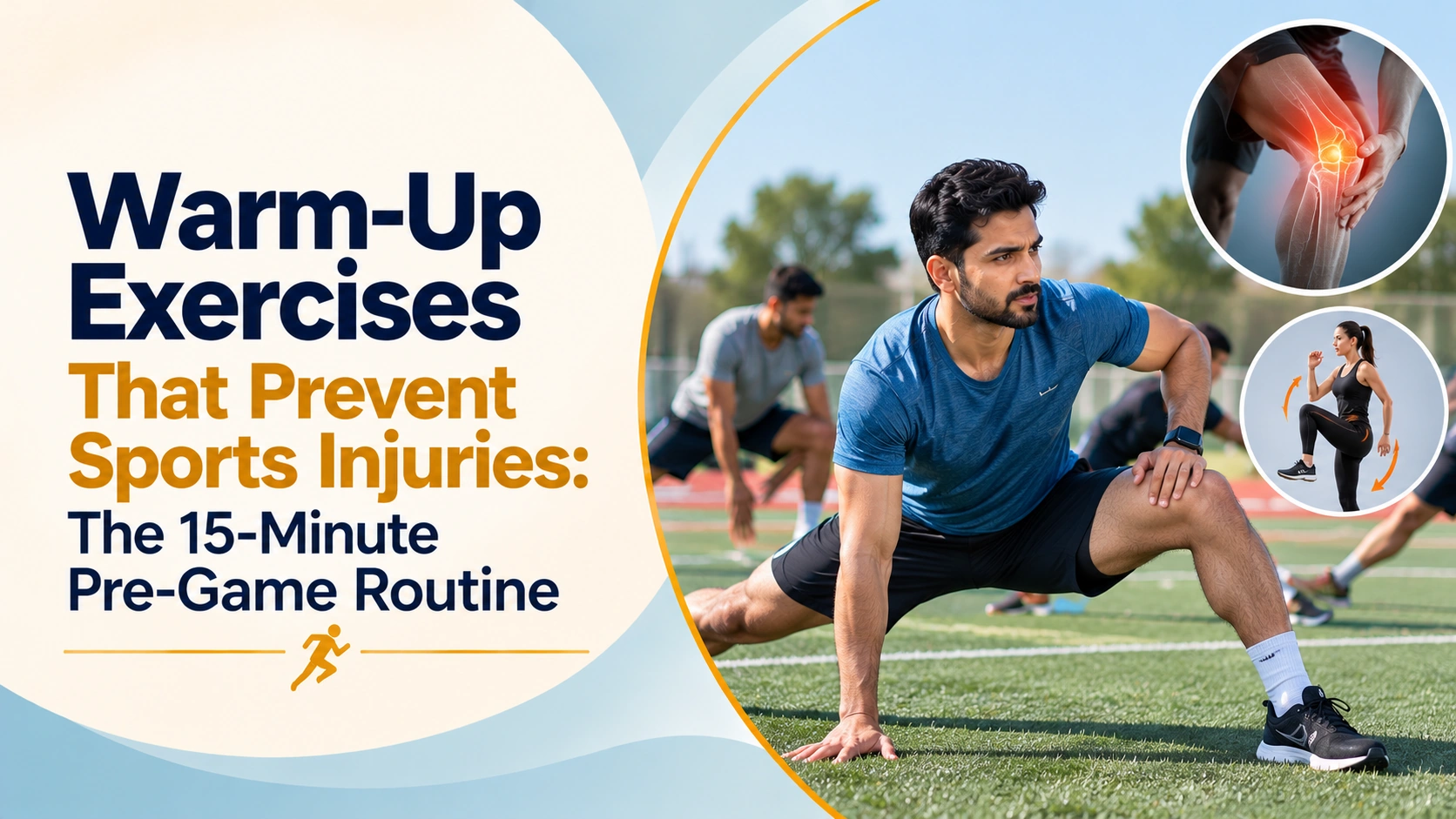
Warm-Up Exercises That Prevent Sports Injuries: The 15-Minute Pre-Game Routine

Most weekend injuries are not bad luck. They are cold muscles, sleepy balance, and full speed arriving together. Fifteen structured minutes change that equation.

Physio
Reading time: 12 minutes

Published: 13 October 2026

You arrive straight from work, lace up while the match starts, and sprint cold into the first rally. Twenty minutes later your hamstring grabs, your ankle rolls, or your knee buckles on a turn you have made a thousand times. Ask around any weekend league and the story repeats weekly.

Yes, the right warm-up exercises prevent sports injuries measurably. Programmes built on running, strength, balance, and agility, such as FIFA 11+, show substantial injury reductions in pooled football trials, while stretching-only routines show little protective effect. Reviews of neuromuscular training link it with fewer knee and ACL injuries, with the clearest pattern above 15 minute sessions done 2 to 3 times weekly at high adherence. The routine below follows that exact recipe in 15 minutes with no equipment. Meta-analysis of FIFA injury prevention programmes. Review of neuromuscular training for knee and ACL injuries. Meta-analysis on dose and adherence in prevention programmes.

Do warm-ups really prevent sports injuries

Short answer: structured ones do, casual ones do not. A pooled analysis of six randomised trials in football found the FIFA 11+ warm-up programme substantially cut overall injuries compared with usual warm-ups, with the effect concentrated in hamstring, knee, ankle, and hip injuries. Reviews of neuromuscular training more broadly link it with fewer knee injuries and roughly halved ACL incidence, and a 2026 dose focused meta-analysis found the protection concentrated in sessions longer than 15 minutes, delivered 2 to 3 times weekly, with adherence above 75 percent. The same literature is honest about the other side: programmes built on stretching alone show little preventive effect, which is why this routine leads with movement, strength, and balance instead. FIFA 11 and 11+ meta-analysis. Neuromuscular training review. Dose and adherence meta-analysis.

Two honest caveats before the routine. First, no warm-up makes injury impossible; it lowers the odds, with compliance doing the heavy lifting. Second, most trial evidence comes from football and team sports in younger athletes, so the recipe transfers well to cricket, running, and gym work but deserves the sport tweaks given later rather than blind copying. That four part shape is what every serious sports injury prevention programme shares, from FIFA 11+ to clinic-built routines.

  • Effective recipe: running plus strength plus balance plus agility, every session.
  • Weak recipe: a slow jog and a few static stretches, then full speed.
  • Dose that protects: above 15 minutes, 2 to 3 times weekly, rarely skipped.
  • Measure that matters: adherence first, programme brand second.

Why cold starts cause so many injuries

Three things go wrong when full effort meets a cold body. Muscle and tendon tissue is stiffer and less tolerant of sudden lengthening, which is the classic hamstring pull on the first sprint. Balance and joint position sense are dull, so landings and cuts arrive with sloppy knee and ankle alignment, the exact mechanism behind most non-contact ACL and ankle injuries. And the nervous system is still in desk mode: reaction times and coordination lag behind competitive speed for the first minutes of play.

A proper warm-up reverses all three before the whistle: temperature and blood flow rise, balance systems wake through single leg and landing practice, and short bursts at game speed calibrate reactions. That is the whole theory of sports injury prevention exercises in one paragraph, and every drill below serves one of those three purposes. Programmes that skip any leg, typically the balance and landing work, consistently underperform the full recipe in reviews.

The RAMP structure behind every good warm-up

Coaches organise warm-ups with the RAMP framework, and this routine follows it exactly. Each phase has a job, and skipping a phase leaves its protection on the table.

Phase Job What you do Minutes
Raise Lift temperature, heart rate, blood flow Easy jog, shuttle runs, arm circles 0 to 4
Activate Switch on glutes, core, shoulder stabilisers Glute bridges, band free squats, scapular sets 4 to 8
Mobilise Move every major joint through full range Leg swings, walking lunges, inchworms, hip openers 8 to 12
Potentiate Rehearse game speed safely Accelerations, decelerations, landing practice, short sprints 12 to 15

10 warm-up exercises that prevent sports injuries

All ten need nothing but flat ground. Doses are per side where relevant, and every drill scales down for beginners by halving the range or the repetitions first, never by rushing.

1. Easy jog with direction changes (Raise)

Jog at talking pace for 2 minutes, then add gentle direction changes and backward running for 1 minute. This lifts tissue temperature and wakes the calves and Achilles for harder work. Keep it conversational; breathlessness belongs later.

  • Best for: every field sport and running session.
  • Keep: light feet, relaxed shoulders, gradual build.
  • Avoid: sprinting cold in the first minute.

2. Forward and lateral leg swings (Mobilise)

Hold a wall or partner, swing one leg forward and back 10 times, then across the body 10 times, and change legs. This opens the hips and hamstrings through a moving range rather than a held stretch. Knee and groin protection starts here.

  • Best for: football, cricket, running.
  • Keep: tall trunk, controlled swing, increasing range.
  • Avoid: ballistic kicking to maximum height.

3. Walking lunges with rotation (Activate and Mobilise)

Step into a deep lunge, rotate the trunk gently over the front knee, return, and alternate legs for 8 per side. This loads the glutes and quads while rotating the trunk under control, rehearsing the exact pattern that fails in unprepared cutting.

  • Best for: knee and groin protection in field sports.
  • Keep: front knee tracking over toes, trunk tall.
  • Avoid: knee collapsing inward on landing.

4. Inchworm walkouts (Activate and Mobilise)

Bend forward, walk hands out to a plank, hold 2 seconds with the trunk braced, then walk feet to hands and stand. Repeat 5 times. This links shoulders, trunk, and hamstrings in one chain, which is why prevention programmes favour compound patterns over isolated ones.

  • Best for: total body readiness, shoulder and trunk link.
  • Keep: trunk braced, hips level, slow walkout.
  • Avoid: sagging the low back in the plank.

5. Glute bridges (Activate)

Lie on your back, knees bent, and lift hips until knees, hips, and shoulders align. Hold 2 seconds, lower slowly, 10 repetitions. Sleepy glutes force hamstrings and knees to compensate, so waking them is direct hamstring and ACL protection.

  • Best for: hamstring and knee protection, sprint sports.
  • Keep: ribs down, squeeze at the top.
  • Avoid: overarching the low back for height.

6. Bodyweight squats (Activate)

Feet shoulder width, sit back and down with knees tracking over toes, 12 slow repetitions. This rehearses the fundamental athletic position every landing and tackle returns to. Depth matters less than knee alignment.

  • Best for: knee alignment, landing mechanics.
  • Keep: knees out over toes, chest proud.
  • Avoid: knees caving inward, heels lifting.

7. Single leg balance with reach (Activate balance)

Stand on one leg, reach the other foot forward, sideways, and behind without touching down, then change legs. Two rounds per side. Balance training is the ankle sprain buster in prevention reviews, and it doubles as knee alignment practice.

  • Best for: ankle and knee stability, all cutting sports.
  • Keep: standing knee soft and aligned, slow reaches.
  • Avoid: grabbing the ground at the first wobble; wobbling is the training.

8. Lateral shuffles (Potentiate agility)

Shuffle sideways 10 metres each way, staying low with quick feet, 3 rounds. Then add a 5 metre acceleration and controlled stop. Side to side deceleration is where groin and ACL injuries happen, so rehearse it before it counts.

  • Best for: groin, knee, and ankle readiness.
  • Keep: low hips, planted outside foot on stops.
  • Avoid: upright stiff legged shuffling.

9. A-skips and short accelerations (Potentiate speed)

Skip with high knees and active arms for 15 metres, twice, then run two 20 metre accelerations at 70 percent and one at 90 percent effort. Hamstrings meet sprint speed here, in doses, instead of in the first chase of the match.

  • Best for: hamstring readiness, sprint sports.
  • Keep: tall posture, progressive effort across reps.
  • Avoid: flat out sprinting in the warm-up.

10. Landing practice: small jumps with quiet knees (Potentiate control)

Hop forward and stick the landing on both feet with soft knees tracking over toes, hold 2 seconds, 6 repetitions. Then single leg sticks, 3 per side. Quiet aligned landings are the single most transferable ACL protection drill in the prevention literature.

  • Best for: knee and ankle landing mechanics.
  • Keep: soft deep landing, knees out, silent feet.
  • Avoid: stiff legged loud landings.
Drill Dose Protects mainly
Jog with direction changes 3 minutes easy General readiness, calves
Leg swings 10 each way per leg Hips, groin, hamstrings
Walking lunges with rotation 8 per side Knees, groin, trunk
Inchworm walkouts 5 reps Shoulders, trunk, hamstrings
Glute bridges 10 reps Hamstrings, knees
Bodyweight squats 12 reps Knee alignment
Single leg balance reaches 2 rounds per side Ankles, knees
Lateral shuffles plus stops 3 rounds Groin, knees, ankles
A-skips plus accelerations 2 plus 3 runs Hamstrings
Landing practice 6 double plus 3 single per leg Knees, ankles

The 15 minute pre-game routine, minute by minute

Run the drills in RAMP order without rest between phases beyond catching breath. The whole sequence fits the protective dose reviews describe: above 15 minutes including the final accelerations.

  1. Minutes 0 to 3: easy jog with direction changes.
  2. Minutes 3 to 6: glute bridges, bodyweight squats, single leg balance reaches.
  3. Minutes 6 to 11: leg swings, walking lunges with rotation, inchworm walkouts.
  4. Minutes 11 to 15: lateral shuffles with stops, A-skips with accelerations, landing practice.

Save long static stretches for after play. Reviews link the protective effect to strength, balance, and agility work rather than stretching alone, so stretching first spends your warm-up budget on its weakest component. If you need a calming ritual, keep one short mobility flow and move on.

Sport tweaks: football, cricket, running, gym, kids

The skeleton stays identical; the emphasis shifts by sport. Footballers should weight lateral shuffles, landings, and hamstring activation heaviest, mirroring the FIFA 11+ recipe that trials validate. Cricketers add throwing arm circles, band free shoulder external rotations using a teammate’s hand for resistance, and extra lateral work for fielding dives. Runners extend the jog phase, add A-skips and ankle hops, and finish with two stride outs. Gym goers warm the exact patterns they will load: goblet squats before barbells, hinge practice before deadlifts, scapular sets before pressing. Children need the same routine shortened and gamified: races, mirrors, and partner balance contests, because the evidence pattern holds for youth sport and adherence decides everything.

Mistakes that cancel the protection

Mistake Why it costs you Do instead
Skipping entirely when late Cold tissue plus full speed is the classic injury recipe A rushed 5 minute version beats zero: jog, lunges, landings
Static stretching first and only Reviews show little preventive effect from stretching alone Dynamic work first; long holds after play
Going through motions at half attention Sloppy alignment rehearses the failure pattern Fewer reps done cleanly beat many done carelessly
New shoes, new surface, no adjustment Traction and impact change loading without warning Add one easy lap and extra balance work on unfamiliar ground
Playing through sharp pain to honour the warm-up Pain changes mechanics and invites compensation injuries Stop the drill, assess, and sit out if mechanics break

How often: the dose that makes it work

The 2026 dose focused meta-analysis is unusually practical about this: sessions above 15 minutes, delivered 2 to 3 times weekly, with adherence above 75 percent, carried the protection, while short or rarely done programmes did not. Programme complexity mattered less than simply showing up, and agility plus running mechanics components added independent value. Translate that to a weekend league: the full routine before every match and one midweek repeat covers the dose; a single rushed jog covers nothing. Meta-analysis on prevention dose and adherence.

  • Minimum effective habit: full routine before every game plus one midweek session.
  • Track adherence like training: sessions done beats sessions planned.
  • Pre-season matters: start the routine weeks before competition, since early season concentrates injuries.
  • Coaches: make it the team ritual, not individual homework; group delivery is what trials actually tested.

When to stop and seek care

Warm-ups prevent injuries; they do not treat them. Stop activity and seek urgent care for chest pain or pressure, faintness or collapse, any head injury with confusion, vomiting, or worsening headache, a visibly deformed joint, inability to bear weight, numbness or weakness in a limb, or uncontrolled bleeding. These are emergency department criteria, not physio cases.

Book physiotherapy instead when pain recurs in the same spot across sessions, swelling returns after every game, a joint feels unstable or gives way, back or neck pain persists beyond 2 to 3 weeks despite regular easy movement, or a previous injury never fully rehabilitated and keeps limiting you. Our guides to sports injury rehabilitation and the five stages of sports rehabilitation explain what structured recovery looks like after the whistle.

When to visit sports physiotherapy in Vadodara

Visit when injuries repeat, when a single joint keeps failing, when return to sport keeps getting postponed, or when you want the routine above personalised to your sport, position, and injury history. At Ekdantaay, assessment led physiotherapy in Gotri, Vadodara starts with movement screening and goal setting, then sets strength, balance, and agility dose with review points. Team sport pathways run through sports injuries rehabilitation and, after operations, pre and post surgical rehabilitation. Request a visit through the contact page or read about the treating clinician on Dr. Ranakdevi Raj, Physiotherapist.

Sports Physiotherapy Vadodara: What Your First Visit Covers

  • Bring: injury history with dates, footwear and surface details, current training week.
  • Expect: landing and balance screening, strength baselines, and a position specific plan.
  • Ask: which two drills matter most for my injury pattern, and what adherence target to hit.
  • Afterwards: the warm-up becomes your prescription, reviewed as the season progresses.

A note on what this article does not do: it does not diagnose an injury, it does not replace assessment, and warm-ups lower odds rather than removing risk. Acute injuries need examination, not a better warm-up next time.

Frequently asked questions

How long should a warm-up last to prevent sports injuries

About 15 minutes of structured work: raise, activate, mobilise, then game speed efforts. Reviews find the protective pattern concentrated above 15 minute sessions done 2 to 3 times weekly, so a token 3 minute jog does not count.

Should I do static stretching before playing

Keep it minimal before play. Evidence links protection to strength, balance, and agility work rather than stretching alone, so do dynamic moves first and save long static holds for after the game.

Do children need warm-ups too

Yes, with the same structure shortened and made playful. Youth trials show the same protective pattern, and early habits decide adult injury rates, so junior teams should ritualise the routine, not skip it.

What warm-up suits runners versus footballers

Runners emphasise the jog phase, A-skips, ankle work, and stride outs. Footballers emphasise lateral shuffles, landings, and hamstring activation. The RAMP skeleton stays identical; only the weighting changes.

I skipped warm-ups for years without injury. Why start now

Past luck is not protection: tissue tolerance falls with age, load, and previous microtrauma, while game speed stays constant. Starting now buys the adherence record that protects the next seasons, which is where the evidence benefit actually accrues.

I got hurt despite warming up. Was the warm-up useless

No. Warm-ups lower odds; contact, fatigue, and chance still injure. Get the injury assessed and rehabilitated through the full stages, then return with the routine adjusted to the weak link the injury exposed.

Can I use this routine in the gym

Yes, with pattern matching: warm the lifts you will load. Goblet squats before barbells, hinge rehearsal before deadlifts, scapular activation before pressing, then ramped warm-up sets of the actual movement.

If injuries keep finding the same joint despite honest warm-ups, get the pattern assessed, not just the pain. Book a sports physiotherapy assessment at Ekdantaay Dental and Physio Care and bring your training week and injury history so Dr. Ranakdevi Raj, Physiotherapist and the team can set your prevention dose. Related pathways: sports injuries rehabilitation and surgical rehabilitation. Runners with recurring niggles should also read our sports injury rehabilitation guide.

Daily Exercise at Home for Back Pain: Safe 15 Minute Routine

A physiotherapist-guided 15 minute daily routine for back pain relief — with safe exercises, form cues, red flags, and when to visit a physiotherapist in Vadodara.

PhysiotherapyReading time: 10 minutes

Published: 9 October 2026 | Vadodara

Quick answer: The best daily exercise at home for back pain includes 5 gentle movements — knee-to-chest stretch, cat-cow, pelvic tilts, bird-dog and glute bridge. Do them for 10–15 minutes every morning. Most people feel relief within 2–3 weeks. If pain radiates to your leg, causes numbness, or lasts more than 6 weeks, see a physiotherapist in Vadodara at Ekdantaay Dental & Physio.

Why Daily Exercise Works for Back Pain

Back pain is the most common reason people visit a physiotherapist in Vadodara. 80% of adults experience it, and 90% of cases resolve with exercise and physiotherapy — not surgery.

Your spine is designed to move. When you sit for 8–10 hours at a desk (common in Vadodara's IT parks and corporate offices), the muscles supporting your spine weaken, the hip flexors tighten, and the lumbar discs lose their natural curve. Daily exercise at home for back pain reverses this by:

  • Strengthening the core muscles (transverse abdominis, multifidus) that support your spine
  • Improving blood flow to spinal discs and surrounding tissues
  • Releasing tight hip flexors and hamstrings that pull on the lower back
  • Reducing stiffness in the facet joints of the spine
  • Triggering endorphin release — your body's natural pain relievers

At Ekdantaay Dental & Physio, we see patients daily who tried to "rest" back pain away — only to make it worse. Movement is medicine.

5 Safe Daily Exercises for Back Pain at Home

These 5 back pain relief exercises are for beginners. No equipment, 10–15 minutes total, safe for mild to moderate back pain.

1. Knee-to-Chest Stretch

Target: Lower back, glutes, hip flexors

  1. Lie on your back with knees bent, feet flat on the floor
  2. Bring one knee toward your chest, holding behind the thigh
  3. Hold for 20–30 seconds, feeling a gentle stretch in the lower back
  4. Switch legs. Repeat 3 times per side

Form cue: Keep lower back pressed into the floor.

2. Cat-Cow Stretch

Target: Spinal mobility, core activation

  1. Start on hands and knees (tabletop position)
  2. Inhale — arch your back, lift your head and tailbone (cow)
  3. Exhale — round your spine, tuck your chin and pelvis (cat)
  4. Move slowly between positions for 10 repetitions

Form cue: Move with your breath.

3. Pelvic Tilts

Target: Deep core, lumbar stability

  1. Lie on your back, knees bent, feet flat
  2. Flatten your lower back against the floor by tilting your pelvis upward
  3. Hold for 5 seconds, then release
  4. Repeat 10–15 times

Form cue: Pull your belly button toward your spine.

4. Bird-Dog

Target: Core stability, balance, spinal alignment

  1. Start on hands and knees
  2. Extend your right arm forward and left leg backward simultaneously
  3. Hold for 5 seconds, keeping your back flat (no sagging)
  4. Return to start, switch sides. Repeat 8–10 times per side

Form cue: Place a book on your back — if it falls, you're sagging.

5. Glute Bridge

Target: Glutes, hamstrings, lower back support

  1. Lie on your back, knees bent, feet flat, arms at your sides
  2. Squeeze your glutes and lift your hips toward the ceiling
  3. Hold for 3–5 seconds at the top
  4. Lower slowly. Repeat 10–15 times

Form cue: Lift from the glutes, not the spine.

Also read: Neck Pain from Phones and Desks for upper back exercises.

Your 15 Minute Morning Routine

Consistency matters more than intensity. Here's a simple daily schedule:

TimeExerciseRepsNotes
0:00–2:00Cat-Cow Stretch10 slow repsWake up the spine gently
2:00–5:00Pelvic Tilts12 repsActivate deep core
5:00–8:00Knee-to-Chest3 × 30 sec per sideRelease lower back tension
8:00–11:00Bird-Dog8 per sideBuild stability
11:00–15:00Glute Bridge12 repsStrengthen posterior chain

Do this every morning. On alternate days, add a 10–15 minute walk — walking loads the spine and improves circulation.

Form Tips to Avoid Injury

  • Never push through sharp pain. Gentle stretch is fine; stabbing pain means stop.
  • Breathe normally. Holding your breath increases tension.
  • Start with fewer reps. If 10 is too many, do 5. Build up over 2 weeks.
  • Use a yoga mat. Hard floors compress the spine.
  • Keep your neck neutral. Don't crane your head forward.

Red Flags — When to Stop and See a Doctor

Stop home exercises for back pain immediately and consult a doctor or physiotherapist in Vadodara if you experience:

  • Pain radiating down one or both legs (sciatica)
  • Numbness, tingling or weakness in the legs or feet
  • Loss of bladder or bowel control (medical emergency — go to ER)
  • Severe pain that wakes you up at night
  • Fever, unexplained weight loss, or history of cancer
  • Pain that worsens after 2 weeks of daily exercise

These symptoms may indicate a herniated disc or spinal stenosis. At Ekdantaay Dental & Physio, we offer a 30-minute assessment with posture analysis and a personalised plan.

Physiotherapy for Back Pain in Vadodara

If daily exercise at home for back pain isn't enough, physiotherapy for back pain in Vadodara is highly effective. At Ekdantaay Dental & Physio, our department led by Dr. Ranakdevi Raj offers:

  • Manual therapy — joint mobilisations and soft tissue release
  • Dry needling — for trigger points in lower back and glutes
  • TENS and ultrasound therapy — pain relief and tissue healing
  • Personalised exercise prescription — progressed weekly
  • Postural training — see postural training in Vadodara
  • Home exercise program — with video demos and WhatsApp follow-ups

Physiotherapy cost in Vadodara: ₹500–₹1,200 per session. Most patients need 6–10 sessions over 4–6 weeks.

Also explore musculoskeletal conditions treatment and fitness training in Vadodara.

Home Exercises vs Clinic Physiotherapy — Which Do You Need?

Home ExercisesClinic Physiotherapy
Best forMild pain, prevention, maintenanceModerate-severe pain, post-injury, post-surgery
CostFree₹500–₹1,200/session
EquipmentNoneTENS, ultrasound, isokinetic testing
ProgressionSelf-guidedPhysiotherapist-guided weekly
Results2–4 weeks for mild relief1–2 weeks for moderate pain

Our recommendation: Start with daily exercise at home for back pain for 2 weeks. If pain persists beyond 6/10, book a physiotherapy consultation in Vadodara at Ekdantaay. Many combine both — clinic manual therapy plus home exercises.

FAQs: Daily Exercise at Home for Back Pain

How many times a day should I do back pain exercises?

Once daily is ideal — 10–15 minutes every morning. If your pain is worse in the evening, you can repeat a shorter 5-minute routine (cat-cow + pelvic tilts) before bed. Consistency matters more than frequency.

Can I do back pain exercises every day?

Yes — gentle back pain relief exercises like the 5 listed above are safe for daily practice. They are low-impact and designed to be done regularly. However, if any exercise increases your pain, stop and consult a physiotherapist in Vadodara.

What is the fastest way to relieve back pain at home?

The fastest relief comes from combining gentle movement (cat-cow, pelvic tilts) with heat therapy (hot water bottle for 15 minutes) and avoiding prolonged sitting. For persistent pain, physiotherapy for back pain in Vadodara at Ekdantaay provides faster, targeted relief.

When should I see a physiotherapist instead of exercising at home?

See a physiotherapist in Vadodara if: pain lasts more than 2 weeks, radiates to your leg, causes numbness, or limits daily activities. At Ekdantaay Dental & Physio, we assess your spine, identify the root cause and create a personalised plan — combining manual therapy with the right home exercises for back pain.

Is walking good for back pain?

Yes — walking is one of the most evidence-based back pain relief exercises. It gently loads the spine, improves circulation and prevents stiffness. Aim for 20–30 minutes of brisk walking daily, with good posture and supportive footwear.

Are you finding the best physio clinic in Vadodara for back pain? Connect with Ekdantaay Dental & Physio — our physiotherapy department led by Dr. Ranakdevi Raj offers personalised back pain treatment, manual therapy and home exercise programs. Book a consultation in Vadodara today. Explore our physiotherapy services, postural training and fitness training pages.

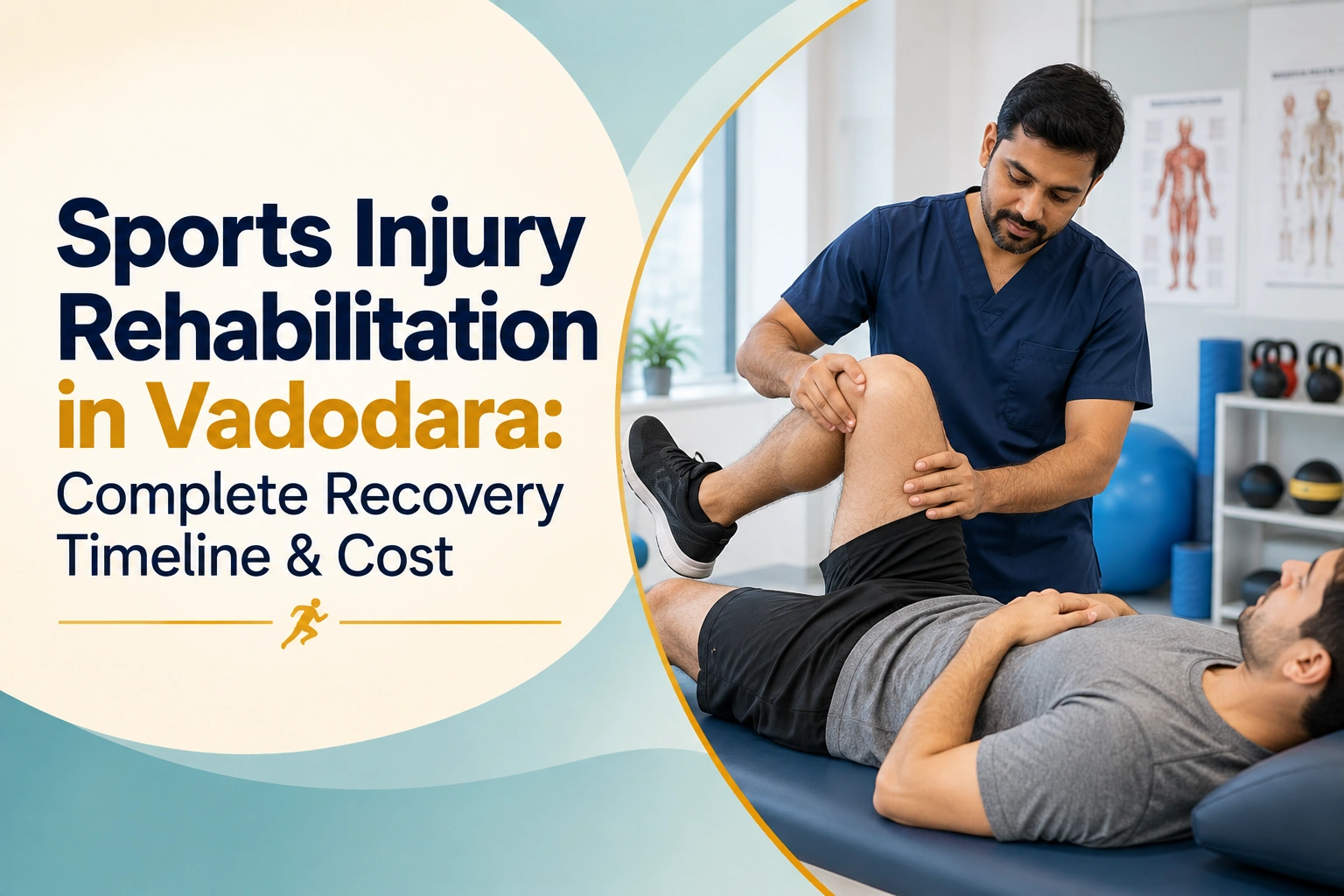
Sports Injury Rehabilitation in Vadodara: Complete Recovery Timeline & Cost

Sprained your ankle on a Vadodara football ground? Torn a rotator cuff at the gym? This guide covers the 5 stages of sports injury rehabilitation, physiotherapy cost in Vadodara, and how to return to sport safely — with timelines you can trust.

Physiotherapy Reading time: 12 minutes

Published: 28 September 2026 | Vadodara

Quick answer: Sports injury rehabilitation in Vadodara typically costs ₹500–₹1,500 per session and takes 2–12 weeks depending on injury severity. The 5 stages are: (1) Pain & inflammation control, (2) Restoring range of motion, (3) Building strength, (4) Proprioception & agility, (5) Return to sport. At Ekdantaay Physio, most patients return to full activity in 6–8 weeks with structured rehab.

What Is Sports Injury Rehabilitation?

Sports injury rehabilitation is a structured, science-backed process that helps athletes recover from musculoskeletal injuries — from ankle sprains to post-ACL reconstruction. Unlike rest-and-wait, active rehab restores strength, flexibility and confidence so you return to sport stronger. At Ekdantaay Dental & Physio, sports rehabilitation combines manual therapy, exercise prescription, dry needling, taping and movement analysis — the goal is return to performance, not just pain-free movement. Research in the British Journal of Sports Medicine shows structured rehabilitation reduces re-injury risk by up to 50% compared to rest alone.

The 5 Stages of Sports Injury Rehabilitation

Every sports injury rehabilitation program at Ekdantaay follows these 5 evidence-based stages. The timeline varies by injury, but the sequence never changes.

Stage 1: Pain & Inflammation Control (Days 1–7)

The first 48–72 hours after injury are critical. The body’s inflammatory response is natural, but excessive swelling delays healing. Treatment includes:
  • PRICE protocol: Protection, Rest, Ice (15–20 min every 2–3 hours), Compression, Elevation
  • Pain management: TENS therapy, ultrasound therapy, or dry needling to reduce muscle spasm
  • Gentle movement: Pain-free range-of-motion exercises to prevent stiffness
Do not: Apply heat, massage aggressively, or “push through pain” in the first week. This increases bleeding and delays healing by 2–3 weeks.

Stage 2: Restoring Range of Motion (Weeks 1–3)

Once pain subsides, the focus shifts to regaining full joint movement. Tight muscles and scar tissue limit mobility — this stage addresses both:
  • Passive and active-assisted stretching
  • Joint mobilisations (Grade I–III)
  • Soft tissue massage and myofascial release
  • Gentle yoga-based flows for spine injuries
Most patients regain 80–90% of normal range by the end of Stage 2. For knee injuries, we use a continuous passive motion (CPM) machine to prevent adhesions.

Stage 3: Building Strength (Weeks 2–6)

Muscle atrophy begins within 48 hours of immobilisation. Stage 3 rebuilds strength progressively:
  • Isometric exercises (muscle contraction without joint movement) — safe for healing tissues
  • Isotonic exercises (with resistance bands, then weights)
  • Eccentric strengthening — proven to prevent re-injury in Achilles and patellar tendonitis
  • Core stability — essential for all sports, especially cricket and running
At Ekdantaay, we use digital muscle testing to track strength gains week by week, ensuring you progress safely without overloading healing tissue.

Stage 4: Proprioception & Agility (Weeks 4–8)

Proprioception — your body’s sense of joint position — is often damaged in ankle and knee injuries. Without retraining, re-injury risk stays high:
  • Balance board and wobble cushion drills
  • Single-leg stance progressions
  • Ladder drills, cone drills, and lateral movements
  • Sport-specific movement patterns (cutting, pivoting, landing mechanics)
Key stat: Athletes who complete proprioception training have a 41% lower risk of ankle re-sprain (British Journal of Sports Medicine, 2023).

Stage 5: Return to Sport (Weeks 6–12)

The final stage is not just “feeling better” — it’s passing objective tests:
  • Strength test: Injured limb ≥90% of uninjured limb (isokinetic testing)
  • Hop tests: Single-leg hop, triple hop, crossover hop
  • Agility test: T-test or 505 agility test
  • Psychological readiness: ACL-RSI scale to assess confidence
Only when you pass all criteria do we clear you for full training. At Ekdantaay, we coordinate with your coach for a gradual 50% → 75% → 100% return over 2–3 weeks.

Common Sports Injuries We Treat in Vadodara

Vadodara’s active community — from football at GSFC to cricket at Alembic — sees a predictable pattern of sports injuries. Here are the most common conditions treated at Ekdantaay Physio:
Injury Typical Cause Recovery Time Sessions Needed
Ankle sprain Football, running on uneven surfaces 2–6 weeks 6–10
ACL tear Cricket, kabaddi, sudden pivoting 6–12 months (post-surgery) 40–60
Tennis elbow Badminton, tennis, gym 4–8 weeks 8–12
Runner’s knee Running, cycling, stair climbing 3–6 weeks 8–14
Rotator cuff injury Swimming, cricket bowling, volleyball 6–12 weeks 12–20
Lower back strain Weightlifting, cricket, prolonged sitting 2–6 weeks 6–12
Achilles tendonitis Running, jumping sports 6–12 weeks 10–16
Also see our detailed guide on the 5 stages of rehabilitation in sport and what sports injury rehabilitation involves.

Physiotherapy Cost in Vadodara (2026)

“Physiotherapy cost in Vadodara” depends on injury complexity, session type and duration. Here’s a transparent 2026 breakdown:
Service Cost per Session Typical Package Sessions
Basic physiotherapy (exercise + TENS) ₹500 – ₹800 ₹4,000 – ₹6,400 8
Sports physiotherapy (manual therapy + dry needling) ₹800 – ₹1,200 ₹8,000 – ₹12,000 10
Post-surgical rehab (ACL, rotator cuff) ₹1,000 – ₹1,500 ₹20,000 – ₹45,000 20–30
Home visit physiotherapy ₹1,200 – ₹1,800 ₹12,000 – ₹18,000 10
At Ekdantaay: Initial assessment (45 min) is ₹600 including movement analysis and personalised plan. Most sports injury patients complete rehab in 8–12 sessions costing ₹6,000–₹12,000 total. We provide itemised bills for insurance claims.
Vadodara offers the same quality at 40–50% lower cost than Mumbai or Ahmedabad — patients travel from Padra, Dabhoi and Bharuch to Ekdantaay.

Sports Physiotherapy vs General Physiotherapy — What’s the Difference?

Many patients ask: “Can’t I just go to any physiotherapist?” The answer is yes — for basic aches. But sports physiotherapy is a specialised skill set:
General Physiotherapy Sports Physiotherapy
Focus Pain relief, basic mobility Return to sport, performance
Techniques TENS, ultrasound, basic exercises Manual therapy, dry needling, taping, movement analysis
Equipment Basic Isokinetic testing, force plates, agility ladders
Outcome Pain-free daily activities Return to pre-injury performance level
Best for Back pain, neck pain, arthritis Sprains, tears, post-surgical athletes
For athletes, always choose a sports physiotherapist — the difference in outcomes is significant. At Ekdantaay, our team has worked with district-level cricketers, footballers and marathon runners.

How to Choose the Right Physiotherapist in Vadodara

With 50+ physiotherapy clinics in Vadodara, how do you choose? Use these 5 checks:
  1. Qualification: Look for BPT (Bachelor of Physiotherapy) or MPT with sports specialisation. Avoid “certificate course” practitioners for sports injuries.
  2. Experience with your injury: Ask “How many ACL rehab cases have you handled?” — a good sports physio will have 20+ cases.
  3. Assessment quality: A proper assessment takes 30–45 minutes and includes movement analysis, strength testing and functional screening — not just “where does it hurt?”
  4. Home exercise program: Rehab happens at home, not in the clinic. Your physio must give you a clear, progressive home program with videos or diagrams.
  5. Return-to-play criteria: The best physios use objective tests (hop tests, strength ratios) to clear you — not just “you feel fine, go ahead.”
At Ekdantaay, every patient receives a written rehab plan with timelines, home exercises and WhatsApp access to their physiotherapist.

7 Recovery Tips to Heal Faster

These 7 evidence-based tips speed up recovery:
  1. Sleep 7–9 hours: Growth hormone peaks during deep sleep — this is when your body repairs tissue. Athletes who sleep <7 hours have 1.7× higher injury risk (British Journal of Sports Medicine).
  2. Protein intake: Aim for 1.6–2.0g protein per kg body weight daily. Vadodara’s vegetarian athletes should combine dal + paneer + whey to meet targets.
  3. Don’t skip warm-up: 10 minutes of dynamic warm-up reduces injury risk by 30%.
  4. Ice for acute, heat for chronic: First 72 hours — ice. After that — heat for blood flow and tissue elasticity.
  5. Stay hydrated: Dehydrated muscles cramp and tear more easily. Vadodara’s heat (35°C+) makes hydration critical for outdoor sports.
  6. Cross-train: Maintain fitness with non-impact activities — swimming, cycling, upper body ergometer.
  7. Mental health matters: Athletes who stay mentally engaged in rehab return 20% faster.

FAQs: Sports Injury Rehabilitation in Vadodara

How much does sports injury rehabilitation cost in Vadodara?

Sports physiotherapy in Vadodara costs ₹800–₹1,500 per session in 2026. A typical 8–12 session rehab program costs ₹6,000–₹12,000. Post-surgical rehab (ACL, rotator cuff) costs ₹20,000–₹45,000 for 20–30 sessions. At Ekdantaay, initial assessment is ₹600.

How long does sports injury rehabilitation take?

Minor injuries (Grade 1 sprains, mild tendonitis): 2–4 weeks. Moderate injuries (Grade 2 sprains, partial tears): 4–8 weeks. Severe injuries (ACL tear, complete rotator cuff tear): 6–12 months post-surgery. The 5-stage rehab process ensures safe, progressive return.

Can I do sports injury rehabilitation at home?

Yes — 70% of rehab happens at home with prescribed exercises. However, the initial assessment, manual therapy and return-to-play testing require a clinic visit. At Ekdantaay, we provide video-based home exercise programs with WhatsApp support between sessions.

What is the difference between sports physiotherapy and normal physiotherapy?

Sports physiotherapy focuses on return to sport and performance — using manual therapy, dry needling, movement analysis and agility training. General physiotherapy focuses on pain relief and basic mobility. For athletes, sports physio delivers significantly better outcomes.

When can I return to sport after an injury?

Only when you pass objective tests: strength ≥90% of uninjured limb, successful hop tests, and psychological readiness. Returning too early increases re-injury risk by 40–50%. At Ekdantaay, we use the 5-stage protocol to clear athletes safely.

Do you offer home visit physiotherapy in Vadodara?

Yes — Ekdantaay offers home visit physiotherapy across Vadodara for post-surgical patients, elderly athletes and those unable to travel. Home visits cost ₹1,200–₹1,800 per session. Call to check availability in your area.
Ready to get back to your sport? Book a sports injury assessment at Ekdantaay Dental & Physio, Vadodara — 45-minute consultation with movement analysis, personalised rehab plan and home exercise program. Explore our physiotherapy services, read about the 5 stages of rehabilitation or learn what sports injury rehabilitation involves.

What Are the 5 Stages of Rehabilitation in Sport? 

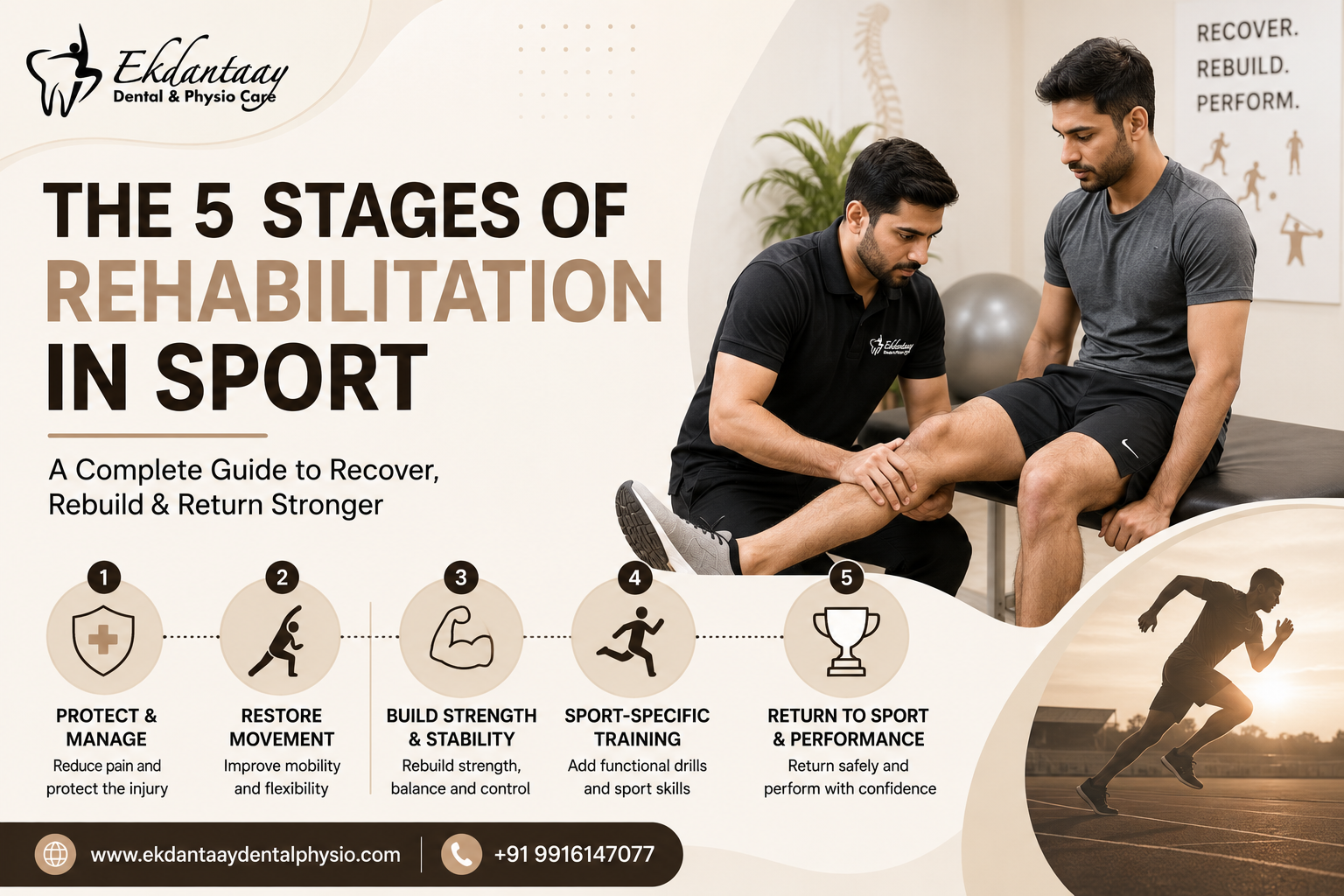
The 5 stages of rehabilitation in sport provide a structured approach to recovering an injury and safely returning to physical activity. They generally progress from protecting the injured area and managing symptoms to restoring movement, rebuilding strength, developing sport-specific ability, and finally returning to full participation and performance. The exact progression depends on injury, individual recovery, and sport. 

An injury can be frustrating for an athlete. Whether it happens during a cricket match, football game, gym session, running practice, or another physical activity, the immediate concern is usually the same: When can I get back to my sport? 

However, successful recovery is not simply about waiting until pain disappears. An athlete may feel better but still have weaknesses, restricted movement, reduced balance, poor control, or a lack of confidence. Returning to demanding activity before these areas have recovered can place unnecessary stress on the body and may increase the possibility of another injury. 

This is why understanding the stages of rehabilitation in sport is important. A structured approach gives athletes a clearer path from injury to normal activity. It allows rehabilitation to progress gradually instead of moving directly from rest to full training. 

Modern sports rehabilitation also recognizes that returning to sport is a process rather than a single moment. The widely cited Bern consensus describes return to sport as a continuum involving return to participation, return to sport, and return to performance, with decisions influenced by physical, psychological, sporting, and contextual factors.  

In this guide, we explain the 5 stages of sports rehab, what happens during each phase, what athletes should expect, and how a physiotherapist can help guide the recovery process. 

5 Stages of Rehabilitation in Sport: Quick Overview 

Stage Main Focus Typical Goal 
Stage 1 Injury protection and symptom management Protect the injured area and control symptoms 
Stage 2 Movement and flexibility Restore appropriate movement 
Stage 3 Strength and stability Rebuild physical capacity 
Stage 4 Sport-specific function Prepare for the demands of the sport 
Stage 5 Return to sport and performance Progress toward full participation and performance 

What Are the 5 Stages of Sports Rehab? 

The 5 stages of sports rehab can be understood as a gradual progression: 

  1. Injury protection and symptom management  
  1. Restoring movement and flexibility  
  1. Building strength and stability  
  1. Developing sport-specific function  
  1. Returning to sport and performance  

These stages should not be treated as rigid time periods. An athlete may move through one stage quickly and spend considerably longer in another depending on the injury and individual response to treatment. 

For example, someone with a mild injury may progress relatively quickly, while a person recovering from surgery or a significant ligament injury may require a much longer rehabilitation process. The most important principle is progression based on recovery milestones rather than simply counting days. 

Research and expert consensus support a criterion-based approach to return-to-sport decisions. Physical readiness, functional ability, psychological readiness, the demands of the sport, and the circumstances surrounding the athlete all need to be considered.  

Stage 1: Injury Protection and Symptom Management 

The first of the stages of rehabilitation in sport focuses on protecting the injured area and controlling symptoms while allowing the body to begin its healing process. Immediately after an injury, the body responds naturally with pain, swelling, reduced movement, and sometimes weakness. The appropriate response depends on the nature and severity of the injury. 

The first priority is to avoid activities that could worsen the condition. This does not necessarily mean complete inactivity. In many situations, carefully controlled movement can be introduced when appropriate. A physiotherapist can determine what level of activity is suitable based on the injury and the individual’s condition. 

What Happens During This Stage? 

The initial assessment is an important part of this phase. A physiotherapist looks at how the injury occurred, the location and nature of symptoms, movement limitations, strength, and functional ability. This information helps determine what activities should temporarily be modified and what type of rehabilitation can safely begin. 

The athlete may need to reduce training intensity or stop particular movements for a period of time. The objective is to protect healing tissues without unnecessarily reducing overall physical capacity. For example, a runner with a lower-limb injury may temporarily avoid running while continuing appropriately modified activities that do not aggravate the injury. 

Stage 2: Restoring Movement and Flexibility 

Once the initial symptoms are controlled and the injured area can tolerate movement, rehabilitation progresses toward restoring normal mobility. This is the second important phase among the rehabilitation phases. 

Injuries frequently cause restricted movement. A joint may become stiff, muscles may become tight, or an athlete may unconsciously change the way they move to avoid discomfort. If these limitations continue, they can interfere with later stages of rehabilitation. 

How Is Movement Restored? 

A physiotherapist may introduce carefully selected mobility exercises based on the injured area and the individual’s current ability. The exercises should challenge the body without exceeding its tolerance. Progress may begin with simple controlled movements and gradually become more demanding as mobility improves. 

Stretching may also be included when appropriate, but rehabilitation is not simply about making muscles more flexible. The goal is to restore useful movement that supports normal function. For an athlete, that means eventually being able to move through the ranges required by their activity. 

Progress Should Be Gradual 

A common mistake is trying to regain full movement too quickly. If an exercise repeatedly increases symptoms, the rehabilitation plan may need to be adjusted. Progress should be based on how the body responds rather than an expectation that a particular movement must be achieved by a specific date. This is one reason individualized physiotherapy is valuable during recovery. 

Stage 3: Building Strength and Stability 

After movement has improved, the focus shifts toward rebuilding strength and stability. This is one of the most important stages of rehabilitation in sport because injuries often result in reduced strength around the affected area. Even when pain has improved, an athlete may not yet have the physical capacity required for training or competition. 

Why Is Strength Important After an Injury? 

Strength provides the physical foundation needed for sporting activity. Running, jumping, changing direction, landing, throwing, lifting, and other movements require muscles and joints to tolerate repeated loads. 

If an athlete returns before adequate strength has been restored, the body may struggle to handle those demands. Rehabilitation therefore progresses from basic strengthening toward more demanding movements. 

Strength Training Is Individualized 

There is no single strengthening program suitable for every athlete. The exercises depend on the injury, sport, training level, age, previous injuries, and current physical capacity. Someone recovering from a knee injury may require progressive strengthening around the lower limb and trunk. A person recovering from a shoulder injury may require a different approach focusing on the shoulder complex and surrounding muscles. 

The goal is not simply to make one muscle stronger. The body works as an interconnected system, so rehabilitation should consider how different areas contribute to movement and stability. 

Stability and Control 

Strength alone is not enough. An athlete also needs to control movement effectively. For example, an athlete may have sufficient strength to perform a squat but struggle to control the knee during a rapid change of direction. Similarly, someone may regain shoulder strength but still lack adequate control during a throwing movement. 

Rehabilitation therefore gradually introduces exercises that challenge stability, coordination, and movement control. This prepares the athlete for more complex activities later in the recovery process. 

Stage 4: Developing Sport-Specific Function 

The fourth stage is where rehabilitation starts to look increasingly like the athlete’s actual sport. This is an important transition. An athlete may be able to perform normal exercises in a clinic or gym but still not be ready for the unpredictable demands of training and competition. 

The sports recovery stages therefore need to include activities that reproduce the physical requirements of the individual’s sport. 

What Is Sport Specific Rehabilitation? 

Sport-specific rehabilitation involves gradually introducing movements and activities that resemble what an athlete needs to perform during their sport. The exact activities depend on the sport. 

A football player may eventually need to perform acceleration, deceleration, changes of direction, and controlled kicking movements. 

A badminton player may need repeated lunges, rapid lateral movements, jumping, and changes in direction. 

A cricket player may require running between wickets, throwing, bowling, batting, and repeated acceleration. 

A runner may need to progress from controlled movement toward higher-speed running and the ability to tolerate longer periods of activity. 

The important point is that rehabilitation should eventually prepare the body for the actual demands of the activity. 

Why Can’t an Athlete Simply Return Once Strength Is Normal? 

Strength testing alone does not completely determine whether someone is ready to return to sport. Sports involve combinations of movements performed repeatedly and often under unpredictable conditions. An athlete may need to react to another player, respond to changing direction, maintain balance, accelerate suddenly, or perform a movement when fatigued. 

Research on return-to-sport rehabilitation emphasizes the importance of functional and sport-specific testing rather than relying on a single measure. Factors such as movement, strength, functional ability, cardiovascular readiness, and psychological readiness can all be relevant.  

This is why Stage 4 gradually bridges the gap between rehabilitation exercises and actual sports participation. 

Stage 5: Returning to Sport and Performance 

The fifth stage is the final part of the 5 stages of sports rehab and focuses on returning to the athlete’s desired level of participation and, where appropriate, performance. However, “returning to sport” does not necessarily mean immediately returning to full competition. 

A safer approach is usually progressive. An athlete may first participate in modified training, then increase training volume and intensity, then participate in unrestricted practice, and eventually return to competition when appropriate. the Bern consensus describes returning to sport as a continuum rather than a single decision. It distinguishes between returning to participation, returning to sport, and returning to performance.  

Return to Participation 

At this point, the athlete may begin participating in training or sport at a reduced level. The activity might be modified by reducing duration, intensity, repetition, or certain movements. This gives the body an opportunity to adapt to real sporting demands while rehabilitation continues. 

Return to Sport 

The athlete progresses toward their normal sporting activity. However, simply participating does not necessarily mean they are performing at their previous level. Training demands may continue to increase gradually while physical and functional responses are monitored. 

Return to Performance 

The final goal for many competitive athletes is not merely participation but returning to their previous level of performance. This can involve restoring speed, strength, endurance, agility, technical ability, and confidence. 

The distinction matters because an athlete can technically return to their sport while still being below their previous performance level. The return-to-sport literature recognizes this difference between participation and full performance.  

How Do You Know When You Are Ready to Progress? 

One of the most important questions during rehabilitation is whether an athlete is actually ready to move to the next stage. There is no universal test that applies to every injury or sport. Instead, progression should consider the individual’s symptoms, movement, strength, functional ability, and the specific requirements of their activity. 

For example, an athlete may need to demonstrate appropriate movement and strength before beginning more demanding training. Later, sport-specific tasks can be assessed to determine whether the body can tolerate the demands of the activity. 

Psychological readiness can also matter. An athlete who is physically capable but extremely fearful of repeating the injury may struggle when returning to competition. Evidence-based rehabilitation therefore considers multiple factors rather than using time alone as the deciding factor.  

Are the 5 Stages of Rehabilitation Always the Same? 

Not necessarily. 

The five stages provide a useful framework for understanding the rehabilitation process, but actual treatment should be individualized. An athlete recovering from a minor muscle injury may progress through the stages relatively quickly. Someone recovering from a significant ligament injury or surgery may require substantially more time and more detailed testing before progressing. 

Some stages may overlap. 

For example, an athlete may continue strength training while beginning sport-specific exercises. Similarly, mobility work may continue throughout later stages if a limitation remains. Therefore, rehabilitation should not be viewed as five isolated boxes that must always be completed one after another. 

Instead, the stages represent a progressive framework. 

How Does a Physiotherapist Help During the 5 Stages? 

A physiotherapist plays an important role in assessing the injury, designing the rehabilitation plan, monitoring progress, and deciding when it is appropriate to increase activity. At the beginning, the physiotherapist identifies the athlete’s current limitations and establishes realistic goals. 

As recovery progresses, treatment is adjusted according to the athlete’s response. 

The physiotherapist may monitor: 

  • Movement quality  
  • Strength  
  • Flexibility  
  • Stability  
  • Functional ability  
  • Exercise tolerance  
  • Sport-specific movement  
  • Confidence during activity  

The exact assessment depends on the injury and sport. This individualized process helps prevent two common problems: progressing too quickly and progressing too slowly. 

Why Returning Too Early Can Be a Problem 

An athlete may feel pressure to return quickly because of an upcoming competition, team responsibilities, or personal goals. However, returning before the body is ready can create problems. 

A reduction in pain does not automatically mean that strength, movement control, or functional capacity have returned to the required level. For this reason, return-to-sport decisions should consider more than how the athlete feels on one particular day. 

The consensus literature recommends a collaborative, individualized approach that considers the athlete, clinician, sport demands, and risk factors. A carefully managed return may take longer than an athlete initially expects, but the goal is to make that return more sustainable. 

What Should Athletes Remember About Rehabilitation? 

The most important lesson from the stages of rehabilitation in sport is that recovery is a process. There is rarely a single exercise, treatment, or date that determines when an athlete is ready. Successful rehabilitation gradually develops the physical and functional abilities required by the athlete’s activity. 

A good rehabilitation plan should answer three questions: 

Where is the athlete now? 
This requires an appropriate assessment of the injury and current limitations. 

What does the athlete need to achieve? 
The answer depends on the sport, activity level, recovery goals, and physical demands. 

What evidence shows the athlete is ready to progress? 
This may involve movement, strength, functional, sport-specific, and psychological considerations. Thinking about rehabilitation in this way creates a more structured and individualized recovery journey. 

This table provides a simplified overview. The actual rehabilitation process should be individualized according to the injury and the athlete’s requirements. 

Key Takeaways 

The 5 stages of rehabilitation in sport provide a practical framework for understanding how an athlete can progress from injury toward full sporting activity. 

The process begins with protecting the injury and managing symptoms. It then progresses toward restoring movement, rebuilding strength and stability, introducing sport-specific activities, and finally returning to sport and performance. 

The most important point is that rehabilitation should not be based solely on time. An athlete’s physical condition, functional ability, sport-specific requirements, and psychological readiness can all influence the decision to progress. A gradual, criteria-based approach gives athletes a better opportunity to return safely and confidently. 

If you have an injury that is preventing you from training or participating in your preferred activity, professional assessment can help determine where you are in the rehabilitation process and what should happen next. 

Ready to Return to Your Sport With Confidence? 

An injury does not have to keep you away from the activities you enjoy. With the right assessment and a structured rehabilitation plan, you can work toward restoring movement, strength, confidence, and sport-specific ability. 

At Ekdantaay Dental & Physio Care, Dr. Ranakdevi Raj, Physiotherapist, provides personalized physiotherapy care to help athletes and active individuals progress through their recovery safely. 

Whether you’re recovering from a recent injury or struggling with an injury that keeps returning, don’t rush your return. Get professional guidance and follow a rehabilitation plan designed around your condition and goals. 

Book Your Physiotherapy Consultation in Vadodara 

Dr. Ranakdevi Raj 
Ekdantaay Dental & Physio Care 

📞 Contact: +91 9916147077 

Clinic Address: 
501, Elite Elegance Gotri Sevasi Main Road, besides Collabera, opposite Hanuman Mandir, Chandramauleshwar Nagar, Gotri, Vadodara, Gujarat 391101 

Take the next step toward a safer and stronger return to sport. Call +91 9916147077 to schedule your consultation. 

What Is Sports Injury Rehabilitation? A Complete Guide 

Sports injury rehabilitation is a structured physiotherapy program designed to help people recover from sports-related injuries, restore strength and mobility, reduce pain, and safely return to physical activity. It combines expert assessment, pain management, therapeutic exercises, manual therapy, and sport-specific training to promote complete recovery while reducing the risk of future injuries. 

Introduction 

Whether you’re a professional athlete, a weekend runner, a gym enthusiast, or someone who enjoys recreational sports, injuries can happen unexpectedly. A twisted ankle during football, shoulder pain after swimming, a ligament injury while playing cricket, or knee pain after running can disrupt your routine and affect your overall quality of life. While many people assume that rest alone is enough, proper recovery often requires a structured rehabilitation program to restore function and prevent the injury from recurring. 

Sports injury rehabilitation is a specialized branch of physiotherapy that focuses on helping individuals recover safely after sports-related injuries. It goes beyond simply reducing pain it aims to restore flexibility, strength, balance, coordination, and confidence so you can return to your sport or daily activities with a lower risk of re-injury. 

At Ekdantaay Dental & Physio Care, Vadodara, rehabilitation programs are tailored to each patient’s injury, fitness level, and recovery goals. Whether you’re recovering from a muscle strain, ligament tear, tendon injury, or post-surgical condition, a personalized treatment plan can support a safe and effective return to activity. 

This comprehensive guide explains how sports injury rehabilitation works, who needs it, the stages of recovery, common treatment techniques, expected recovery timelines, and practical tips to help you recover faster. 

What Is Sports Injury Rehabilitation? 

Sports injury rehabilitation is a personalized recovery program that helps individuals regain movement, strength, flexibility, endurance, and functional ability after a sports-related injury. The rehabilitation process uses evidence-based physiotherapy techniques to reduce pain, repair damaged tissues, improve performance, and prepare the body for a safe return to sports or physical activity. 

Unlike simply resting after an injury, rehabilitation addresses the underlying causes of the problem. Weak muscles, poor movement patterns, joint instability, and muscle imbalances can all contribute to repeated injuries if they are not properly treated. A structured rehabilitation program identifies these issues and corrects them as part of the recovery process. 

The goal is not just to heal the injured area but to restore the body’s overall function and minimize the chances of future injuries. 

Who Can Benefit from Sports Injury Rehabilitation? 

Despite its name, sports injury rehabilitation isn’t only for professional athletes. Anyone who participates in physical activities can benefit from specialized physiotherapy. 

This includes: 

  • Professional athletes  
  • Amateur sports players  
  • School and college athletes  
  • Fitness enthusiasts  
  • Gym members  
  • Marathon runners  
  • Cyclists  
  • Swimmers  
  • Football and cricket players  
  • Tennis and badminton players  
  • Dancers  
  • Individuals recovering from exercise-related injuries  

Even if your injury occurred during recreational activities rather than competitive sports, rehabilitation can help you recover safely and regain confidence in movement. 

What Does Sports Injury Rehabilitation Aim to Achieve? 

A comprehensive rehabilitation program focuses on much more than pain relief. 

Its primary goals include: 

  • Reducing pain and inflammation  
  • Restoring normal joint movement  
  • Improving muscle strength  
  • Increasing flexibility  
  • Enhancing balance and coordination  
  • Correcting faulty movement patterns  
  • Improving endurance  
  • Preventing recurring injuries  
  • Restoring confidence during movement  
  • Helping individuals return safely to sports and daily activities  

Because every injury is different, physiotherapists customize treatment plans based on the patient’s condition, recovery stage, activity level, and long-term goals. 

Why Rest Alone Isn’t Enough 

One of the biggest misconceptions is that complete rest will heal every sports injury. While temporary rest is important immediately after an injury, prolonged inactivity may lead to: 

Only Rest Rehabilitation 
Muscle weakness Restores muscle strength 
Joint stiffness Improves flexibility and mobility 
Reduced fitness Gradually rebuilds endurance 
Higher risk of re-injury Addresses the root cause 
Delayed recovery Structured, progressive recovery 
Limited functional recovery Safe return to sports 

Physiotherapy ensures that healing tissues are progressively strengthened through carefully planned exercises rather than being overloaded too soon or left inactive for too long. 

Why Is Sports Injury Rehabilitation Important? 

Recovering from an injury is about more than waiting for the pain to disappear. Pain often decreases before the injured tissues have fully regained their strength and stability. Returning to sports too early can increase the risk of another injury, sometimes causing even greater damage than the original problem. 

Sports injury rehabilitation provides a step-by-step recovery process that allows the body to heal while gradually rebuilding strength, flexibility, coordination, and sport-specific skills. 

Key Benefits of Sports Injury Rehabilitation 

1. Promotes Faster Recovery 

Early physiotherapy helps improve circulation, reduce swelling, maintain mobility, and encourage proper tissue healing. 

2. Reduces Pain Naturally 

Physiotherapists use evidence-based techniques such as manual therapy, therapeutic exercises, stretching, and other non-surgical approaches to reduce pain while improving function. 

3. Restores Normal Movement 

Injuries often cause stiffness and restricted mobility. Rehabilitation focuses on restoring full range of motion so everyday activities and sports movements become comfortable again. 

4. Builds Strength Around the Injury 

Weak supporting muscles can place extra stress on injured joints and tissues. Progressive strengthening exercises improve stability and reduce the likelihood of future injuries. 

5. Improves Athletic Performance 

A well-designed rehabilitation program doesn’t just restore previous ability it can also improve movement quality, balance, agility, and overall physical performance. 

6. Helps Prevent Future Injuries 

One of the most valuable aspects of sports injury rehabilitation is injury prevention. Physiotherapists identify movement faults, muscle imbalances, and training errors that may have contributed to the injury and work to correct them before returning to sport. 

Sports Injury Rehabilitation Supports Long-Term Health 

Successful rehabilitation isn’t measured only by how quickly someone returns to playing. It is measured by whether they can continue participating in sports confidently without recurring pain or repeated injuries. 

A comprehensive rehabilitation program helps patients develop: 

  • Better body awareness  
  • Improved movement mechanics  
  • Greater flexibility  
  • Increased strength  
  • Better balance  
  • Improved endurance  
  • Reduced injury risk  
  • Long-term joint health  

These improvements often benefit not only athletic performance but also everyday activities, making rehabilitation a worthwhile investment in overall physical health. 

Common Types of Sports Injuries 

Sports injuries can affect muscles, ligaments, tendons, bones, joints, and connective tissues. While some injuries occur suddenly because of a fall, collision, or awkward movement, others develop gradually due to repetitive stress, poor training techniques, or inadequate recovery between workouts. 

Understanding the type of injury is important because each condition requires a different rehabilitation approach. A muscle strain, for example, heals differently than a ligament tear or a tendon injury. Accurate diagnosis allows a physiotherapist to create a treatment plan that matches the stage of healing and helps prevent long-term complications. 

Muscle Strains 

Muscle strains are among the most common injuries seen in athletes and active individuals. They occur when muscle fibers are overstretched or torn, often during activities that involve sprinting, jumping, or sudden acceleration. 

Hamstring strains, calf strains, quadriceps injuries, and groin pulls are frequently seen in sports such as football, cricket, athletics, and badminton. Depending on the severity, symptoms may include pain, muscle tightness, swelling, bruising, and difficulty moving the affected area. Rehabilitation focuses on reducing pain initially, followed by restoring flexibility, rebuilding strength, and gradually returning the muscle to its full functional capacity. 

Ligament Injuries 

Ligaments connect bones and provide stability to joints. Sudden twisting movements, awkward landings, or direct impacts can stretch or tear these structures. One of the most recognized ligament injuries is an anterior cruciate ligament (ACL) tear in the knee, but ankle ligament sprains are even more common among recreational athletes. 

Recovery from ligament injuries requires carefully planned rehabilitation because restoring stability is just as important as reducing pain. Progressive strengthening exercises, balance training, and movement retraining help patients regain confidence before returning to sports. 

Tendon Injuries 

Tendons connect muscles to bones and can become irritated through repeated overuse rather than a single traumatic event. Conditions such as Achilles tendinopathy, tennis elbow, golfer’s elbow, and patellar tendon pain often develop gradually after repetitive training without adequate recovery. 

Unlike acute injuries, tendon problems typically require progressive loading exercises rather than prolonged rest. A structured physiotherapy program encourages tendon healing while improving the surrounding muscle strength and flexibility. 

Joint Injuries 

Sports involving rapid direction changes or physical contact place considerable stress on the joints. The knees, shoulders, ankles, wrists, and hips are particularly vulnerable. Joint injuries may involve cartilage damage, dislocations, instability, or inflammation. Without proper rehabilitation, stiffness and weakness can persist long after the initial pain subsides. 

Treatment aims to restore joint mobility, improve muscular support, and ensure the joint can tolerate sport-specific movements safely. 

Stress Injuries 

Not every sports injury happens suddenly. Repeated training without sufficient recovery can gradually overload bones and soft tissues. Distance runners, cyclists, gym enthusiasts, and athletes preparing for competitions sometimes develop stress-related injuries because their bodies are unable to recover between training sessions. 

Early rehabilitation helps reduce excessive loading while maintaining overall fitness through modified exercise programs that support healing. 

Acute vs. Overuse Sports Injuries 

Sports injuries are generally classified into two categories. 

Acute Injuries Overuse Injuries 
Occur suddenly Develop gradually over time 
Usually caused by falls, collisions, or twisting Usually caused by repetitive movements 
Immediate pain and swelling are common Pain increases slowly during activity 
Often easier to identify May be ignored in the early stages 
Require immediate assessment Require correction of training habits and movement patterns 

Recognizing the difference helps ensure the appropriate rehabilitation strategy is started at the right time. 

Signs You May Need Sports Injury Rehabilitation 

Many people assume that if they can walk or move the injured area, professional treatment isn’t necessary. However, the absence of severe pain does not always mean the tissues have healed completely. Ignoring an injury or returning to activity too soon can prolong recovery and increase the likelihood of another injury. 

You should consider sports injury rehabilitation if: 

  • Pain continues for several days after the injury.  
  • Swelling does not improve as expected.  
  • You notice reduced flexibility or restricted movement.  
  • The affected joint feels unstable or gives way.  
  • Weakness prevents you from performing normal activities.  
  • The same injury keeps recurring.  
  • You struggle to return to your previous level of sports performance.  
  • Pain returns every time you train or exercise.  

These symptoms often indicate that the body needs more than rest. A structured rehabilitation program addresses the underlying issues instead of simply masking symptoms. 

Why Early Rehabilitation Matters 

Many athletes delay physiotherapy because they believe the body will recover naturally with time. While minor injuries may improve on their own, delayed treatment often allows weakness, stiffness, and poor movement patterns to develop. 

Early intervention offers several important advantages. It helps control pain before it becomes chronic, preserves joint mobility, minimizes muscle loss, and allows rehabilitation exercises to begin at the appropriate stage of healing. 

Perhaps most importantly, early rehabilitation reduces the risk of compensatory movements. When one part of the body is painful, people naturally shift weight or alter their movement patterns. Over time, these compensations can create new problems in other joints and muscles. Seeking professional guidance soon after an injury often leads to a faster, safer, and more complete recovery. 

How Sports Injury Rehabilitation Works 

Sports injury rehabilitation is not a single treatment or exercise routine. A carefully designed rehabilitation plan adapts as the body heals. Every rehabilitation program begins with understanding the patient’s injury, physical condition, sporting activity, and recovery goals. From there, treatment evolves in stages, with each phase preparing the body for the next level of activity. Physiotherapists avoid rushing patients back to sport and ensure they safely reach each milestone before increasing rehabilitation intensity. 

Step 1: Comprehensive Assessment 

Recovery starts with a detailed clinical assessment. During the initial consultation, the physiotherapist gathers information about how the injury occurred, when symptoms began, the patient’s activity level, previous injuries, and any existing medical conditions. 

The physical examination may include evaluating posture, joint movement, muscle strength, flexibility, balance, walking or running patterns, and sport-specific movements. In some cases, imaging reports such as X-rays or MRI scans are reviewed to better understand the extent of the injury. This thorough evaluation helps identify not only the injured tissue but also any contributing factors, such as muscle imbalances, poor biomechanics, or training errors. 

Step 2: Setting Realistic Recovery Goals 

Once the assessment is complete, a personalized rehabilitation plan is developed. The goals vary depending on the individual. A competitive athlete preparing for a tournament may require advanced agility and performance training, while a recreational runner may simply want to return to pain-free jogging. 

Recovery goals typically focus on reducing pain, restoring mobility, rebuilding strength, improving functional movement, and enabling a safe return to the desired level of activity. Setting measurable milestones also allows progress to be monitored throughout the rehabilitation process. 

Step 3: Individualized Treatment Planning 

No two injuries heal in exactly the same way. Even two patients with the same diagnosis may require different rehabilitation strategies depending on factors such as age, fitness level, occupation, and sporting demands. 

For this reason, physiotherapists continually adjust treatment as recovery progresses. Exercises become more challenging, movement patterns are refined, and sport-specific drills are introduced only when the body is ready. This individualized approach helps maximize recovery while minimizing the risk of setbacks. 

Step 4: Monitoring Progress Throughout Recovery 

Rehabilitation is an ongoing process rather than a fixed schedule. Regular reassessments allow the physiotherapist to measure improvements in strength, flexibility, balance, endurance, and functional performance. If recovery is progressing faster or slower than expected, the treatment plan can be modified accordingly. 

Continuous monitoring ensures that patients move through each phase of rehabilitation safely instead of returning to sports before their body is fully prepared. 

Looking Ahead 

Once the assessment and treatment plan are in place, rehabilitation progresses through carefully structured stages that gradually restore movement, strength, stability, and sport-specific performance. 

The Stages of Sports Injury Rehabilitation and Common Physiotherapy Treatments 

Recovering from a sports injury is a gradual process. Returning to training too soon or skipping important rehabilitation stages can delay healing and increase the risk of another injury. This is why physiotherapists follow a structured rehabilitation program that progresses according to your body’s healing rather than a fixed timeline. 

Although every recovery journey is unique, most sports injury rehabilitation programs move through four key stages. Each stage has specific goals and treatment methods that prepare the body for the next level of activity. 

The Four Stages of Sports Injury Rehabilitation 

Stage 1: Protecting the Injury and Managing Pain 

The first stage begins immediately after the injury occurs. During this phase, the priority is to control pain and inflammation while protecting the injured tissues from further damage. Many people believe complete bed rest is the best solution. In reality, prolonged inactivity can cause muscle weakness, joint stiffness, and slower recovery. Instead, physiotherapists recommend controlled movement whenever it is safe to do so. 

Treatment during this phase may include activity modification, gentle mobility exercises, manual therapy, and appropriate pain management techniques. Patients are also educated about movements they should temporarily avoid and how to safely perform daily activities without placing excessive stress on the injured area. The goal is not only to reduce discomfort but also to create the ideal environment for healing. 

Stage 2: Restoring Movement and Flexibility 

Once pain and swelling begin to improve, the focus shifts toward restoring normal movement. After an injury, joints often become stiff, muscles tighten, and normal movement patterns are disrupted. Without proper rehabilitation, these restrictions may continue even after the tissues have healed. 

During this stage, physiotherapists introduce gentle stretching exercises, mobility drills, and range-of-motion exercises to gradually improve flexibility. Manual therapy techniques may also be used to restore joint mobility and reduce stiffness. 

Progress is carefully monitored to ensure exercises improve mobility without irritating the healing tissues. As movement improves, patients often notice everyday activities such as walking, climbing stairs, bending, or reaching becoming easier and more comfortable. 

Stage 3: Rebuilding Strength and Stability 

Once normal movement has largely returned, rehabilitation focuses on rebuilding strength. An injury often causes the surrounding muscles to weaken because they have not been used normally during the recovery period. Weak muscles provide less support to joints, increasing the likelihood of repeated injuries. Rather than immediately introducing heavy exercises, physiotherapists gradually increase the intensity based on the patient’s progress. 

Strengthening programs typically target both the injured area and the surrounding muscle groups. For example, someone recovering from a knee injury may also strengthen the hips, core, and ankle because all these areas influence knee stability. Balance and coordination training also become an important part of rehabilitation during this stage. These exercises improve body awareness and help patients regain confidence in movement. 

Stage 4: Returning to Sports Safely 

The final stage prepares patients to return to their chosen sport or physical activity. Simply being pain-free does not necessarily mean the body is ready for competitive sports. Athletes need adequate strength, endurance, agility, coordination, and confidence before resuming full participation. 

Rehabilitation during this phase becomes increasingly sport-specific. For a football player, treatment may include sprinting, cutting, and change-of-direction drills. A badminton player may practice lunges and quick lateral movements, while a runner gradually increases running distance and speed under professional supervision. 

Before returning to unrestricted activity, physiotherapists assess several factors, including: 

Recovery Milestone Why It Matters 
Pain-free movement Indicates the injured tissue is tolerating activity well. 
Full joint mobility Helps restore normal movement patterns. 
Adequate muscle strength Supports the injured area during activity. 
Good balance and coordination Reduces the likelihood of falls and re-injury. 
Sport-specific performance Ensures the body is prepared for the physical demands of the sport. 

Meeting these milestones significantly reduces the risk of suffering another injury soon after returning to play. 

Physiotherapy Treatments Used During Sports Injury Rehabilitation 

Every rehabilitation program is tailored to the individual’s injury, goals, and stage of recovery. Physiotherapists combine different treatment methods to promote healing and restore function effectively. 

Manual Therapy 

Manual therapy involves hands-on techniques performed by the physiotherapist to improve joint movement, reduce muscle tightness, and relieve pain. Depending on the condition, treatment may include joint mobilization, soft tissue release, trigger point therapy, or gentle stretching techniques. 

Manual therapy is often combined with exercise rather than used as a standalone treatment because lasting improvement comes from restoring movement and strength together. 

Therapeutic Exercise 

Exercise forms the foundation of sports injury rehabilitation. Unlike general fitness exercises, therapeutic exercises are specifically designed to restore function after an injury. They are introduced progressively, beginning with gentle movements before advancing to strengthening, endurance, and functional training. 

Each exercise has a clear purpose, whether it is improving flexibility, increasing muscle strength, enhancing stability, or preparing the patient for sport-specific activities. A personalized exercise program also teaches patients how to continue their recovery safely at home between physiotherapy sessions. 

Balance and Proprioception Training 

After many sports injuries, especially ankle and knee injuries, the body’s ability to detect joint position can become impaired. This sense, known as proprioception, plays a crucial role in maintaining balance and coordinating movement. Without proper proprioception training, patients may feel unstable even after pain has resolved. 

Physiotherapists use carefully selected balance exercises to retrain the body’s neuromuscular system. As rehabilitation progresses, these exercises become more challenging to better prepare patients for real-life sporting situations. Improving proprioception is one of the most effective ways to reduce the risk of future injuries. 

Functional Movement Training 

Every sport places different physical demands on the body. A tennis player requires rapid rotational movements, while a runner depends on efficient lower-limb mechanics. Similarly, a cricketer needs shoulder stability for throwing and bowling. 

Functional movement training bridges the gap between rehabilitation exercises and real sporting activities. Instead of focusing only on isolated muscles, these exercises train the body to perform coordinated movement patterns similar to those required during sports participation. This approach improves confidence while helping patients transition safely back to competition or recreational activities. 

Education and Injury Prevention 

An effective rehabilitation program does more than treat the current injury it also helps prevent future problems. Physiotherapists educate patients about proper warm-up routines, recovery strategies, training progression, posture, movement mechanics, footwear selection, and techniques that reduce unnecessary stress on joints and muscles. 

Understanding why an injury occurred allows patients to make informed changes that support long-term physical health. Rather than simply returning to sport, the goal is to return stronger, move more efficiently, and reduce the chances of experiencing the same injury again. 

Rehabilitation Is a Partnership 

One of the biggest factors influencing recovery is consistency. Physiotherapy sessions provide expert guidance, but meaningful progress also depends on following prescribed home exercises, attending scheduled appointments, and gradually increasing activity as recommended. 

Patients who actively participate in their rehabilitation often recover more efficiently than those who rely solely on passive treatments. By combining professional physiotherapy with commitment and patience, individuals can regain strength, restore confidence, and safely return to the activities they enjoy. 

Benefits of Sports Injury Rehabilitation 

Recovering from an injury is about much more than eliminating pain. A successful rehabilitation program restores the body’s ability to move efficiently, perform confidently, and tolerate the physical demands of sports without recurring injuries. While every patient has different goals, the long-term benefits of sports injury rehabilitation extend beyond returning to the field they contribute to better overall physical health and improved quality of life. 

Faster and More Effective Recovery 

One of the biggest advantages of a structured rehabilitation program is that it supports the body’s natural healing process while minimizing unnecessary delays. Rather than waiting for pain to disappear on its own, physiotherapy uses progressive treatment techniques that encourage tissue healing, maintain joint mobility, and prevent excessive muscle loss during recovery. 

Patients who begin rehabilitation at the appropriate time often regain function sooner than those who rely solely on prolonged rest. More importantly, they recover in a way that prepares the body for future physical activity instead of simply masking symptoms. 

Restores Strength, Mobility, and Flexibility 

Sports injuries frequently result in stiffness, muscle weakness, and restricted movement. Even after pain subsides, these limitations can affect athletic performance and everyday activities. 

Rehabilitation focuses on gradually restoring normal movement patterns while rebuilding muscle strength around the injured area. As flexibility and mobility improve, patients often notice greater confidence when walking, running, lifting, climbing stairs, or returning to their preferred sport. The goal is to restore complete function rather than achieving only partial recovery. 

Reduces the Risk of Re-Injury 

Many recurring sports injuries happen because athletes return to activity before their bodies are fully prepared. Pain is only one indicator of recovery. Weak muscles, poor balance, reduced coordination, and faulty movement patterns may still exist even when discomfort has disappeared. 

Sports injury rehabilitation addresses these underlying issues through progressive strengthening, balance training, and sport-specific exercises. This comprehensive approach significantly lowers the likelihood of repeating the same injury in the future. 

Improves Performance After Recovery 

An often-overlooked benefit of rehabilitation is that many athletes return stronger than they were before the injury. During treatment, physiotherapists identify weaknesses, muscle imbalances, and movement inefficiencies that may have contributed to the original injury. Correcting these problems not only reduces future injury risk but can also improve overall athletic performance. 

Many patients report better balance, improved agility, increased endurance, and more efficient movement after completing a comprehensive rehabilitation program. 

Builds Confidence 

Physical recovery and mental recovery often progress together. Following a serious injury, many individuals hesitate to run, jump, or change direction because they fear getting injured again. This lack of confidence can affect performance even after the body has healed. 

A gradual rehabilitation program helps patients rebuild trust in their bodies. As they successfully complete increasingly challenging exercises, confidence naturally returns alongside physical strength. 

How Long Does Sports Injury Rehabilitation Take? 

One of the most common questions patients ask is, “How long will recovery take?” The answer depends on several factors, including the type of injury, its severity, the individual’s age, overall health, fitness level, and commitment to rehabilitation. No two recovery journeys are exactly the same. 

Minor muscle strains may improve within a few weeks, while ligament injuries or post-surgical rehabilitation can require several months of guided physiotherapy. 

The table below provides a general idea of recovery timelines. 

Injury Type Approximate Rehabilitation Period* 
Mild muscle strain 2–4 weeks 
Moderate muscle or ligament injury 4–8 weeks 
Severe ligament injury 3–6 months 
Tendon injuries 6–12 weeks or longer 
Post-surgical sports rehabilitation Several months depending on the procedure 

*These timelines are estimates only. Recovery varies from person to person and should always be guided by a qualified physiotherapist. 

Instead of focusing only on the calendar, physiotherapists evaluate recovery based on functional milestones such as strength, mobility, balance, and sport-specific performance. Returning to activity before these milestones are achieved increases the likelihood of another injury. 

Can Sports Injuries Be Prevented? 

Although not every sports injury is avoidable, many occur because of preventable factors such as poor preparation, inadequate recovery, improper technique, or training errors. Developing healthy training habits plays an important role in reducing injury risk. 

Some practical ways to help prevent sports injuries include: 

  • Perform a proper warm-up before every training session.  
  • Increase training intensity gradually rather than making sudden changes.  
  • Include strength and flexibility exercises in your regular fitness routine.  
  • Allow sufficient recovery time between intense workouts.  
  • Wear appropriate footwear and protective equipment for your sport.  
  • Maintain good hydration and nutrition to support muscle recovery.  
  • Listen to your body and avoid ignoring persistent pain.  
  • Seek professional assessment if discomfort continues despite rest.  

These simple habits not only reduce injury risk but also support long-term athletic performance. 

When Should You See a Physiotherapist? 

Many people wait until their pain becomes severe before seeking treatment. However, early physiotherapy often leads to better outcomes and shorter recovery times. 

You should consider consulting a physiotherapist if: 

  • Pain persists for more than a few days after an injury.  
  • Swelling or stiffness continues despite rest.  
  • You are unable to return to your normal level of activity.  
  • The injured joint feels unstable or repeatedly gives way.  
  • You experience recurring injuries in the same area.  
  • Your sports performance is limited because of pain or reduced movement.  

Early assessment helps identify the exact cause of the problem and allows treatment to begin before the condition becomes more complex. 

Why Choose Ekdantaay Dental & Physio Care for Sports Injury Rehabilitation in Vadodara? 

Recovering from a sports injury requires more than temporary pain relief it requires a structured rehabilitation plan that is tailored to your body, your sport, and your recovery goals. 

At Ekdantaay Dental & Physio Care, we focus on evidence-based physiotherapy that supports complete recovery rather than simply treating symptoms. Every rehabilitation program begins with a detailed assessment to understand the nature of the injury, identify contributing factors, and develop a personalized treatment strategy. 

Our approach combines manual therapy, therapeutic exercise, mobility training, strengthening, balance training, and functional rehabilitation to help patients return safely to sports and daily activities. 

Whether you are a professional athlete, a recreational sports enthusiast, a fitness lover, or someone recovering from an exercise-related injury, our goal is to help you recover with confidence while reducing the risk of future injuries. 

If you are looking for sports injury rehabilitation in Vadodara, our experienced physiotherapy team is committed to providing individualized care that supports both short-term recovery and long-term physical well-being.

Ready to Get Back to Moving Without Pain?

Whether you’re recovering from a sports injury, managing persistent pain, or looking to improve your physical strength and mobility, the right physiotherapy guidance can make your recovery more structured and confident.

Consult Dr. Ranakdevi Raj, Physiotherapist, at Ekdantaay Dental & Physio Care in Vadodara for personalized physiotherapy care tailored to your condition and recovery goals.

Visit Our Clinic:
501, Elite Elegance Gotri Sevasi Main Road, besides Collabera, opposite Hanuman Mandir, Chandramauleshwar Nagar, Gotri, Vadodara, Gujarat 391101

Dr. Ranakdevi Raj
+91 9916147077

Expert Consultation

Make an Appointment

At Ekdantaay Dental & Physio Care, we make scheduling your appointment easy and convenient. Whether you’re looking for a dental check-up, orthodontic consultation, or physiotherapy session, our team is here to help. Simply fill out the form or contact us directly, and we’ll find a time that works best for you.


Our clinic is dedicated to providing exceptional care in a welcoming environment. We look forward to serving you and ensuring you receive the highest level of care.

Contact Us

    Services
    DentalPhysio