What Are the 5 Stages of Rehabilitation in Sport? 

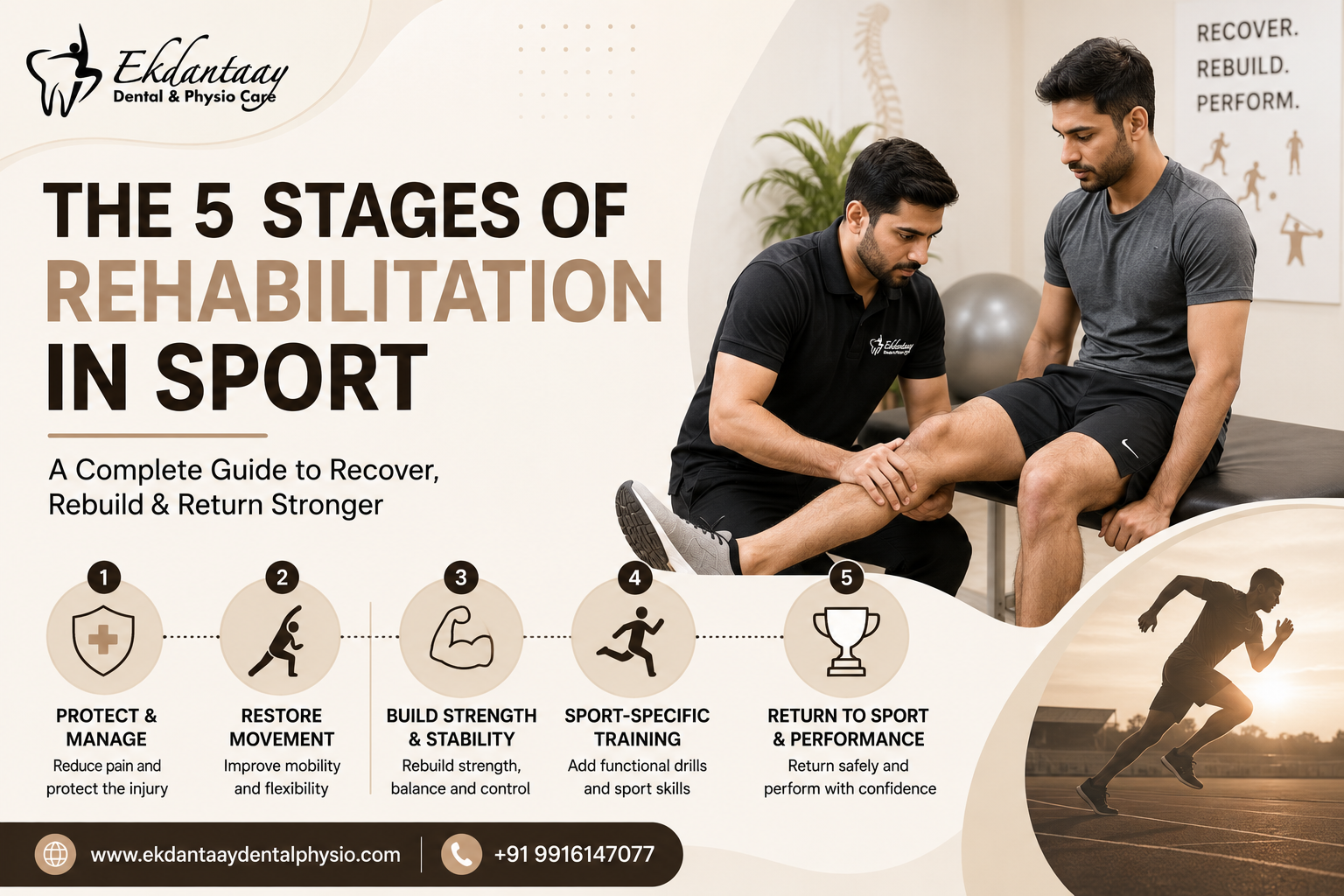
The 5 stages of rehabilitation in sport provide a structured approach to recovering an injury and safely returning to physical activity. They generally progress from protecting the injured area and managing symptoms to restoring movement, rebuilding strength, developing sport-specific ability, and finally returning to full participation and performance. The exact progression depends on injury, individual recovery, and sport. 

An injury can be frustrating for an athlete. Whether it happens during a cricket match, football game, gym session, running practice, or another physical activity, the immediate concern is usually the same: When can I get back to my sport? 

However, successful recovery is not simply about waiting until pain disappears. An athlete may feel better but still have weaknesses, restricted movement, reduced balance, poor control, or a lack of confidence. Returning to demanding activity before these areas have recovered can place unnecessary stress on the body and may increase the possibility of another injury. 

This is why understanding the stages of rehabilitation in sport is important. A structured approach gives athletes a clearer path from injury to normal activity. It allows rehabilitation to progress gradually instead of moving directly from rest to full training. 

Modern sports rehabilitation also recognizes that returning to sport is a process rather than a single moment. The widely cited Bern consensus describes return to sport as a continuum involving return to participation, return to sport, and return to performance, with decisions influenced by physical, psychological, sporting, and contextual factors.  

In this guide, we explain the 5 stages of sports rehab, what happens during each phase, what athletes should expect, and how a physiotherapist can help guide the recovery process. 

5 Stages of Rehabilitation in Sport: Quick Overview 

Stage Main Focus Typical Goal 
Stage 1 Injury protection and symptom management Protect the injured area and control symptoms 
Stage 2 Movement and flexibility Restore appropriate movement 
Stage 3 Strength and stability Rebuild physical capacity 
Stage 4 Sport-specific function Prepare for the demands of the sport 
Stage 5 Return to sport and performance Progress toward full participation and performance 

What Are the 5 Stages of Sports Rehab? 

The 5 stages of sports rehab can be understood as a gradual progression: 

  1. Injury protection and symptom management  
  1. Restoring movement and flexibility  
  1. Building strength and stability  
  1. Developing sport-specific function  
  1. Returning to sport and performance  

These stages should not be treated as rigid time periods. An athlete may move through one stage quickly and spend considerably longer in another depending on the injury and individual response to treatment. 

For example, someone with a mild injury may progress relatively quickly, while a person recovering from surgery or a significant ligament injury may require a much longer rehabilitation process. The most important principle is progression based on recovery milestones rather than simply counting days. 

Research and expert consensus support a criterion-based approach to return-to-sport decisions. Physical readiness, functional ability, psychological readiness, the demands of the sport, and the circumstances surrounding the athlete all need to be considered.  

Stage 1: Injury Protection and Symptom Management 

The first of the stages of rehabilitation in sport focuses on protecting the injured area and controlling symptoms while allowing the body to begin its healing process. Immediately after an injury, the body responds naturally with pain, swelling, reduced movement, and sometimes weakness. The appropriate response depends on the nature and severity of the injury. 

The first priority is to avoid activities that could worsen the condition. This does not necessarily mean complete inactivity. In many situations, carefully controlled movement can be introduced when appropriate. A physiotherapist can determine what level of activity is suitable based on the injury and the individual’s condition. 

What Happens During This Stage? 

The initial assessment is an important part of this phase. A physiotherapist looks at how the injury occurred, the location and nature of symptoms, movement limitations, strength, and functional ability. This information helps determine what activities should temporarily be modified and what type of rehabilitation can safely begin. 

The athlete may need to reduce training intensity or stop particular movements for a period of time. The objective is to protect healing tissues without unnecessarily reducing overall physical capacity. For example, a runner with a lower-limb injury may temporarily avoid running while continuing appropriately modified activities that do not aggravate the injury. 

Stage 2: Restoring Movement and Flexibility 

Once the initial symptoms are controlled and the injured area can tolerate movement, rehabilitation progresses toward restoring normal mobility. This is the second important phase among the rehabilitation phases. 

Injuries frequently cause restricted movement. A joint may become stiff, muscles may become tight, or an athlete may unconsciously change the way they move to avoid discomfort. If these limitations continue, they can interfere with later stages of rehabilitation. 

How Is Movement Restored? 

A physiotherapist may introduce carefully selected mobility exercises based on the injured area and the individual’s current ability. The exercises should challenge the body without exceeding its tolerance. Progress may begin with simple controlled movements and gradually become more demanding as mobility improves. 

Stretching may also be included when appropriate, but rehabilitation is not simply about making muscles more flexible. The goal is to restore useful movement that supports normal function. For an athlete, that means eventually being able to move through the ranges required by their activity. 

Progress Should Be Gradual 

A common mistake is trying to regain full movement too quickly. If an exercise repeatedly increases symptoms, the rehabilitation plan may need to be adjusted. Progress should be based on how the body responds rather than an expectation that a particular movement must be achieved by a specific date. This is one reason individualized physiotherapy is valuable during recovery. 

Stage 3: Building Strength and Stability 

After movement has improved, the focus shifts toward rebuilding strength and stability. This is one of the most important stages of rehabilitation in sport because injuries often result in reduced strength around the affected area. Even when pain has improved, an athlete may not yet have the physical capacity required for training or competition. 

Why Is Strength Important After an Injury? 

Strength provides the physical foundation needed for sporting activity. Running, jumping, changing direction, landing, throwing, lifting, and other movements require muscles and joints to tolerate repeated loads. 

If an athlete returns before adequate strength has been restored, the body may struggle to handle those demands. Rehabilitation therefore progresses from basic strengthening toward more demanding movements. 

Strength Training Is Individualized 

There is no single strengthening program suitable for every athlete. The exercises depend on the injury, sport, training level, age, previous injuries, and current physical capacity. Someone recovering from a knee injury may require progressive strengthening around the lower limb and trunk. A person recovering from a shoulder injury may require a different approach focusing on the shoulder complex and surrounding muscles. 

The goal is not simply to make one muscle stronger. The body works as an interconnected system, so rehabilitation should consider how different areas contribute to movement and stability. 

Stability and Control 

Strength alone is not enough. An athlete also needs to control movement effectively. For example, an athlete may have sufficient strength to perform a squat but struggle to control the knee during a rapid change of direction. Similarly, someone may regain shoulder strength but still lack adequate control during a throwing movement. 

Rehabilitation therefore gradually introduces exercises that challenge stability, coordination, and movement control. This prepares the athlete for more complex activities later in the recovery process. 

Stage 4: Developing Sport-Specific Function 

The fourth stage is where rehabilitation starts to look increasingly like the athlete’s actual sport. This is an important transition. An athlete may be able to perform normal exercises in a clinic or gym but still not be ready for the unpredictable demands of training and competition. 

The sports recovery stages therefore need to include activities that reproduce the physical requirements of the individual’s sport. 

What Is Sport Specific Rehabilitation? 

Sport-specific rehabilitation involves gradually introducing movements and activities that resemble what an athlete needs to perform during their sport. The exact activities depend on the sport. 

A football player may eventually need to perform acceleration, deceleration, changes of direction, and controlled kicking movements. 

A badminton player may need repeated lunges, rapid lateral movements, jumping, and changes in direction. 

A cricket player may require running between wickets, throwing, bowling, batting, and repeated acceleration. 

A runner may need to progress from controlled movement toward higher-speed running and the ability to tolerate longer periods of activity. 

The important point is that rehabilitation should eventually prepare the body for the actual demands of the activity. 

Why Can’t an Athlete Simply Return Once Strength Is Normal? 

Strength testing alone does not completely determine whether someone is ready to return to sport. Sports involve combinations of movements performed repeatedly and often under unpredictable conditions. An athlete may need to react to another player, respond to changing direction, maintain balance, accelerate suddenly, or perform a movement when fatigued. 

Research on return-to-sport rehabilitation emphasizes the importance of functional and sport-specific testing rather than relying on a single measure. Factors such as movement, strength, functional ability, cardiovascular readiness, and psychological readiness can all be relevant.  

This is why Stage 4 gradually bridges the gap between rehabilitation exercises and actual sports participation. 

Stage 5: Returning to Sport and Performance 

The fifth stage is the final part of the 5 stages of sports rehab and focuses on returning to the athlete’s desired level of participation and, where appropriate, performance. However, “returning to sport” does not necessarily mean immediately returning to full competition. 

A safer approach is usually progressive. An athlete may first participate in modified training, then increase training volume and intensity, then participate in unrestricted practice, and eventually return to competition when appropriate. the Bern consensus describes returning to sport as a continuum rather than a single decision. It distinguishes between returning to participation, returning to sport, and returning to performance.  

Return to Participation 

At this point, the athlete may begin participating in training or sport at a reduced level. The activity might be modified by reducing duration, intensity, repetition, or certain movements. This gives the body an opportunity to adapt to real sporting demands while rehabilitation continues. 

Return to Sport 

The athlete progresses toward their normal sporting activity. However, simply participating does not necessarily mean they are performing at their previous level. Training demands may continue to increase gradually while physical and functional responses are monitored. 

Return to Performance 

The final goal for many competitive athletes is not merely participation but returning to their previous level of performance. This can involve restoring speed, strength, endurance, agility, technical ability, and confidence. 

The distinction matters because an athlete can technically return to their sport while still being below their previous performance level. The return-to-sport literature recognizes this difference between participation and full performance.  

How Do You Know When You Are Ready to Progress? 

One of the most important questions during rehabilitation is whether an athlete is actually ready to move to the next stage. There is no universal test that applies to every injury or sport. Instead, progression should consider the individual’s symptoms, movement, strength, functional ability, and the specific requirements of their activity. 

For example, an athlete may need to demonstrate appropriate movement and strength before beginning more demanding training. Later, sport-specific tasks can be assessed to determine whether the body can tolerate the demands of the activity. 

Psychological readiness can also matter. An athlete who is physically capable but extremely fearful of repeating the injury may struggle when returning to competition. Evidence-based rehabilitation therefore considers multiple factors rather than using time alone as the deciding factor.  

Are the 5 Stages of Rehabilitation Always the Same? 

Not necessarily. 

The five stages provide a useful framework for understanding the rehabilitation process, but actual treatment should be individualized. An athlete recovering from a minor muscle injury may progress through the stages relatively quickly. Someone recovering from a significant ligament injury or surgery may require substantially more time and more detailed testing before progressing. 

Some stages may overlap. 

For example, an athlete may continue strength training while beginning sport-specific exercises. Similarly, mobility work may continue throughout later stages if a limitation remains. Therefore, rehabilitation should not be viewed as five isolated boxes that must always be completed one after another. 

Instead, the stages represent a progressive framework. 

How Does a Physiotherapist Help During the 5 Stages? 

A physiotherapist plays an important role in assessing the injury, designing the rehabilitation plan, monitoring progress, and deciding when it is appropriate to increase activity. At the beginning, the physiotherapist identifies the athlete’s current limitations and establishes realistic goals. 

As recovery progresses, treatment is adjusted according to the athlete’s response. 

The physiotherapist may monitor: 

  • Movement quality  
  • Strength  
  • Flexibility  
  • Stability  
  • Functional ability  
  • Exercise tolerance  
  • Sport-specific movement  
  • Confidence during activity  

The exact assessment depends on the injury and sport. This individualized process helps prevent two common problems: progressing too quickly and progressing too slowly. 

Why Returning Too Early Can Be a Problem 

An athlete may feel pressure to return quickly because of an upcoming competition, team responsibilities, or personal goals. However, returning before the body is ready can create problems. 

A reduction in pain does not automatically mean that strength, movement control, or functional capacity have returned to the required level. For this reason, return-to-sport decisions should consider more than how the athlete feels on one particular day. 

The consensus literature recommends a collaborative, individualized approach that considers the athlete, clinician, sport demands, and risk factors. A carefully managed return may take longer than an athlete initially expects, but the goal is to make that return more sustainable. 

What Should Athletes Remember About Rehabilitation? 

The most important lesson from the stages of rehabilitation in sport is that recovery is a process. There is rarely a single exercise, treatment, or date that determines when an athlete is ready. Successful rehabilitation gradually develops the physical and functional abilities required by the athlete’s activity. 

A good rehabilitation plan should answer three questions: 

Where is the athlete now? 
This requires an appropriate assessment of the injury and current limitations. 

What does the athlete need to achieve? 
The answer depends on the sport, activity level, recovery goals, and physical demands. 

What evidence shows the athlete is ready to progress? 
This may involve movement, strength, functional, sport-specific, and psychological considerations. Thinking about rehabilitation in this way creates a more structured and individualized recovery journey. 

This table provides a simplified overview. The actual rehabilitation process should be individualized according to the injury and the athlete’s requirements. 

Key Takeaways 

The 5 stages of rehabilitation in sport provide a practical framework for understanding how an athlete can progress from injury toward full sporting activity. 

The process begins with protecting the injury and managing symptoms. It then progresses toward restoring movement, rebuilding strength and stability, introducing sport-specific activities, and finally returning to sport and performance. 

The most important point is that rehabilitation should not be based solely on time. An athlete’s physical condition, functional ability, sport-specific requirements, and psychological readiness can all influence the decision to progress. A gradual, criteria-based approach gives athletes a better opportunity to return safely and confidently. 

If you have an injury that is preventing you from training or participating in your preferred activity, professional assessment can help determine where you are in the rehabilitation process and what should happen next. 

Ready to Return to Your Sport With Confidence? 

An injury does not have to keep you away from the activities you enjoy. With the right assessment and a structured rehabilitation plan, you can work toward restoring movement, strength, confidence, and sport-specific ability. 

At Ekdantaay Dental & Physio Care, Dr. Ranakdevi Raj, Physiotherapist, provides personalized physiotherapy care to help athletes and active individuals progress through their recovery safely. 

Whether you’re recovering from a recent injury or struggling with an injury that keeps returning, don’t rush your return. Get professional guidance and follow a rehabilitation plan designed around your condition and goals. 

Book Your Physiotherapy Consultation in Vadodara 

Dr. Ranakdevi Raj 
Ekdantaay Dental & Physio Care 

📞 Contact: +91 9916147077 

Clinic Address: 
501, Elite Elegance Gotri Sevasi Main Road, besides Collabera, opposite Hanuman Mandir, Chandramauleshwar Nagar, Gotri, Vadodara, Gujarat 391101 

Take the next step toward a safer and stronger return to sport. Call +91 9916147077 to schedule your consultation. 
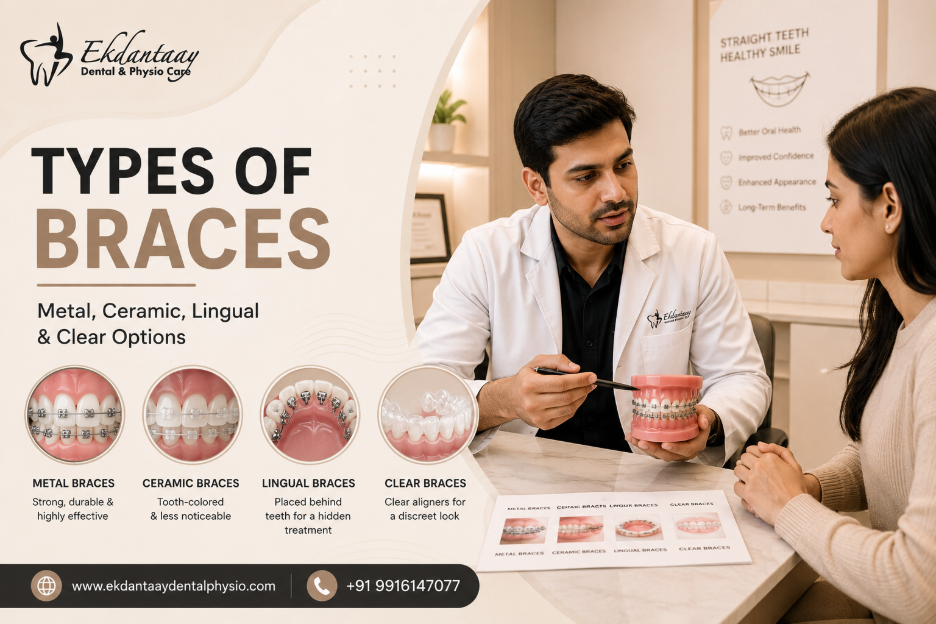
Types of Braces Available in Vadodara: Metal, Ceramic, Lingual and Clear 

The main types of braces available in Vadodara are metal, ceramic, lingual, and clear braces. Each option differs in appearance, comfort, maintenance, and suitability for specific dental conditions. The right braces depend on factors such as tooth alignment, bite, oral health, lifestyle, and the orthodontist’s recommended treatment plan. 

Introduction  

Choosing braces is an important decision, especially when you are comparing different treatment options for yourself or your child. The types of braces available today offer different levels of visibility, comfort, maintenance, and suitability depending on the individual dental condition. 

The most commonly discussed options include metal braces, ceramic braces, lingual braces, and clear braces. While all these options are designed to improve tooth alignment, they are not interchangeable. The right choice depends on the position of your teeth, the type of correction required, your lifestyle, and your orthodontist’s treatment plan. 

If you are looking for the right braces in Vadodara, understanding how these options differ can help you have a more informed conversation with your orthodontist. 

At Ekdantaay Dental & Physio Care, Dr. Raj Parthdev provides orthodontic treatment based on each patient’s individual dental needs. Rather than recommending one option for everyone, the treatment approach is selected after assessing the teeth, bite, oral health, and expected treatment goals. 

This guide explains the major types of braces, how each option works, their advantages and limitations, and what you should consider before making a decision. 

What Are the Different Types of Braces? 

The main types of braces include metal braces, ceramic braces, lingual braces, and clear braces. They differ mainly in their design, visibility, placement, maintenance requirements, and suitability for different patients. 

Here is a quick comparison: 

Type Visibility Placement Main Advantage Important Consideration 
Metal braces More visible Front of teeth Reliable and versatile More noticeable 
Ceramic braces Less noticeable Front of teeth Tooth-coloured appearance Requires careful maintenance 
Lingual braces Hidden Back of teeth Very discreet May require an adjustment period 
Clear braces Less noticeable Depends on the system Discreet appearance Suitability varies by case 

Although appearance is an important consideration for many patients, it should not be the only factor. Orthodontic treatment is primarily planned around achieving appropriate tooth movement and a healthy bite. 

How Do the Different Types of Braces Work? 

Braces use controlled forces to gradually move teeth toward planned positions. The orthodontic system applies pressure through brackets, wires, or other components, while the surrounding tissues adapt to the gradual movement. 

The basic principle is similar across fixed braces, but the design and position of the appliance can differ. 

For example, conventional braces are attached to the front surface of the teeth, while lingual braces are positioned behind the teeth. Ceramic braces use tooth-coloured components to make the appliance less noticeable. 

This means that choosing between the types of braces is not simply an aesthetic decision. Your orthodontist must determine which system can effectively address your particular dental condition. 

Metal Braces: A Reliable Orthodontic Option 

Metal braces are one of the most established orthodontic treatment options. They use brackets attached to the front surfaces of the teeth and an orthodontic wire that guides tooth movement throughout treatment. 

Modern metal braces are smaller and more refined than many of the older designs patients may remember. They remain widely used because they can be suitable for a broad range of orthodontic problems. 

What Are the Advantages of Metal Braces? 

One of the biggest advantages of metal braces is their versatility. They can be used in many different treatment situations and are commonly considered when significant tooth movement or bite correction is required. 

Other advantages include: 

  • Proven orthodontic design 
  • Durable components 
  • Suitable for many treatment needs 
  • Continuous tooth movement during treatment 
  • No requirement for the patient to remove the appliance 

Because metal braces remain attached to the teeth throughout active treatment, patients do not need to remember to put them back after eating or brushing. 

Ceramic Braces: A More Discreet Fixed Option 

Ceramic braces work on the same basic orthodontic principle as conventional braces, but the brackets are designed to blend more closely with the natural appearance of the teeth. 

They are often considered by patients who want fixed orthodontic treatment while reducing the visibility of their braces. 

Ceramic braces can be particularly appealing to older teenagers and adults who are concerned about the appearance of traditional metal brackets. 

What Are the Advantages of Ceramic Braces? 

The main advantage of ceramic braces is their appearance. 

Depending on the system used, the brackets can be considerably less noticeable than traditional metal brackets. 

Potential advantages include: 

  • More discreet appearance 
  • Fixed treatment approach 
  • Suitable for many orthodontic situations 
  • Can be an option for patients who prioritise aesthetics 

However, ceramic components may require careful handling and cleaning. Your orthodontist will explain whether they are appropriate for your particular treatment. 

Lingual Braces Vadodara: What Makes Them Different? 

Lingual braces Vadodara are designed to be placed on the inner surfaces of the teeth rather than the outer surfaces. 

Because the brackets are positioned behind the teeth, they are much less visible when a person smiles. 

This makes lingual braces an option for patients who want fixed orthodontic treatment while keeping the appliance discreet. 

What Are the Benefits of Lingual Braces? 

The most obvious benefit is their discreet appearance. 

Other considerations include: 

  • Braces are positioned behind the teeth 
  • They are difficult to notice when smiling 
  • They provide a fixed treatment approach 
  • They may appeal to adults concerned about visible braces 

However, because the appliance is positioned behind the teeth, patients may need time to adapt to the sensation. Cleaning can also require additional attention. 

A consultation is therefore important before deciding whether lingual braces are appropriate for your case. 

What Are Clear Braces? 

Clear braces are designed to make orthodontic treatment less noticeable while still providing the benefits of a fixed appliance. The term can refer to braces that use less visible components, depending on the specific system being offered. 

For patients who are concerned about the appearance of traditional braces, clear braces can provide a more discreet alternative while keeping the appliance attached to the teeth throughout treatment. 

However, the appearance of the appliance is only one consideration. Your orthodontist also needs to evaluate whether the treatment system can provide the tooth movement required for your individual case. 

What Are the Advantages of Clear Braces? 

Clear braces may appeal to patients who want a less noticeable treatment option. 

Their potential advantages include: 

  • More discreet appearance 
  • Fixed treatment approach 
  • Suitable for selected orthodontic cases 
  • Less visually prominent than conventional metal braces 
  • No need to remove the appliance during meals 

Like other fixed appliances, clear braces require consistent oral hygiene. Patients should carefully clean around the brackets and follow their orthodontist’s instructions throughout treatment. 

Types of Braces: How Do They Compare? 

The different types of braces offer different combinations of appearance, placement, maintenance, and treatment characteristics. 

Factor Metal Braces Ceramic Braces Lingual Braces Clear Braces 
Appearance More noticeable Less noticeable Highly discreet Less noticeable 
Position Front of teeth Front of teeth Behind teeth Depends on system 
Fixed appliance Yes Yes Yes Yes 
Cleaning Requires regular attention Requires regular attention Can require additional care Requires regular attention 
Visibility Higher Lower Very low Lower 
Patient adaptation Usually straightforward Usually straightforward May require more adaptation Usually straightforward 
Suitability Many orthodontic cases Selected cases Selected cases Selected cases 

This comparison provides a general overview. It should not be used to select treatment without a professional assessment because the most suitable appliance depends on the individual’s dental condition. 

Which Type of Braces Is Best for You? 

There is no single option that is best for every patient. The appropriate types of braces depend on your dental condition, treatment objectives, lifestyle, appearance preferences, and the type of tooth movement required. 

For example, a patient who prioritizes durability and versatility may consider metal braces, while someone who is more concerned about visibility may prefer ceramic, lingual, or clear options when clinically suitable. 

Your orthodontist should make the final recommendation after examining your teeth and bite. 

Metal Braces May Be Considered When: 

  • A reliable fixed appliance is required 
  • The case involves more extensive tooth movement 
  • Appearance is less important than appliance versatility 
  • A patient prefers a straightforward fixed treatment option 

Ceramic Braces May Be Considered When: 

  • A fixed appliance is appropriate 
  • The patient wants a less noticeable appearance 
  • The dental condition is suitable for this type of appliance 

Lingual Braces May Be Considered When: 

  • Discreet fixed treatment is a priority 
  • The patient’s dental condition is suitable 
  • The patient is comfortable adapting to an appliance positioned behind the teeth 

Clear Braces May Be Considered When: 

  • A less noticeable fixed option is preferred 
  • The patient’s dental condition is suitable 
  • Appearance is an important treatment consideration 

These are general considerations rather than treatment recommendations. An orthodontic examination is necessary before selecting an appliance. 

What Should You Consider Before Choosing Braces? 

Choosing between the different types of braces involves more than comparing how they look. 

1. Your Dental Condition 

The first consideration should always be your teeth and bite. Some treatment options may be more appropriate for types of tooth movement than others. 

2. Appearance 

If you are concerned about visible orthodontic appliances, you may want to discuss ceramic, lingual, or clear options with your orthodontist. 

3. Maintenance 

Every fixed appliance requires good oral hygiene. Some designs may require additional attention while brushing and cleaning between teeth. 

4. Comfort and Adaptation 

It is normal to need some time to adapt to braces. The location and design of the appliance can influence how quickly you become comfortable with it. 

5. Treatment Requirements 

Your orthodontist needs to consider the amount and direction of tooth movement required before recommending an appliance. 

6. Your Lifestyle 

Students, working professionals, public-facing professionals, and others may have different preferences regarding the appearance and maintenance of their braces. 

7. Long-Term Results 

The goal should not simply be to choose the least noticeable appliance. The treatment should be planned to achieve appropriate tooth alignment and bite function. 

How Do You Take Care of Braces? 

Regardless of which type of braces you choose, maintaining good oral hygiene is an important part of treatment. 

Brackets and wires can create additional areas where food particles and plaque can be collected. Careful cleaning helps protect the teeth and gums during orthodontic treatment. 

Follow These Basic Care Tips: 

  • Brush carefully around all brackets and wires. 
  • Clean between the teeth regularly. 
  • Follow the cleaning technique recommended by your orthodontist. 
  • Avoid foods that may damage the appliance. 
  • Attend scheduled orthodontic appointments. 
  • Inform your orthodontist if a bracket or wire becomes damaged. 
  • Continue routine dental care during orthodontic treatment. 

Good daily care can make treatment more comfortable and help maintain healthy teeth and gums throughout the process. 

Do Braces Hurt? 

Some patients experience temporary discomfort when braces are first placed or after adjustments. This happens because the teeth are responding to controlled orthodontic forces. 

The sensation is generally temporary and tends to become easier to manage as the patient adapts. 

The amount of discomfort can vary from one person to another. If you experience significant or persistent pain, contact your orthodontist rather than trying to manage the problem yourself. 

How Long Do You Need to Wear Braces? 

Treatment duration varies between patients. The time required depends on factors such as: 

  • The complexity of the dental condition 
  • The amount of tooth movement required 
  • The selected appliance 
  • Patient cooperation 
  • Oral hygiene 
  • Regular attendance at appointments 

Your orthodontist can provide a more meaningful estimate after examining your teeth and preparing your treatment plan. It is important not to compare your treatment duration with someone else’s. Two patients may have similar-looking braces but completely different treatment requirements. 

How Can Dr. Raj Parthdev Help You Choose? 

Selecting the right braces begins with understanding your individual dental needs. 

At Ekdantaay Dental & Physio Care, Dr. Raj Parthdev evaluates the alignment of the teeth, bite relationship, oral health, and treatment objectives before recommending an appropriate orthodontic approach. 

Rather than treating every patient with the same appliance, the treatment plan is personalized according to the patient’s condition and expectations. 

If you are considering braces in Vadodara, a consultation can help you understand: 

  • Which treatment options may be suitable 
  • How different braces compare 
  • What your treatment may involve 
  • How you should care for your braces 
  • What factors may affect your treatment duration 

A professional assessment gives you a clearer basis for making your decision instead of choosing an appliance based only on appearance or someone else’s experience. 

Key Takeaways 

The main types of braces discussed in this guide are metal braces, ceramic braces, lingual braces, and clear braces. Each option has different characteristics, and none is automatically the right choice for every patient. 

  • Metal braces are a well-established fixed option. 
  • Ceramic braces provide a less noticeable appearance. 
  • Lingual braces are positioned behind the teeth. 
  • Clear braces offer a more discreet appearance in suitable cases. 
  • Treatment selection should be based on your individual dental condition. 
  • Appearance, maintenance, comfort, lifestyle, and treatment requirements should all be considered. 
  • A consultation with an orthodontist is the best way to determine the appropriate option. 

Considering Braces in Vadodara? 

If you are unsure which type of braces may be suitable for you or your child, a professional orthodontic assessment is the right place to start. 

At Ekdantaay Dental & Physio Care, Dr. Raj Parthdev provides personalised orthodontic treatment in Vadodara based on patient’s dental needs and treatment goals. 

Clinic Address: 

501, Elite Elegance, Gotri Sevasi Main Road, 

Besides Collabera, Opposite Hanuman Mandir, 

Chandramauleshwar Nagar, Gotri, 

Vadodara, Gujarat 391101 

Book a consultation to discuss your orthodontic concerns and understand which treatment option may be appropriate for your smile. 

Medical Disclaimer 

This article is provided for general educational purposes and should not replace professional dental examination, diagnosis, or treatment. Every patient’s dental condition is different, so the appropriate treatment option should be determined by a qualified dental professional after an individual assessment. 

What Is Sports Injury Rehabilitation? A Complete Guide 

Sports injury rehabilitation is a structured physiotherapy program designed to help people recover from sports-related injuries, restore strength and mobility, reduce pain, and safely return to physical activity. It combines expert assessment, pain management, therapeutic exercises, manual therapy, and sport-specific training to promote complete recovery while reducing the risk of future injuries. 

Introduction 

Whether you’re a professional athlete, a weekend runner, a gym enthusiast, or someone who enjoys recreational sports, injuries can happen unexpectedly. A twisted ankle during football, shoulder pain after swimming, a ligament injury while playing cricket, or knee pain after running can disrupt your routine and affect your overall quality of life. While many people assume that rest alone is enough, proper recovery often requires a structured rehabilitation program to restore function and prevent the injury from recurring. 

Sports injury rehabilitation is a specialized branch of physiotherapy that focuses on helping individuals recover safely after sports-related injuries. It goes beyond simply reducing pain it aims to restore flexibility, strength, balance, coordination, and confidence so you can return to your sport or daily activities with a lower risk of re-injury. 

At Ekdantaay Dental & Physio Care, Vadodara, rehabilitation programs are tailored to each patient’s injury, fitness level, and recovery goals. Whether you’re recovering from a muscle strain, ligament tear, tendon injury, or post-surgical condition, a personalized treatment plan can support a safe and effective return to activity. 

This comprehensive guide explains how sports injury rehabilitation works, who needs it, the stages of recovery, common treatment techniques, expected recovery timelines, and practical tips to help you recover faster. 

What Is Sports Injury Rehabilitation? 

Sports injury rehabilitation is a personalized recovery program that helps individuals regain movement, strength, flexibility, endurance, and functional ability after a sports-related injury. The rehabilitation process uses evidence-based physiotherapy techniques to reduce pain, repair damaged tissues, improve performance, and prepare the body for a safe return to sports or physical activity. 

Unlike simply resting after an injury, rehabilitation addresses the underlying causes of the problem. Weak muscles, poor movement patterns, joint instability, and muscle imbalances can all contribute to repeated injuries if they are not properly treated. A structured rehabilitation program identifies these issues and corrects them as part of the recovery process. 

The goal is not just to heal the injured area but to restore the body’s overall function and minimize the chances of future injuries. 

Who Can Benefit from Sports Injury Rehabilitation? 

Despite its name, sports injury rehabilitation isn’t only for professional athletes. Anyone who participates in physical activities can benefit from specialized physiotherapy. 

This includes: 

  • Professional athletes  
  • Amateur sports players  
  • School and college athletes  
  • Fitness enthusiasts  
  • Gym members  
  • Marathon runners  
  • Cyclists  
  • Swimmers  
  • Football and cricket players  
  • Tennis and badminton players  
  • Dancers  
  • Individuals recovering from exercise-related injuries  

Even if your injury occurred during recreational activities rather than competitive sports, rehabilitation can help you recover safely and regain confidence in movement. 

What Does Sports Injury Rehabilitation Aim to Achieve? 

A comprehensive rehabilitation program focuses on much more than pain relief. 

Its primary goals include: 

  • Reducing pain and inflammation  
  • Restoring normal joint movement  
  • Improving muscle strength  
  • Increasing flexibility  
  • Enhancing balance and coordination  
  • Correcting faulty movement patterns  
  • Improving endurance  
  • Preventing recurring injuries  
  • Restoring confidence during movement  
  • Helping individuals return safely to sports and daily activities  

Because every injury is different, physiotherapists customize treatment plans based on the patient’s condition, recovery stage, activity level, and long-term goals. 

Why Rest Alone Isn’t Enough 

One of the biggest misconceptions is that complete rest will heal every sports injury. While temporary rest is important immediately after an injury, prolonged inactivity may lead to: 

Only Rest Rehabilitation 
Muscle weakness Restores muscle strength 
Joint stiffness Improves flexibility and mobility 
Reduced fitness Gradually rebuilds endurance 
Higher risk of re-injury Addresses the root cause 
Delayed recovery Structured, progressive recovery 
Limited functional recovery Safe return to sports 

Physiotherapy ensures that healing tissues are progressively strengthened through carefully planned exercises rather than being overloaded too soon or left inactive for too long. 

Why Is Sports Injury Rehabilitation Important? 

Recovering from an injury is about more than waiting for the pain to disappear. Pain often decreases before the injured tissues have fully regained their strength and stability. Returning to sports too early can increase the risk of another injury, sometimes causing even greater damage than the original problem. 

Sports injury rehabilitation provides a step-by-step recovery process that allows the body to heal while gradually rebuilding strength, flexibility, coordination, and sport-specific skills. 

Key Benefits of Sports Injury Rehabilitation 

1. Promotes Faster Recovery 

Early physiotherapy helps improve circulation, reduce swelling, maintain mobility, and encourage proper tissue healing. 

2. Reduces Pain Naturally 

Physiotherapists use evidence-based techniques such as manual therapy, therapeutic exercises, stretching, and other non-surgical approaches to reduce pain while improving function. 

3. Restores Normal Movement 

Injuries often cause stiffness and restricted mobility. Rehabilitation focuses on restoring full range of motion so everyday activities and sports movements become comfortable again. 

4. Builds Strength Around the Injury 

Weak supporting muscles can place extra stress on injured joints and tissues. Progressive strengthening exercises improve stability and reduce the likelihood of future injuries. 

5. Improves Athletic Performance 

A well-designed rehabilitation program doesn’t just restore previous ability it can also improve movement quality, balance, agility, and overall physical performance. 

6. Helps Prevent Future Injuries 

One of the most valuable aspects of sports injury rehabilitation is injury prevention. Physiotherapists identify movement faults, muscle imbalances, and training errors that may have contributed to the injury and work to correct them before returning to sport. 

Sports Injury Rehabilitation Supports Long-Term Health 

Successful rehabilitation isn’t measured only by how quickly someone returns to playing. It is measured by whether they can continue participating in sports confidently without recurring pain or repeated injuries. 

A comprehensive rehabilitation program helps patients develop: 

  • Better body awareness  
  • Improved movement mechanics  
  • Greater flexibility  
  • Increased strength  
  • Better balance  
  • Improved endurance  
  • Reduced injury risk  
  • Long-term joint health  

These improvements often benefit not only athletic performance but also everyday activities, making rehabilitation a worthwhile investment in overall physical health. 

Common Types of Sports Injuries 

Sports injuries can affect muscles, ligaments, tendons, bones, joints, and connective tissues. While some injuries occur suddenly because of a fall, collision, or awkward movement, others develop gradually due to repetitive stress, poor training techniques, or inadequate recovery between workouts. 

Understanding the type of injury is important because each condition requires a different rehabilitation approach. A muscle strain, for example, heals differently than a ligament tear or a tendon injury. Accurate diagnosis allows a physiotherapist to create a treatment plan that matches the stage of healing and helps prevent long-term complications. 

Muscle Strains 

Muscle strains are among the most common injuries seen in athletes and active individuals. They occur when muscle fibers are overstretched or torn, often during activities that involve sprinting, jumping, or sudden acceleration. 

Hamstring strains, calf strains, quadriceps injuries, and groin pulls are frequently seen in sports such as football, cricket, athletics, and badminton. Depending on the severity, symptoms may include pain, muscle tightness, swelling, bruising, and difficulty moving the affected area. Rehabilitation focuses on reducing pain initially, followed by restoring flexibility, rebuilding strength, and gradually returning the muscle to its full functional capacity. 

Ligament Injuries 

Ligaments connect bones and provide stability to joints. Sudden twisting movements, awkward landings, or direct impacts can stretch or tear these structures. One of the most recognized ligament injuries is an anterior cruciate ligament (ACL) tear in the knee, but ankle ligament sprains are even more common among recreational athletes. 

Recovery from ligament injuries requires carefully planned rehabilitation because restoring stability is just as important as reducing pain. Progressive strengthening exercises, balance training, and movement retraining help patients regain confidence before returning to sports. 

Tendon Injuries 

Tendons connect muscles to bones and can become irritated through repeated overuse rather than a single traumatic event. Conditions such as Achilles tendinopathy, tennis elbow, golfer’s elbow, and patellar tendon pain often develop gradually after repetitive training without adequate recovery. 

Unlike acute injuries, tendon problems typically require progressive loading exercises rather than prolonged rest. A structured physiotherapy program encourages tendon healing while improving the surrounding muscle strength and flexibility. 

Joint Injuries 

Sports involving rapid direction changes or physical contact place considerable stress on the joints. The knees, shoulders, ankles, wrists, and hips are particularly vulnerable. Joint injuries may involve cartilage damage, dislocations, instability, or inflammation. Without proper rehabilitation, stiffness and weakness can persist long after the initial pain subsides. 

Treatment aims to restore joint mobility, improve muscular support, and ensure the joint can tolerate sport-specific movements safely. 

Stress Injuries 

Not every sports injury happens suddenly. Repeated training without sufficient recovery can gradually overload bones and soft tissues. Distance runners, cyclists, gym enthusiasts, and athletes preparing for competitions sometimes develop stress-related injuries because their bodies are unable to recover between training sessions. 

Early rehabilitation helps reduce excessive loading while maintaining overall fitness through modified exercise programs that support healing. 

Acute vs. Overuse Sports Injuries 

Sports injuries are generally classified into two categories. 

Acute Injuries Overuse Injuries 
Occur suddenly Develop gradually over time 
Usually caused by falls, collisions, or twisting Usually caused by repetitive movements 
Immediate pain and swelling are common Pain increases slowly during activity 
Often easier to identify May be ignored in the early stages 
Require immediate assessment Require correction of training habits and movement patterns 

Recognizing the difference helps ensure the appropriate rehabilitation strategy is started at the right time. 

Signs You May Need Sports Injury Rehabilitation 

Many people assume that if they can walk or move the injured area, professional treatment isn’t necessary. However, the absence of severe pain does not always mean the tissues have healed completely. Ignoring an injury or returning to activity too soon can prolong recovery and increase the likelihood of another injury. 

You should consider sports injury rehabilitation if: 

  • Pain continues for several days after the injury.  
  • Swelling does not improve as expected.  
  • You notice reduced flexibility or restricted movement.  
  • The affected joint feels unstable or gives way.  
  • Weakness prevents you from performing normal activities.  
  • The same injury keeps recurring.  
  • You struggle to return to your previous level of sports performance.  
  • Pain returns every time you train or exercise.  

These symptoms often indicate that the body needs more than rest. A structured rehabilitation program addresses the underlying issues instead of simply masking symptoms. 

Why Early Rehabilitation Matters 

Many athletes delay physiotherapy because they believe the body will recover naturally with time. While minor injuries may improve on their own, delayed treatment often allows weakness, stiffness, and poor movement patterns to develop. 

Early intervention offers several important advantages. It helps control pain before it becomes chronic, preserves joint mobility, minimizes muscle loss, and allows rehabilitation exercises to begin at the appropriate stage of healing. 

Perhaps most importantly, early rehabilitation reduces the risk of compensatory movements. When one part of the body is painful, people naturally shift weight or alter their movement patterns. Over time, these compensations can create new problems in other joints and muscles. Seeking professional guidance soon after an injury often leads to a faster, safer, and more complete recovery. 

How Sports Injury Rehabilitation Works 

Sports injury rehabilitation is not a single treatment or exercise routine. A carefully designed rehabilitation plan adapts as the body heals. Every rehabilitation program begins with understanding the patient’s injury, physical condition, sporting activity, and recovery goals. From there, treatment evolves in stages, with each phase preparing the body for the next level of activity. Physiotherapists avoid rushing patients back to sport and ensure they safely reach each milestone before increasing rehabilitation intensity. 

Step 1: Comprehensive Assessment 

Recovery starts with a detailed clinical assessment. During the initial consultation, the physiotherapist gathers information about how the injury occurred, when symptoms began, the patient’s activity level, previous injuries, and any existing medical conditions. 

The physical examination may include evaluating posture, joint movement, muscle strength, flexibility, balance, walking or running patterns, and sport-specific movements. In some cases, imaging reports such as X-rays or MRI scans are reviewed to better understand the extent of the injury. This thorough evaluation helps identify not only the injured tissue but also any contributing factors, such as muscle imbalances, poor biomechanics, or training errors. 

Step 2: Setting Realistic Recovery Goals 

Once the assessment is complete, a personalized rehabilitation plan is developed. The goals vary depending on the individual. A competitive athlete preparing for a tournament may require advanced agility and performance training, while a recreational runner may simply want to return to pain-free jogging. 

Recovery goals typically focus on reducing pain, restoring mobility, rebuilding strength, improving functional movement, and enabling a safe return to the desired level of activity. Setting measurable milestones also allows progress to be monitored throughout the rehabilitation process. 

Step 3: Individualized Treatment Planning 

No two injuries heal in exactly the same way. Even two patients with the same diagnosis may require different rehabilitation strategies depending on factors such as age, fitness level, occupation, and sporting demands. 

For this reason, physiotherapists continually adjust treatment as recovery progresses. Exercises become more challenging, movement patterns are refined, and sport-specific drills are introduced only when the body is ready. This individualized approach helps maximize recovery while minimizing the risk of setbacks. 

Step 4: Monitoring Progress Throughout Recovery 

Rehabilitation is an ongoing process rather than a fixed schedule. Regular reassessments allow the physiotherapist to measure improvements in strength, flexibility, balance, endurance, and functional performance. If recovery is progressing faster or slower than expected, the treatment plan can be modified accordingly. 

Continuous monitoring ensures that patients move through each phase of rehabilitation safely instead of returning to sports before their body is fully prepared. 

Looking Ahead 

Once the assessment and treatment plan are in place, rehabilitation progresses through carefully structured stages that gradually restore movement, strength, stability, and sport-specific performance. 

The Stages of Sports Injury Rehabilitation and Common Physiotherapy Treatments 

Recovering from a sports injury is a gradual process. Returning to training too soon or skipping important rehabilitation stages can delay healing and increase the risk of another injury. This is why physiotherapists follow a structured rehabilitation program that progresses according to your body’s healing rather than a fixed timeline. 

Although every recovery journey is unique, most sports injury rehabilitation programs move through four key stages. Each stage has specific goals and treatment methods that prepare the body for the next level of activity. 

The Four Stages of Sports Injury Rehabilitation 

Stage 1: Protecting the Injury and Managing Pain 

The first stage begins immediately after the injury occurs. During this phase, the priority is to control pain and inflammation while protecting the injured tissues from further damage. Many people believe complete bed rest is the best solution. In reality, prolonged inactivity can cause muscle weakness, joint stiffness, and slower recovery. Instead, physiotherapists recommend controlled movement whenever it is safe to do so. 

Treatment during this phase may include activity modification, gentle mobility exercises, manual therapy, and appropriate pain management techniques. Patients are also educated about movements they should temporarily avoid and how to safely perform daily activities without placing excessive stress on the injured area. The goal is not only to reduce discomfort but also to create the ideal environment for healing. 

Stage 2: Restoring Movement and Flexibility 

Once pain and swelling begin to improve, the focus shifts toward restoring normal movement. After an injury, joints often become stiff, muscles tighten, and normal movement patterns are disrupted. Without proper rehabilitation, these restrictions may continue even after the tissues have healed. 

During this stage, physiotherapists introduce gentle stretching exercises, mobility drills, and range-of-motion exercises to gradually improve flexibility. Manual therapy techniques may also be used to restore joint mobility and reduce stiffness. 

Progress is carefully monitored to ensure exercises improve mobility without irritating the healing tissues. As movement improves, patients often notice everyday activities such as walking, climbing stairs, bending, or reaching becoming easier and more comfortable. 

Stage 3: Rebuilding Strength and Stability 

Once normal movement has largely returned, rehabilitation focuses on rebuilding strength. An injury often causes the surrounding muscles to weaken because they have not been used normally during the recovery period. Weak muscles provide less support to joints, increasing the likelihood of repeated injuries. Rather than immediately introducing heavy exercises, physiotherapists gradually increase the intensity based on the patient’s progress. 

Strengthening programs typically target both the injured area and the surrounding muscle groups. For example, someone recovering from a knee injury may also strengthen the hips, core, and ankle because all these areas influence knee stability. Balance and coordination training also become an important part of rehabilitation during this stage. These exercises improve body awareness and help patients regain confidence in movement. 

Stage 4: Returning to Sports Safely 

The final stage prepares patients to return to their chosen sport or physical activity. Simply being pain-free does not necessarily mean the body is ready for competitive sports. Athletes need adequate strength, endurance, agility, coordination, and confidence before resuming full participation. 

Rehabilitation during this phase becomes increasingly sport-specific. For a football player, treatment may include sprinting, cutting, and change-of-direction drills. A badminton player may practice lunges and quick lateral movements, while a runner gradually increases running distance and speed under professional supervision. 

Before returning to unrestricted activity, physiotherapists assess several factors, including: 

Recovery Milestone Why It Matters 
Pain-free movement Indicates the injured tissue is tolerating activity well. 
Full joint mobility Helps restore normal movement patterns. 
Adequate muscle strength Supports the injured area during activity. 
Good balance and coordination Reduces the likelihood of falls and re-injury. 
Sport-specific performance Ensures the body is prepared for the physical demands of the sport. 

Meeting these milestones significantly reduces the risk of suffering another injury soon after returning to play. 

Physiotherapy Treatments Used During Sports Injury Rehabilitation 

Every rehabilitation program is tailored to the individual’s injury, goals, and stage of recovery. Physiotherapists combine different treatment methods to promote healing and restore function effectively. 

Manual Therapy 

Manual therapy involves hands-on techniques performed by the physiotherapist to improve joint movement, reduce muscle tightness, and relieve pain. Depending on the condition, treatment may include joint mobilization, soft tissue release, trigger point therapy, or gentle stretching techniques. 

Manual therapy is often combined with exercise rather than used as a standalone treatment because lasting improvement comes from restoring movement and strength together. 

Therapeutic Exercise 

Exercise forms the foundation of sports injury rehabilitation. Unlike general fitness exercises, therapeutic exercises are specifically designed to restore function after an injury. They are introduced progressively, beginning with gentle movements before advancing to strengthening, endurance, and functional training. 

Each exercise has a clear purpose, whether it is improving flexibility, increasing muscle strength, enhancing stability, or preparing the patient for sport-specific activities. A personalized exercise program also teaches patients how to continue their recovery safely at home between physiotherapy sessions. 

Balance and Proprioception Training 

After many sports injuries, especially ankle and knee injuries, the body’s ability to detect joint position can become impaired. This sense, known as proprioception, plays a crucial role in maintaining balance and coordinating movement. Without proper proprioception training, patients may feel unstable even after pain has resolved. 

Physiotherapists use carefully selected balance exercises to retrain the body’s neuromuscular system. As rehabilitation progresses, these exercises become more challenging to better prepare patients for real-life sporting situations. Improving proprioception is one of the most effective ways to reduce the risk of future injuries. 

Functional Movement Training 

Every sport places different physical demands on the body. A tennis player requires rapid rotational movements, while a runner depends on efficient lower-limb mechanics. Similarly, a cricketer needs shoulder stability for throwing and bowling. 

Functional movement training bridges the gap between rehabilitation exercises and real sporting activities. Instead of focusing only on isolated muscles, these exercises train the body to perform coordinated movement patterns similar to those required during sports participation. This approach improves confidence while helping patients transition safely back to competition or recreational activities. 

Education and Injury Prevention 

An effective rehabilitation program does more than treat the current injury it also helps prevent future problems. Physiotherapists educate patients about proper warm-up routines, recovery strategies, training progression, posture, movement mechanics, footwear selection, and techniques that reduce unnecessary stress on joints and muscles. 

Understanding why an injury occurred allows patients to make informed changes that support long-term physical health. Rather than simply returning to sport, the goal is to return stronger, move more efficiently, and reduce the chances of experiencing the same injury again. 

Rehabilitation Is a Partnership 

One of the biggest factors influencing recovery is consistency. Physiotherapy sessions provide expert guidance, but meaningful progress also depends on following prescribed home exercises, attending scheduled appointments, and gradually increasing activity as recommended. 

Patients who actively participate in their rehabilitation often recover more efficiently than those who rely solely on passive treatments. By combining professional physiotherapy with commitment and patience, individuals can regain strength, restore confidence, and safely return to the activities they enjoy. 

Benefits of Sports Injury Rehabilitation 

Recovering from an injury is about much more than eliminating pain. A successful rehabilitation program restores the body’s ability to move efficiently, perform confidently, and tolerate the physical demands of sports without recurring injuries. While every patient has different goals, the long-term benefits of sports injury rehabilitation extend beyond returning to the field they contribute to better overall physical health and improved quality of life. 

Faster and More Effective Recovery 

One of the biggest advantages of a structured rehabilitation program is that it supports the body’s natural healing process while minimizing unnecessary delays. Rather than waiting for pain to disappear on its own, physiotherapy uses progressive treatment techniques that encourage tissue healing, maintain joint mobility, and prevent excessive muscle loss during recovery. 

Patients who begin rehabilitation at the appropriate time often regain function sooner than those who rely solely on prolonged rest. More importantly, they recover in a way that prepares the body for future physical activity instead of simply masking symptoms. 

Restores Strength, Mobility, and Flexibility 

Sports injuries frequently result in stiffness, muscle weakness, and restricted movement. Even after pain subsides, these limitations can affect athletic performance and everyday activities. 

Rehabilitation focuses on gradually restoring normal movement patterns while rebuilding muscle strength around the injured area. As flexibility and mobility improve, patients often notice greater confidence when walking, running, lifting, climbing stairs, or returning to their preferred sport. The goal is to restore complete function rather than achieving only partial recovery. 

Reduces the Risk of Re-Injury 

Many recurring sports injuries happen because athletes return to activity before their bodies are fully prepared. Pain is only one indicator of recovery. Weak muscles, poor balance, reduced coordination, and faulty movement patterns may still exist even when discomfort has disappeared. 

Sports injury rehabilitation addresses these underlying issues through progressive strengthening, balance training, and sport-specific exercises. This comprehensive approach significantly lowers the likelihood of repeating the same injury in the future. 

Improves Performance After Recovery 

An often-overlooked benefit of rehabilitation is that many athletes return stronger than they were before the injury. During treatment, physiotherapists identify weaknesses, muscle imbalances, and movement inefficiencies that may have contributed to the original injury. Correcting these problems not only reduces future injury risk but can also improve overall athletic performance. 

Many patients report better balance, improved agility, increased endurance, and more efficient movement after completing a comprehensive rehabilitation program. 

Builds Confidence 

Physical recovery and mental recovery often progress together. Following a serious injury, many individuals hesitate to run, jump, or change direction because they fear getting injured again. This lack of confidence can affect performance even after the body has healed. 

A gradual rehabilitation program helps patients rebuild trust in their bodies. As they successfully complete increasingly challenging exercises, confidence naturally returns alongside physical strength. 

How Long Does Sports Injury Rehabilitation Take? 

One of the most common questions patients ask is, “How long will recovery take?” The answer depends on several factors, including the type of injury, its severity, the individual’s age, overall health, fitness level, and commitment to rehabilitation. No two recovery journeys are exactly the same. 

Minor muscle strains may improve within a few weeks, while ligament injuries or post-surgical rehabilitation can require several months of guided physiotherapy. 

The table below provides a general idea of recovery timelines. 

Injury Type Approximate Rehabilitation Period* 
Mild muscle strain 2–4 weeks 
Moderate muscle or ligament injury 4–8 weeks 
Severe ligament injury 3–6 months 
Tendon injuries 6–12 weeks or longer 
Post-surgical sports rehabilitation Several months depending on the procedure 

*These timelines are estimates only. Recovery varies from person to person and should always be guided by a qualified physiotherapist. 

Instead of focusing only on the calendar, physiotherapists evaluate recovery based on functional milestones such as strength, mobility, balance, and sport-specific performance. Returning to activity before these milestones are achieved increases the likelihood of another injury. 

Can Sports Injuries Be Prevented? 

Although not every sports injury is avoidable, many occur because of preventable factors such as poor preparation, inadequate recovery, improper technique, or training errors. Developing healthy training habits plays an important role in reducing injury risk. 

Some practical ways to help prevent sports injuries include: 

  • Perform a proper warm-up before every training session.  
  • Increase training intensity gradually rather than making sudden changes.  
  • Include strength and flexibility exercises in your regular fitness routine.  
  • Allow sufficient recovery time between intense workouts.  
  • Wear appropriate footwear and protective equipment for your sport.  
  • Maintain good hydration and nutrition to support muscle recovery.  
  • Listen to your body and avoid ignoring persistent pain.  
  • Seek professional assessment if discomfort continues despite rest.  

These simple habits not only reduce injury risk but also support long-term athletic performance. 

When Should You See a Physiotherapist? 

Many people wait until their pain becomes severe before seeking treatment. However, early physiotherapy often leads to better outcomes and shorter recovery times. 

You should consider consulting a physiotherapist if: 

  • Pain persists for more than a few days after an injury.  
  • Swelling or stiffness continues despite rest.  
  • You are unable to return to your normal level of activity.  
  • The injured joint feels unstable or repeatedly gives way.  
  • You experience recurring injuries in the same area.  
  • Your sports performance is limited because of pain or reduced movement.  

Early assessment helps identify the exact cause of the problem and allows treatment to begin before the condition becomes more complex. 

Why Choose Ekdantaay Dental & Physio Care for Sports Injury Rehabilitation in Vadodara? 

Recovering from a sports injury requires more than temporary pain relief it requires a structured rehabilitation plan that is tailored to your body, your sport, and your recovery goals. 

At Ekdantaay Dental & Physio Care, we focus on evidence-based physiotherapy that supports complete recovery rather than simply treating symptoms. Every rehabilitation program begins with a detailed assessment to understand the nature of the injury, identify contributing factors, and develop a personalized treatment strategy. 

Our approach combines manual therapy, therapeutic exercise, mobility training, strengthening, balance training, and functional rehabilitation to help patients return safely to sports and daily activities. 

Whether you are a professional athlete, a recreational sports enthusiast, a fitness lover, or someone recovering from an exercise-related injury, our goal is to help you recover with confidence while reducing the risk of future injuries. 

If you are looking for sports injury rehabilitation in Vadodara, our experienced physiotherapy team is committed to providing individualized care that supports both short-term recovery and long-term physical well-being.

Ready to Get Back to Moving Without Pain?

Whether you’re recovering from a sports injury, managing persistent pain, or looking to improve your physical strength and mobility, the right physiotherapy guidance can make your recovery more structured and confident.

Consult Dr. Ranakdevi Raj, Physiotherapist, at Ekdantaay Dental & Physio Care in Vadodara for personalized physiotherapy care tailored to your condition and recovery goals.

Visit Our Clinic:
501, Elite Elegance Gotri Sevasi Main Road, besides Collabera, opposite Hanuman Mandir, Chandramauleshwar Nagar, Gotri, Vadodara, Gujarat 391101

Dr. Ranakdevi Raj
+91 9916147077

What Is Orthodontic Treatment? A Complete Guide for Patients in Vadodara 

Orthodontic treatment is a specialized branch of dentistry that corrects misaligned teeth, improper bites, and jaw irregularities using braces, clear aligners, or other orthodontic appliances. Proper treatment improves oral health, chewing efficiency, speech, facial aesthetics, and long-term dental function for both children and adults. 

Introduction 

A straight, healthy smile is about much more than appearance. Misaligned teeth can make it difficult to clean your teeth properly, chew comfortably, speak clearly, and maintain good oral hygiene. Over time, these issues may increase the risk of tooth decay, gum disease, abnormal tooth wear, jaw discomfort, and reduced confidence in your smile. 

This is where orthodontic treatment plays an important role. Orthodontics is a specialized area of dentistry focused on correcting crooked teeth, bite problems, and jaw alignment to improve both oral health and smile aesthetics. Modern orthodontic care offers several treatment options, including traditional metal braces, ceramic braces, self-ligating braces, and clear aligners, allowing patients to choose solutions that fit their lifestyle and dental needs. 

Whether you’re a parent wondering if your child needs braces or an adult considering teeth straightening for the first time, understanding orthodontic treatment helps you make an informed decision. 

At Ekdantaay Dental & Physio Care in Vadodara, Dr. Raj Parthdev provides personalized orthodontic treatment plans designed to achieve healthy, functional, and confident smiles. Every treatment begins with a detailed assessment of your teeth, bite, and jaw alignment to recommend the most suitable option for your needs. 

In this comprehensive guide, you’ll learn what orthodontic treatment is, who can benefit from it, the types of braces available, treatment duration, expected costs, common myths, and what to expect throughout your orthodontic journey. 

What Is Orthodontic Treatment? 

Orthodontic treatment is a specialized dental treatment that corrects the position of teeth and jaws to improve oral health, bite function, and smile appearance. It uses braces, clear aligners, retainers, and other orthodontic appliances to gradually move teeth into their ideal positions. 

Orthodontics is one of the recognized specialties in dentistry. Rather than focusing only on repairing damaged teeth, orthodontics addresses the alignment of teeth and jaws. Properly aligned teeth are easier to clean, distribute biting forces more evenly, and can contribute to improved speech and facial harmony. 

Orthodontic treatment is suitable for children, teenagers, and adults. Thanks to advances in dental technology, many modern treatments are more comfortable, discreet, and efficient than ever before. 

Orthodontic treatment can help correct: 

  • Crooked teeth  
  • Crowded teeth  
  • Gaps between teeth  
  • Overbite  
  • Underbite  
  • Crossbite  
  • Open bite  
  • Protruding front teeth  
  • Jaw alignment problems  
  • Uneven bite  

When these conditions are left untreated, they may contribute to difficulties with oral hygiene, uneven tooth wear, gum problems, and jaw discomfort over time. 

Definition 

Orthodontic treatment is the branch of dentistry that diagnoses, prevents, and corrects improperly positioned teeth and jaw relationships using specialized appliances such as braces and clear aligners. 

Why Is Orthodontic Treatment Important? 

Many people think braces are only for cosmetic reasons, but orthodontic treatment provides significant functional and long-term health benefits. 

A properly aligned bite can improve chewing efficiency, reduce excessive pressure on certain teeth, make brushing and flossing easier, and lower the risk of future dental complications. 

Orthodontic treatment improves: 

  • Oral hygiene  
  • Chewing ability  
  • Speech clarity  
  • Bite function  
  • Jaw comfort  
  • Facial balance  
  • Smile confidence  
  • Long-term dental health  

Health Benefits of Orthodontic Treatment 

Benefit How It Helps 
Easier Cleaning Straight teeth are easier to brush and floss effectively. 
Lower Risk of Tooth Decay Better cleaning reduces plaque buildup and cavities. 
Healthier Gums Properly aligned teeth are less likely to trap food and bacteria. 
Better Bite Improves chewing efficiency and reduces uneven tooth wear. 
Reduced Jaw Stress Correcting bite issues may decrease strain on the jaw joints. 
Improved Speech Certain alignment issues can affect pronunciation; correction may improve clarity. 
Enhanced Confidence A straighter smile often contributes to greater self-esteem and comfort in social situations. 

Beyond these clinical benefits, orthodontic treatment often has a positive impact on quality of life. Many patients report feeling more confident during conversations, smiling more freely in photographs, and finding it easier to maintain their oral hygiene routine after treatment. 

At Ekdantaay Dental & Physio Care, treatment planning goes beyond simply straightening teeth. Dr. Raj Parthdev evaluates your bite, jaw relationship, facial profile, and oral health to create a personalized orthodontic plan aimed at achieving both functional stability and an attractive smile. 

How Does Orthodontic Treatment Work? 

Orthodontic treatment works by applying gentle, continuous pressure to move teeth into their correct positions over time. Depending on your dental condition, this is achieved using braces, clear aligners, or other orthodontic appliances. The movement happens gradually, allowing the surrounding bone and tissues to adapt safely while creating a healthier bite and a well-aligned smile. 

Teeth are supported by the jawbone and surrounded by a ligament called the periodontal ligament. When a controlled force is applied, the bone around the tooth naturally remodels. Bone on one side of the tooth is gradually resorbed, while new bone forms on the opposite side, allowing the tooth to move into its planned position. 

Since every patient’s teeth and bite are unique, orthodontic treatment begins with a detailed clinical examination. Your orthodontist evaluates your teeth, jaw alignment, bite relationship, and overall oral health before creating a personalised treatment plan. 

At Ekdantaay Dental & Physio Care, Dr. Raj Parthdev carefully plans each stage of treatment to ensure teeth move safely, efficiently, and predictably while maintaining long-term oral health. 

The Orthodontic Treatment Process 

Step What Happens 
Initial Consultation Examination of teeth, bite, and jaw alignment to understand the orthodontic problem. 
Diagnostic Records Digital scans, photographs, and dental X-rays help create an accurate treatment plan. 
Personalized Treatment Plan The most suitable orthodontic treatment option is selected based on your needs. 
Appliance Placement Braces or clear aligners are provided according to the treatment plan. 
Regular Follow-Up Visits Periodic appointments monitor progress and make necessary adjustments. 
Retention Phase Retainers help maintain the new tooth position after active treatment is completed. 

Each stage is important for achieving stable, long-lasting results. Skipping appointments or not following your orthodontist’s instructions may delay treatment progress. 

Who Needs Orthodontic Treatment? 

Orthodontic treatment is recommended for children, teenagers, and adults who have crooked teeth, bite problems, or spacing issues that affect oral health, function, or appearance. Early evaluation can help identify developing problems, while adults can also benefit from orthodontic treatment at any age. 

Many people believe orthodontic treatment is only for teenagers, but this is a common misconception. Advances in orthodontic technology have made treatment suitable for patients of all age groups. Whether the goal is improving bite function, correcting crowded teeth, or achieving a straighter smile, orthodontic treatment can be planned according to the individual’s dental condition. 

You May Need Orthodontic Treatment If You Have: 

  • Crooked teeth  
  • Crowded teeth  
  • Gaps between teeth  
  • Difficulty biting or chewing food  
  • Teeth that protrude significantly  
  • Upper and lower teeth that do not meet properly  
  • Frequent cheek biting  
  • Speech difficulties related to tooth alignment  
  • Jaw discomfort caused by bite problems  
  • Difficulty maintaining proper oral hygiene because of overlapping teeth  

If any of these concerns sound familiar, an orthodontic consultation can help determine whether treatment is appropriate. 

Orthodontic Treatment for Children 

The Indian Orthodontic Society and many dental professionals recommend that children have an orthodontic evaluation by around seven years of age. This does not necessarily mean treatment will begin immediately. Instead, early assessment helps identify developing bite or jaw problems before they become more complex. 

Early orthodontic monitoring may help guide jaw growth, manage space for permanent teeth, and reduce the likelihood of more extensive treatment later. 

Parents should consider an orthodontic evaluation if they notice: 

  • Early or delayed loss of baby teeth  
  • Crowded permanent teeth  
  • Difficulty chewing food  
  • Mouth breathing  
  • Thumb sucking beyond the appropriate age  
  • Noticeable jaw shifting  
  • Teeth that appear significantly misaligned  

Orthodontic Treatment for Teenagers 

Teenage years are often considered an ideal time for orthodontic treatment because most permanent teeth have erupted, while the jaw is still developing. 

During this stage, orthodontic treatment can effectively correct: 

  • Crowding  
  • Spacing  
  • Bite problems  
  • Jaw alignment concerns  
  • Protruding front teeth  

Many teenagers choose from different orthodontic treatment options based on their clinical needs and lifestyle preferences. 

Orthodontic Treatment for Adults 

Orthodontic treatment is not limited by age. Adults increasingly seek treatment to improve oral health, smile aesthetics, and bite function. 

Adult orthodontic treatment can help: 

  • Correct long-standing bite problems  
  • Improve oral hygiene by aligning crowded teeth  
  • Prepare teeth for restorative dental procedures  
  • Enhance smile confidence  
  • Reduce abnormal tooth wear caused by improper bite alignment  

Although adult treatment may take slightly longer than treatment for younger patients, predictable outcomes can still be achieved with proper planning and patient cooperation. 

Common Orthodontic Problems 

Orthodontic treatment addresses a wide range of dental alignment and bite issues. Identifying these problems early allows treatment to begin before they lead to additional complications. 

Crowded Teeth 

Crowded teeth occur when there is not enough space in the jaw for all teeth to align properly. Overlapping teeth can make brushing and flossing more difficult, increasing the risk of plaque buildup and gum disease. 

Spacing Between Teeth 

Noticeable gaps between teeth may occur because of missing teeth, differences in tooth size, or natural jaw development. While some spacing is purely cosmetic, larger gaps may also affect bite function. 

Overbite 

An overbite occurs when the upper front teeth overlap the lower front teeth excessively. Severe overbites may contribute to tooth wear, gum irritation, or difficulties with biting. 

Underbite 

An underbite develops when the lower teeth extend in front of the upper teeth. This bite relationship may affect chewing, speech, and overall jaw function. 

Crossbite 

A crossbite occurs when one or more upper teeth bite inside the lower teeth instead of outside them. If left untreated, it may contribute to uneven tooth wear and jaw asymmetry. 

Open Bite 

In an open bite, the upper and lower teeth do not touch when the mouth is closed. This may interfere with biting food effectively and can sometimes affect speech. 

Protruding Teeth 

Protruding front teeth extend further forward than normal and are more vulnerable to accidental injury. Orthodontic treatment can improve their position while enhancing bite function and smile appearance. 

When Should You Visit an Orthodontist? 

You should consider scheduling an orthodontic consultation if you notice: 

  • Crooked or crowded teeth  
  • Gaps between teeth  
  • Difficulty chewing food  
  • Bite problems  
  • Jaw discomfort  
  • Teeth that appear uneven  
  • Concerns about smile alignment  
  • A child showing signs of developing bite irregularities  

Early assessment allows orthodontic problems to be diagnosed and managed before they become more complex. 

Expert Tip from Dr. Raj Parthdev 

Not every patient who visits an orthodontist requires immediate braces or aligners. A thorough evaluation helps determine the right time to begin treatment, the most suitable treatment option, and the expected duration based on your individual dental condition. Beginning treatment at the appropriate stage can improve both efficiency and long-term stability. 

Types of Orthodontic Treatment 

Orthodontic treatment is available in different forms to suit various dental conditions, lifestyles, and treatment goals. The most suitable option depends on factors such as the severity of tooth misalignment, bite correction requirements, age, oral health, and personal preferences. After a detailed examination, your orthodontist will recommend the treatment that best fits your clinical needs. 

Modern orthodontics offers several treatment options, allowing patients to choose between traditional braces and more discreet alternatives. Each treatment has its own advantages, and the right choice should always be based on a professional assessment rather than appearance alone. 

Metal Braces 

Metal braces are the most commonly used orthodontic treatment. They consist of stainless-steel brackets attached to the teeth and connected by orthodontic wires that gradually move teeth into their correct positions. 

Today’s metal braces are smaller, smoother, and more comfortable than older designs. 

Metal Braces are commonly recommended for: 

  • Moderate to severe teeth misalignment  
  • Crowded teeth  
  • Bite correction  
  • Complex orthodontic cases  
  • Teenagers and adults  

Advantages 

  • Suitable for most orthodontic problems  
  • Highly effective for complex cases  
  • Durable and reliable  
  • Cost-effective compared to some alternatives  

Ceramic Braces 

Ceramic braces function similarly to metal braces but use tooth-coloured or clear brackets, making them less noticeable during treatment. 

They are often preferred by patients who want a more discreet appearance while still benefiting from fixed orthodontic treatment. 

Ceramic Braces may be suitable for: 

  • Adults  
  • College students  
  • Working professionals  
  • Patients concerned about aesthetics  

Advantages 

  • Less visible than metal braces  
  • Effective for many orthodontic conditions  
  • Blend more naturally with teeth  

Clear Aligners 

Clear aligners are removable, transparent trays that gradually move teeth into their desired positions. Each aligner is custom-made and replaced periodically as treatment progresses. 

Clear aligners are popular among adults and professionals because they are nearly invisible and can be removed while eating and brushing. 

Clear Aligners are commonly chosen for: 

  • Mild to moderate teeth alignment problems  
  • Adults seeking a discreet treatment option  
  • Patients who prefer removable appliances  

Advantages 

  • Nearly invisible appearance  
  • Comfortable to wear  
  • Removable while eating  
  • Easier oral hygiene maintenance  
  • No dietary restrictions caused by brackets or wires  

Self-Ligating Braces 

Self-ligating braces use a specialized clip mechanism instead of elastic bands to hold the orthodontic wire. 

These braces are designed to reduce friction during tooth movement and may require fewer adjustments in certain cases. 

Benefits include: 

  • Reduced friction  
  • Easier cleaning  
  • Comfortable adjustments  
  • Efficient tooth movement for suitable cases  

Braces vs Clear Aligners 

Both braces and clear aligners are effective orthodontic treatment options. The right choice depends on the complexity of your dental condition, treatment goals, and lifestyle. Your orthodontist will recommend the option that offers the most predictable and stable results. 

Feature Braces Clear Aligners 
Appearance Visible Nearly Invisible 
Removable No Yes 
Suitable for Complex Cases Yes Selected Cases 
Eating Restrictions Yes No (Removed During Meals) 
Oral Hygiene Requires Extra Care Easier to Maintain 
Comfort Mild Initial Discomfort Generally Comfortable 
Regular Adjustments Yes Scheduled Aligner Changes 

Instead of choosing based only on appearance, patients should consider long-term treatment effectiveness. During your consultation, Dr. Raj Parthdev evaluates your bite, jaw relationship, and alignment before recommending the most appropriate orthodontic treatment. 

Benefits of Orthodontic Treatment 

Orthodontic treatment improves much more than the appearance of your smile. It enhances oral health, chewing efficiency, bite function, speech in some cases, and long-term dental stability while helping patients maintain better oral hygiene. 

Although many people initially seek orthodontic treatment for cosmetic reasons, the functional benefits often have an even greater impact on overall oral health. 

Functional Benefits 

Better Bite Function 

Properly aligned teeth help distribute chewing forces evenly, reducing unnecessary stress on individual teeth and supporting more efficient chewing. 

Easier Oral Hygiene 

Crooked or overlapping teeth can make brushing and flossing difficult. Aligning the teeth improves access, making it easier to maintain daily oral hygiene. 

Lower Risk of Dental Problems 

Proper alignment may help reduce the risk of: 

  • Plaque accumulation  
  • Tooth decay  
  • Gum disease  
  • Uneven tooth wear  
  • Bite-related complications  

Improved Jaw Comfort 

Correcting bite irregularities can reduce excessive pressure on certain areas of the jaw and improve overall bite balance. 

Better Long-Term Oral Health 

Orthodontic treatment helps establish a healthier bite that supports the long-term stability of your teeth and surrounding tissues. 

Cosmetic Benefits 

Many patients also notice significant improvements in smile aesthetics after orthodontic treatment. 

These improvements may include: 

  • Straighter smile  
  • Better facial balance  
  • Improved confidence during conversations  
  • Greater comfort while smiling in photographs  
  • Enhanced overall appearance  

For many patients, these changes contribute positively to both personal and professional interactions. 

What to Expect During Orthodontic Treatment 

Knowing what to expect before beginning treatment helps patients feel more confident throughout the process. 

Although every orthodontic treatment plan is personalized, most patients follow a similar journey. 

Step 1: Consultation 

Your orthodontist performs a comprehensive examination of your teeth, bite, jaw alignment, and oral health. 

This appointment is also an opportunity to discuss your concerns, treatment expectations, and available options. 

Step 2: Diagnostic Records 

Diagnostic records may include: 

  • Digital scans  
  • Dental X-rays  
  • Clinical photographs  
  • Bite assessment  

These records help create an accurate treatment plan. 

Step 3: Personalised Treatment Planning 

After reviewing your records, Dr. Raj Parthdev develops a customised orthodontic treatment plan based on your specific dental condition and treatment goals. 

Step 4: Starting Treatment 

Depending on your treatment plan, braces are placed or clear aligners are provided. 

Your orthodontist also explains: 

  • Oral hygiene instructions  
  • Foods to avoid (if applicable)  
  • Appointment schedule  
  • Home care recommendations  

Step 5: Regular Review Appointments 

Periodic appointments allow your orthodontist to monitor tooth movement and make necessary adjustments throughout treatment. 

Attending scheduled visits is essential for achieving the planned results. 

Step 6: Retention Phase 

Once active treatment is complete, retainers are provided to help maintain the corrected tooth positions. 

Wearing retainers as instructed is an important part of preserving your orthodontic results over the long term. 

Tips for a Successful Orthodontic Treatment 

Following your orthodontist’s instructions can help keep treatment on track and support the best possible outcome. 

Practical Tips 

  • Brush after every meal whenever possible.  
  • Floss regularly using the technique recommended by your orthodontist.  
  • Attend every scheduled appointment.  
  • Wear aligners or retainers exactly as instructed.  
  • Avoid damaging braces by following dietary recommendations.  
  • Report any discomfort or appliance issues promptly.  
  • Maintain regular dental check-ups and professional cleanings.  

Expert Insight 

Successful orthodontic treatment is a partnership between the orthodontist and the patient. Careful treatment planning, consistent follow-up appointments, and good oral hygiene all contribute to achieving healthy, stable, and long-lasting results. 

How Long Does Orthodontic Treatment Take? 

The duration of orthodontic treatment varies from patient to patient. It depends on the complexity of the dental problem, the type of treatment selected, age, oral health, and how well the patient follows the orthodontist’s instructions. While some cases can be completed in a shorter period, more complex bite corrections may require a longer treatment timeline. 

Every smile is unique, which is why there is no one-size-fits-all treatment duration. During your consultation, Dr. Raj Parthdev will assess your teeth and bite to provide an estimated treatment timeline based on your individual condition. 

Factors That Influence Treatment Duration 

  • Severity of teeth misalignment  
  • Type of bite problem  
  • Age of the patient  
  • Type of orthodontic treatment selected  
  • Overall oral health  
  • Patient cooperation  
  • Regular attendance at follow-up appointments  

Patients who maintain excellent oral hygiene, attend scheduled visits, and follow treatment instructions are more likely to complete treatment as planned. 

Cost of Orthodontic Treatment in Vadodara 

The cost of orthodontic treatment depends on several factors, including the complexity of the case, the type of orthodontic appliance used, treatment duration, and the patient’s individual treatment requirements. A detailed examination is essential before providing an accurate estimate. 

Rather than comparing treatment solely on price, patients should also consider factors such as the orthodontist’s expertise, treatment planning, follow-up care, and long-term treatment outcomes. 

Factors That Affect Treatment Cost 

Factor Why It Matters 
Severity of the orthodontic problem More complex cases may require longer treatment and additional planning. 
Type of treatment Different orthodontic appliances involve different treatment approaches. 
Treatment duration Longer treatment generally involves more review appointments. 
Diagnostic records Digital scans and X-rays help create an accurate treatment plan. 
Retention phase Retainers are an important part of maintaining treatment results. 

For an accurate treatment estimate, a consultation with an orthodontist is recommended. 

Why Choose Ekdantaay Dental & Physio Care for Orthodontic Treatment in Vadodara? 

Choosing the right clinic is an important part of achieving successful orthodontic treatment. At Ekdantaay Dental & Physio Care, every treatment plan is tailored to the patient’s individual dental condition, treatment goals, and long-term oral health. 

Under the care of Dr. Raj Parthdev, patients receive a comprehensive evaluation before treatment begins, ensuring that recommendations are based on clinical findings rather than a one-size-fits-all approach. 

Why Patients Choose Ekdantaay Dental & Physio Care 

  • Personalised orthodontic treatment plans  
  • Comprehensive examination before starting treatment  
  • Modern diagnostic approach  
  • Treatment options based on individual clinical needs  
  • Focus on both smile aesthetics and bite function  
  • Patient education throughout the treatment journey  
  • Comfortable and patient-friendly environment  
  • Conveniently located in Gotri, Vadodara  

Whether you are considering orthodontic treatment for yourself or your child, a professional consultation can help you understand the available treatment options and choose the most appropriate approach. 

Key Takeaways 

  • Orthodontic treatment helps correct crooked teeth, bite problems, and jaw alignment issues.  
  • Treatment is suitable for children, teenagers, and adults.  
  • Different treatment options are available depending on the patient’s dental condition.  
  • A personalised treatment plan is essential for achieving healthy, stable, and long-lasting results.  
  • Early consultation allows orthodontic problems to be identified and managed before they become more complex.  
  • Choosing an experienced orthodontist and following treatment instructions play an important role in successful outcomes.  

Ready to Improve Your Smile? 

If you are experiencing crooked teeth, bite problems, or spacing issues, an orthodontic consultation can help you understand your treatment options and determine the most suitable plan for your smile. 

At Ekdantaay Dental & Physio Care, Dr. Raj Parthdev provides personalised orthodontic treatment with a focus on healthy function, long-term stability, and confident smiles. 

Ekdantaay Dental & Physio Care 
501, Elite Elegance, Gotri Sevasi Main Road, 
Besides Collabera, Opposite Hanuman Mandir, 
Chandramauleshwar Nagar, Gotri, Vadodara – 391101

Phone No: +91 9916147077 

Book your consultation today and take the first step toward a healthier, straighter smile. 

Medical Disclaimer 

This article is intended for educational purposes only and should not be considered a substitute for professional dental advice, diagnosis, or treatment. Every patient’s dental condition is unique. Consult a qualified dental professional for an accurate diagnosis and a personalised treatment plan. 

Expert Consultation

Make an Appointment

At Ekdantaay Dental & Physio Care, we make scheduling your appointment easy and convenient. Whether you’re looking for a dental check-up, orthodontic consultation, or physiotherapy session, our team is here to help. Simply fill out the form or contact us directly, and we’ll find a time that works best for you.


Our clinic is dedicated to providing exceptional care in a welcoming environment. We look forward to serving you and ensuring you receive the highest level of care.

Contact Us

    Services
    DentalPhysio