

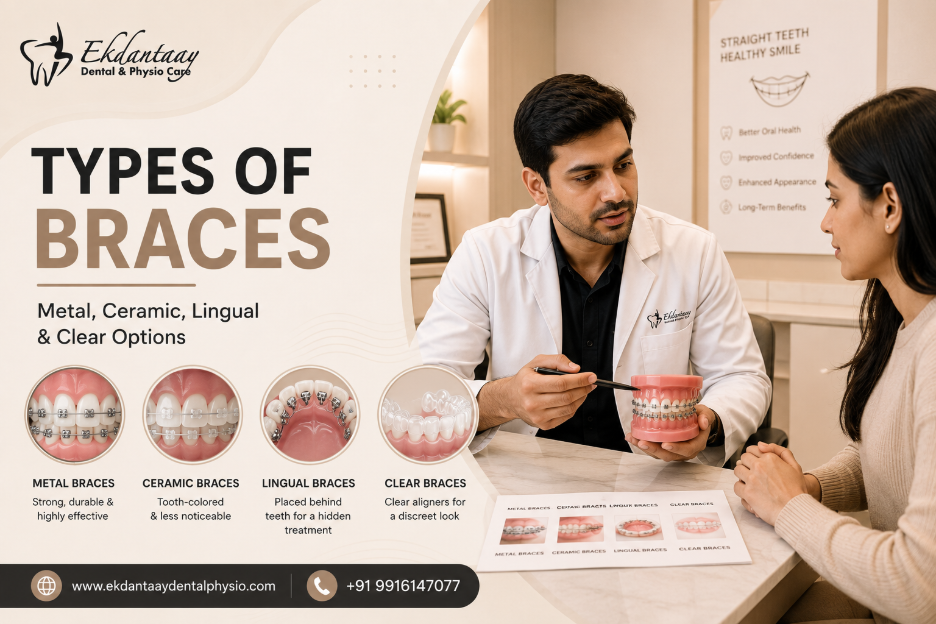
The main types of braces available in Vadodara are metal, ceramic, lingual, and clear braces. Each option differs in appearance, comfort, maintenance, and suitability for specific dental conditions. The right braces depend on factors such as tooth alignment, bite, oral health, lifestyle, and the orthodontist’s recommended treatment plan.
Introduction
Choosing braces is an important decision, especially when you are comparing different treatment options for yourself or your child. The types of braces available today offer different levels of visibility, comfort, maintenance, and suitability depending on the individual dental condition.
The most commonly discussed options include metal braces, ceramic braces, lingual braces, and clear braces. While all these options are designed to improve tooth alignment, they are not interchangeable. The right choice depends on the position of your teeth, the type of correction required, your lifestyle, and your orthodontist’s treatment plan.
If you are looking for the right braces in Vadodara, understanding how these options differ can help you have a more informed conversation with your orthodontist.
At Ekdantaay Dental & Physio Care, Dr. Raj Parthdev provides orthodontic treatment based on each patient’s individual dental needs. Rather than recommending one option for everyone, the treatment approach is selected after assessing the teeth, bite, oral health, and expected treatment goals.
This guide explains the major types of braces, how each option works, their advantages and limitations, and what you should consider before making a decision.
What Are the Different Types of Braces?
The main types of braces include metal braces, ceramic braces, lingual braces, and clear braces. They differ mainly in their design, visibility, placement, maintenance requirements, and suitability for different patients.
Here is a quick comparison:
| Type | Visibility | Placement | Main Advantage | Important Consideration |
| Metal braces | More visible | Front of teeth | Reliable and versatile | More noticeable |
| Ceramic braces | Less noticeable | Front of teeth | Tooth-coloured appearance | Requires careful maintenance |
| Lingual braces | Hidden | Back of teeth | Very discreet | May require an adjustment period |
| Clear braces | Less noticeable | Depends on the system | Discreet appearance | Suitability varies by case |
Although appearance is an important consideration for many patients, it should not be the only factor. Orthodontic treatment is primarily planned around achieving appropriate tooth movement and a healthy bite.
How Do the Different Types of Braces Work?
Braces use controlled forces to gradually move teeth toward planned positions. The orthodontic system applies pressure through brackets, wires, or other components, while the surrounding tissues adapt to the gradual movement.
The basic principle is similar across fixed braces, but the design and position of the appliance can differ.
For example, conventional braces are attached to the front surface of the teeth, while lingual braces are positioned behind the teeth. Ceramic braces use tooth-coloured components to make the appliance less noticeable.
This means that choosing between the types of braces is not simply an aesthetic decision. Your orthodontist must determine which system can effectively address your particular dental condition.
Metal Braces: A Reliable Orthodontic Option
Metal braces are one of the most established orthodontic treatment options. They use brackets attached to the front surfaces of the teeth and an orthodontic wire that guides tooth movement throughout treatment.
Modern metal braces are smaller and more refined than many of the older designs patients may remember. They remain widely used because they can be suitable for a broad range of orthodontic problems.
What Are the Advantages of Metal Braces?
One of the biggest advantages of metal braces is their versatility. They can be used in many different treatment situations and are commonly considered when significant tooth movement or bite correction is required.
Other advantages include:
- Proven orthodontic design
- Durable components
- Suitable for many treatment needs
- Continuous tooth movement during treatment
- No requirement for the patient to remove the appliance
Because metal braces remain attached to the teeth throughout active treatment, patients do not need to remember to put them back after eating or brushing.
Ceramic Braces: A More Discreet Fixed Option
Ceramic braces work on the same basic orthodontic principle as conventional braces, but the brackets are designed to blend more closely with the natural appearance of the teeth.
They are often considered by patients who want fixed orthodontic treatment while reducing the visibility of their braces.
Ceramic braces can be particularly appealing to older teenagers and adults who are concerned about the appearance of traditional metal brackets.
What Are the Advantages of Ceramic Braces?
The main advantage of ceramic braces is their appearance.
Depending on the system used, the brackets can be considerably less noticeable than traditional metal brackets.
Potential advantages include:
- More discreet appearance
- Fixed treatment approach
- Suitable for many orthodontic situations
- Can be an option for patients who prioritise aesthetics
However, ceramic components may require careful handling and cleaning. Your orthodontist will explain whether they are appropriate for your particular treatment.
Lingual Braces Vadodara: What Makes Them Different?
Lingual braces Vadodara are designed to be placed on the inner surfaces of the teeth rather than the outer surfaces.
Because the brackets are positioned behind the teeth, they are much less visible when a person smiles.
This makes lingual braces an option for patients who want fixed orthodontic treatment while keeping the appliance discreet.
What Are the Benefits of Lingual Braces?
The most obvious benefit is their discreet appearance.
Other considerations include:
- Braces are positioned behind the teeth
- They are difficult to notice when smiling
- They provide a fixed treatment approach
- They may appeal to adults concerned about visible braces
However, because the appliance is positioned behind the teeth, patients may need time to adapt to the sensation. Cleaning can also require additional attention.
A consultation is therefore important before deciding whether lingual braces are appropriate for your case.
What Are Clear Braces?
Clear braces are designed to make orthodontic treatment less noticeable while still providing the benefits of a fixed appliance. The term can refer to braces that use less visible components, depending on the specific system being offered.
For patients who are concerned about the appearance of traditional braces, clear braces can provide a more discreet alternative while keeping the appliance attached to the teeth throughout treatment.
However, the appearance of the appliance is only one consideration. Your orthodontist also needs to evaluate whether the treatment system can provide the tooth movement required for your individual case.
What Are the Advantages of Clear Braces?
Clear braces may appeal to patients who want a less noticeable treatment option.
Their potential advantages include:
- More discreet appearance
- Fixed treatment approach
- Suitable for selected orthodontic cases
- Less visually prominent than conventional metal braces
- No need to remove the appliance during meals
Like other fixed appliances, clear braces require consistent oral hygiene. Patients should carefully clean around the brackets and follow their orthodontist’s instructions throughout treatment.
Types of Braces: How Do They Compare?
The different types of braces offer different combinations of appearance, placement, maintenance, and treatment characteristics.
| Factor | Metal Braces | Ceramic Braces | Lingual Braces | Clear Braces |
| Appearance | More noticeable | Less noticeable | Highly discreet | Less noticeable |
| Position | Front of teeth | Front of teeth | Behind teeth | Depends on system |
| Fixed appliance | Yes | Yes | Yes | Yes |
| Cleaning | Requires regular attention | Requires regular attention | Can require additional care | Requires regular attention |
| Visibility | Higher | Lower | Very low | Lower |
| Patient adaptation | Usually straightforward | Usually straightforward | May require more adaptation | Usually straightforward |
| Suitability | Many orthodontic cases | Selected cases | Selected cases | Selected cases |
This comparison provides a general overview. It should not be used to select treatment without a professional assessment because the most suitable appliance depends on the individual’s dental condition.
Which Type of Braces Is Best for You?
There is no single option that is best for every patient. The appropriate types of braces depend on your dental condition, treatment objectives, lifestyle, appearance preferences, and the type of tooth movement required.
For example, a patient who prioritizes durability and versatility may consider metal braces, while someone who is more concerned about visibility may prefer ceramic, lingual, or clear options when clinically suitable.
Your orthodontist should make the final recommendation after examining your teeth and bite.
Metal Braces May Be Considered When:
- A reliable fixed appliance is required
- The case involves more extensive tooth movement
- Appearance is less important than appliance versatility
- A patient prefers a straightforward fixed treatment option
Ceramic Braces May Be Considered When:
- A fixed appliance is appropriate
- The patient wants a less noticeable appearance
- The dental condition is suitable for this type of appliance
Lingual Braces May Be Considered When:
- Discreet fixed treatment is a priority
- The patient’s dental condition is suitable
- The patient is comfortable adapting to an appliance positioned behind the teeth
Clear Braces May Be Considered When:
- A less noticeable fixed option is preferred
- The patient’s dental condition is suitable
- Appearance is an important treatment consideration
These are general considerations rather than treatment recommendations. An orthodontic examination is necessary before selecting an appliance.
What Should You Consider Before Choosing Braces?
Choosing between the different types of braces involves more than comparing how they look.
1. Your Dental Condition
The first consideration should always be your teeth and bite. Some treatment options may be more appropriate for types of tooth movement than others.
2. Appearance
If you are concerned about visible orthodontic appliances, you may want to discuss ceramic, lingual, or clear options with your orthodontist.
3. Maintenance
Every fixed appliance requires good oral hygiene. Some designs may require additional attention while brushing and cleaning between teeth.
4. Comfort and Adaptation
It is normal to need some time to adapt to braces. The location and design of the appliance can influence how quickly you become comfortable with it.
5. Treatment Requirements
Your orthodontist needs to consider the amount and direction of tooth movement required before recommending an appliance.
6. Your Lifestyle
Students, working professionals, public-facing professionals, and others may have different preferences regarding the appearance and maintenance of their braces.
7. Long-Term Results
The goal should not simply be to choose the least noticeable appliance. The treatment should be planned to achieve appropriate tooth alignment and bite function.
How Do You Take Care of Braces?
Regardless of which type of braces you choose, maintaining good oral hygiene is an important part of treatment.
Brackets and wires can create additional areas where food particles and plaque can be collected. Careful cleaning helps protect the teeth and gums during orthodontic treatment.
Follow These Basic Care Tips:
- Brush carefully around all brackets and wires.
- Clean between the teeth regularly.
- Follow the cleaning technique recommended by your orthodontist.
- Avoid foods that may damage the appliance.
- Attend scheduled orthodontic appointments.
- Inform your orthodontist if a bracket or wire becomes damaged.
- Continue routine dental care during orthodontic treatment.
Good daily care can make treatment more comfortable and help maintain healthy teeth and gums throughout the process.
Do Braces Hurt?
Some patients experience temporary discomfort when braces are first placed or after adjustments. This happens because the teeth are responding to controlled orthodontic forces.
The sensation is generally temporary and tends to become easier to manage as the patient adapts.
The amount of discomfort can vary from one person to another. If you experience significant or persistent pain, contact your orthodontist rather than trying to manage the problem yourself.
How Long Do You Need to Wear Braces?
Treatment duration varies between patients. The time required depends on factors such as:
- The complexity of the dental condition
- The amount of tooth movement required
- The selected appliance
- Patient cooperation
- Oral hygiene
- Regular attendance at appointments
Your orthodontist can provide a more meaningful estimate after examining your teeth and preparing your treatment plan. It is important not to compare your treatment duration with someone else’s. Two patients may have similar-looking braces but completely different treatment requirements.
How Can Dr. Raj Parthdev Help You Choose?
Selecting the right braces begins with understanding your individual dental needs.
At Ekdantaay Dental & Physio Care, Dr. Raj Parthdev evaluates the alignment of the teeth, bite relationship, oral health, and treatment objectives before recommending an appropriate orthodontic approach.
Rather than treating every patient with the same appliance, the treatment plan is personalized according to the patient’s condition and expectations.
If you are considering braces in Vadodara, a consultation can help you understand:
- Which treatment options may be suitable
- How different braces compare
- What your treatment may involve
- How you should care for your braces
- What factors may affect your treatment duration
A professional assessment gives you a clearer basis for making your decision instead of choosing an appliance based only on appearance or someone else’s experience.
Key Takeaways
The main types of braces discussed in this guide are metal braces, ceramic braces, lingual braces, and clear braces. Each option has different characteristics, and none is automatically the right choice for every patient.
- Metal braces are a well-established fixed option.
- Ceramic braces provide a less noticeable appearance.
- Lingual braces are positioned behind the teeth.
- Clear braces offer a more discreet appearance in suitable cases.
- Treatment selection should be based on your individual dental condition.
- Appearance, maintenance, comfort, lifestyle, and treatment requirements should all be considered.
- A consultation with an orthodontist is the best way to determine the appropriate option.
Considering Braces in Vadodara?
If you are unsure which type of braces may be suitable for you or your child, a professional orthodontic assessment is the right place to start.
At Ekdantaay Dental & Physio Care, Dr. Raj Parthdev provides personalised orthodontic treatment in Vadodara based on patient’s dental needs and treatment goals.
Clinic Address:
501, Elite Elegance, Gotri Sevasi Main Road,
Besides Collabera, Opposite Hanuman Mandir,
Chandramauleshwar Nagar, Gotri,
Vadodara, Gujarat 391101
Book a consultation to discuss your orthodontic concerns and understand which treatment option may be appropriate for your smile.
Medical Disclaimer
This article is provided for general educational purposes and should not replace professional dental examination, diagnosis, or treatment. Every patient’s dental condition is different, so the appropriate treatment option should be determined by a qualified dental professional after an individual assessment.