

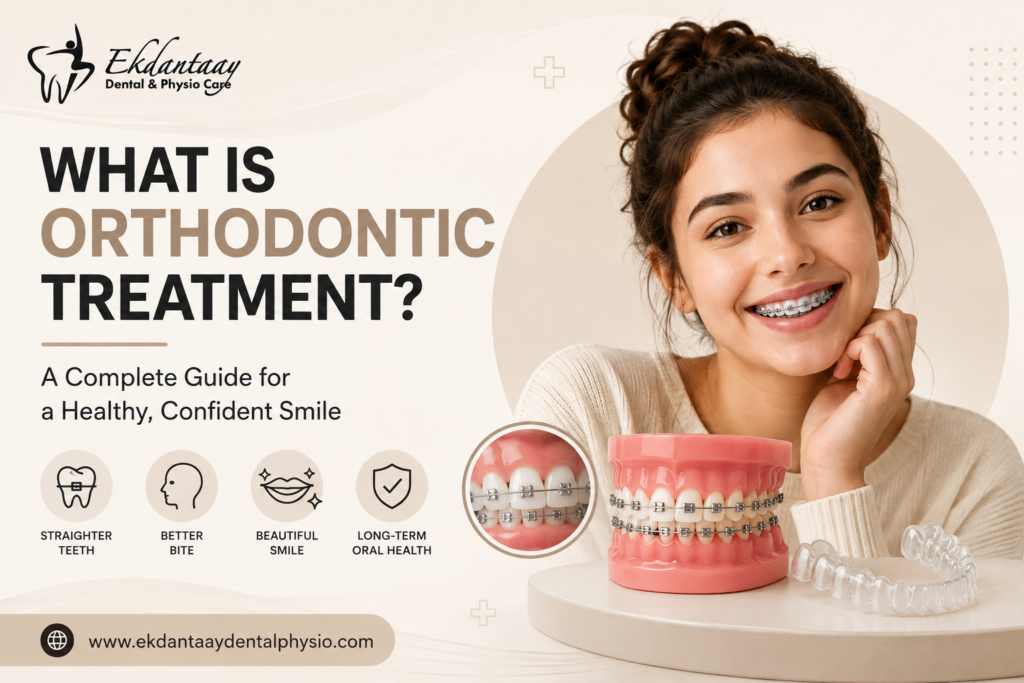
Orthodontic treatment is a specialized branch of dentistry that corrects misaligned teeth, improper bites, and jaw irregularities using braces, clear aligners, or other orthodontic appliances. Proper treatment improves oral health, chewing efficiency, speech, facial aesthetics, and long-term dental function for both children and adults.
Introduction
A straight, healthy smile is about much more than appearance. Misaligned teeth can make it difficult to clean your teeth properly, chew comfortably, speak clearly, and maintain good oral hygiene. Over time, these issues may increase the risk of tooth decay, gum disease, abnormal tooth wear, jaw discomfort, and reduced confidence in your smile.
This is where orthodontic treatment plays an important role. Orthodontics is a specialized area of dentistry focused on correcting crooked teeth, bite problems, and jaw alignment to improve both oral health and smile aesthetics. Modern orthodontic care offers several treatment options, including traditional metal braces, ceramic braces, self-ligating braces, and clear aligners, allowing patients to choose solutions that fit their lifestyle and dental needs.
Whether you’re a parent wondering if your child needs braces or an adult considering teeth straightening for the first time, understanding orthodontic treatment helps you make an informed decision.
At Ekdantaay Dental & Physio Care in Vadodara, Dr. Raj Parthdev provides personalized orthodontic treatment plans designed to achieve healthy, functional, and confident smiles. Every treatment begins with a detailed assessment of your teeth, bite, and jaw alignment to recommend the most suitable option for your needs.
In this comprehensive guide, you’ll learn what orthodontic treatment is, who can benefit from it, the types of braces available, treatment duration, expected costs, common myths, and what to expect throughout your orthodontic journey.
What Is Orthodontic Treatment?
Orthodontic treatment is a specialized dental treatment that corrects the position of teeth and jaws to improve oral health, bite function, and smile appearance. It uses braces, clear aligners, retainers, and other orthodontic appliances to gradually move teeth into their ideal positions.
Orthodontics is one of the recognized specialties in dentistry. Rather than focusing only on repairing damaged teeth, orthodontics addresses the alignment of teeth and jaws. Properly aligned teeth are easier to clean, distribute biting forces more evenly, and can contribute to improved speech and facial harmony.
Orthodontic treatment is suitable for children, teenagers, and adults. Thanks to advances in dental technology, many modern treatments are more comfortable, discreet, and efficient than ever before.
Orthodontic treatment can help correct:
- Crooked teeth
- Crowded teeth
- Gaps between teeth
- Overbite
- Underbite
- Crossbite
- Open bite
- Protruding front teeth
- Jaw alignment problems
- Uneven bite
When these conditions are left untreated, they may contribute to difficulties with oral hygiene, uneven tooth wear, gum problems, and jaw discomfort over time.
Definition
Orthodontic treatment is the branch of dentistry that diagnoses, prevents, and corrects improperly positioned teeth and jaw relationships using specialized appliances such as braces and clear aligners.
Why Is Orthodontic Treatment Important?
Many people think braces are only for cosmetic reasons, but orthodontic treatment provides significant functional and long-term health benefits.
A properly aligned bite can improve chewing efficiency, reduce excessive pressure on certain teeth, make brushing and flossing easier, and lower the risk of future dental complications.
Orthodontic treatment improves:
- Oral hygiene
- Chewing ability
- Speech clarity
- Bite function
- Jaw comfort
- Facial balance
- Smile confidence
- Long-term dental health
Health Benefits of Orthodontic Treatment
| Benefit | How It Helps |
| Easier Cleaning | Straight teeth are easier to brush and floss effectively. |
| Lower Risk of Tooth Decay | Better cleaning reduces plaque buildup and cavities. |
| Healthier Gums | Properly aligned teeth are less likely to trap food and bacteria. |
| Better Bite | Improves chewing efficiency and reduces uneven tooth wear. |
| Reduced Jaw Stress | Correcting bite issues may decrease strain on the jaw joints. |
| Improved Speech | Certain alignment issues can affect pronunciation; correction may improve clarity. |
| Enhanced Confidence | A straighter smile often contributes to greater self-esteem and comfort in social situations. |
Beyond these clinical benefits, orthodontic treatment often has a positive impact on quality of life. Many patients report feeling more confident during conversations, smiling more freely in photographs, and finding it easier to maintain their oral hygiene routine after treatment.
At Ekdantaay Dental & Physio Care, treatment planning goes beyond simply straightening teeth. Dr. Raj Parthdev evaluates your bite, jaw relationship, facial profile, and oral health to create a personalized orthodontic plan aimed at achieving both functional stability and an attractive smile.
How Does Orthodontic Treatment Work?
Orthodontic treatment works by applying gentle, continuous pressure to move teeth into their correct positions over time. Depending on your dental condition, this is achieved using braces, clear aligners, or other orthodontic appliances. The movement happens gradually, allowing the surrounding bone and tissues to adapt safely while creating a healthier bite and a well-aligned smile.
Teeth are supported by the jawbone and surrounded by a ligament called the periodontal ligament. When a controlled force is applied, the bone around the tooth naturally remodels. Bone on one side of the tooth is gradually resorbed, while new bone forms on the opposite side, allowing the tooth to move into its planned position.
Since every patient’s teeth and bite are unique, orthodontic treatment begins with a detailed clinical examination. Your orthodontist evaluates your teeth, jaw alignment, bite relationship, and overall oral health before creating a personalised treatment plan.
At Ekdantaay Dental & Physio Care, Dr. Raj Parthdev carefully plans each stage of treatment to ensure teeth move safely, efficiently, and predictably while maintaining long-term oral health.
The Orthodontic Treatment Process
| Step | What Happens |
| Initial Consultation | Examination of teeth, bite, and jaw alignment to understand the orthodontic problem. |
| Diagnostic Records | Digital scans, photographs, and dental X-rays help create an accurate treatment plan. |
| Personalized Treatment Plan | The most suitable orthodontic treatment option is selected based on your needs. |
| Appliance Placement | Braces or clear aligners are provided according to the treatment plan. |
| Regular Follow-Up Visits | Periodic appointments monitor progress and make necessary adjustments. |
| Retention Phase | Retainers help maintain the new tooth position after active treatment is completed. |
Each stage is important for achieving stable, long-lasting results. Skipping appointments or not following your orthodontist’s instructions may delay treatment progress.
Who Needs Orthodontic Treatment?
Orthodontic treatment is recommended for children, teenagers, and adults who have crooked teeth, bite problems, or spacing issues that affect oral health, function, or appearance. Early evaluation can help identify developing problems, while adults can also benefit from orthodontic treatment at any age.
Many people believe orthodontic treatment is only for teenagers, but this is a common misconception. Advances in orthodontic technology have made treatment suitable for patients of all age groups. Whether the goal is improving bite function, correcting crowded teeth, or achieving a straighter smile, orthodontic treatment can be planned according to the individual’s dental condition.
You May Need Orthodontic Treatment If You Have:
- Crooked teeth
- Crowded teeth
- Gaps between teeth
- Difficulty biting or chewing food
- Teeth that protrude significantly
- Upper and lower teeth that do not meet properly
- Frequent cheek biting
- Speech difficulties related to tooth alignment
- Jaw discomfort caused by bite problems
- Difficulty maintaining proper oral hygiene because of overlapping teeth
If any of these concerns sound familiar, an orthodontic consultation can help determine whether treatment is appropriate.
Orthodontic Treatment for Children
The Indian Orthodontic Society and many dental professionals recommend that children have an orthodontic evaluation by around seven years of age. This does not necessarily mean treatment will begin immediately. Instead, early assessment helps identify developing bite or jaw problems before they become more complex.
Early orthodontic monitoring may help guide jaw growth, manage space for permanent teeth, and reduce the likelihood of more extensive treatment later.
Parents should consider an orthodontic evaluation if they notice:
- Early or delayed loss of baby teeth
- Crowded permanent teeth
- Difficulty chewing food
- Mouth breathing
- Thumb sucking beyond the appropriate age
- Noticeable jaw shifting
- Teeth that appear significantly misaligned
Orthodontic Treatment for Teenagers
Teenage years are often considered an ideal time for orthodontic treatment because most permanent teeth have erupted, while the jaw is still developing.
During this stage, orthodontic treatment can effectively correct:
- Crowding
- Spacing
- Bite problems
- Jaw alignment concerns
- Protruding front teeth
Many teenagers choose from different orthodontic treatment options based on their clinical needs and lifestyle preferences.
Orthodontic Treatment for Adults
Orthodontic treatment is not limited by age. Adults increasingly seek treatment to improve oral health, smile aesthetics, and bite function.
Adult orthodontic treatment can help:
- Correct long-standing bite problems
- Improve oral hygiene by aligning crowded teeth
- Prepare teeth for restorative dental procedures
- Enhance smile confidence
- Reduce abnormal tooth wear caused by improper bite alignment
Although adult treatment may take slightly longer than treatment for younger patients, predictable outcomes can still be achieved with proper planning and patient cooperation.
Common Orthodontic Problems
Orthodontic treatment addresses a wide range of dental alignment and bite issues. Identifying these problems early allows treatment to begin before they lead to additional complications.
Crowded Teeth
Crowded teeth occur when there is not enough space in the jaw for all teeth to align properly. Overlapping teeth can make brushing and flossing more difficult, increasing the risk of plaque buildup and gum disease.
Spacing Between Teeth
Noticeable gaps between teeth may occur because of missing teeth, differences in tooth size, or natural jaw development. While some spacing is purely cosmetic, larger gaps may also affect bite function.
Overbite
An overbite occurs when the upper front teeth overlap the lower front teeth excessively. Severe overbites may contribute to tooth wear, gum irritation, or difficulties with biting.
Underbite
An underbite develops when the lower teeth extend in front of the upper teeth. This bite relationship may affect chewing, speech, and overall jaw function.
Crossbite
A crossbite occurs when one or more upper teeth bite inside the lower teeth instead of outside them. If left untreated, it may contribute to uneven tooth wear and jaw asymmetry.
Open Bite
In an open bite, the upper and lower teeth do not touch when the mouth is closed. This may interfere with biting food effectively and can sometimes affect speech.
Protruding Teeth
Protruding front teeth extend further forward than normal and are more vulnerable to accidental injury. Orthodontic treatment can improve their position while enhancing bite function and smile appearance.
When Should You Visit an Orthodontist?
You should consider scheduling an orthodontic consultation if you notice:
- Crooked or crowded teeth
- Gaps between teeth
- Difficulty chewing food
- Bite problems
- Jaw discomfort
- Teeth that appear uneven
- Concerns about smile alignment
- A child showing signs of developing bite irregularities
Early assessment allows orthodontic problems to be diagnosed and managed before they become more complex.
Expert Tip from Dr. Raj Parthdev
Not every patient who visits an orthodontist requires immediate braces or aligners. A thorough evaluation helps determine the right time to begin treatment, the most suitable treatment option, and the expected duration based on your individual dental condition. Beginning treatment at the appropriate stage can improve both efficiency and long-term stability.
Types of Orthodontic Treatment
Orthodontic treatment is available in different forms to suit various dental conditions, lifestyles, and treatment goals. The most suitable option depends on factors such as the severity of tooth misalignment, bite correction requirements, age, oral health, and personal preferences. After a detailed examination, your orthodontist will recommend the treatment that best fits your clinical needs.
Modern orthodontics offers several treatment options, allowing patients to choose between traditional braces and more discreet alternatives. Each treatment has its own advantages, and the right choice should always be based on a professional assessment rather than appearance alone.
Metal Braces
Metal braces are the most commonly used orthodontic treatment. They consist of stainless-steel brackets attached to the teeth and connected by orthodontic wires that gradually move teeth into their correct positions.
Today’s metal braces are smaller, smoother, and more comfortable than older designs.
Metal Braces are commonly recommended for:
- Moderate to severe teeth misalignment
- Crowded teeth
- Bite correction
- Complex orthodontic cases
- Teenagers and adults
Advantages
- Suitable for most orthodontic problems
- Highly effective for complex cases
- Durable and reliable
- Cost-effective compared to some alternatives
Ceramic Braces
Ceramic braces function similarly to metal braces but use tooth-coloured or clear brackets, making them less noticeable during treatment.
They are often preferred by patients who want a more discreet appearance while still benefiting from fixed orthodontic treatment.
Ceramic Braces may be suitable for:
- Adults
- College students
- Working professionals
- Patients concerned about aesthetics
Advantages
- Less visible than metal braces
- Effective for many orthodontic conditions
- Blend more naturally with teeth
Clear Aligners
Clear aligners are removable, transparent trays that gradually move teeth into their desired positions. Each aligner is custom-made and replaced periodically as treatment progresses.
Clear aligners are popular among adults and professionals because they are nearly invisible and can be removed while eating and brushing.
Clear Aligners are commonly chosen for:
- Mild to moderate teeth alignment problems
- Adults seeking a discreet treatment option
- Patients who prefer removable appliances
Advantages
- Nearly invisible appearance
- Comfortable to wear
- Removable while eating
- Easier oral hygiene maintenance
- No dietary restrictions caused by brackets or wires
Self-Ligating Braces
Self-ligating braces use a specialized clip mechanism instead of elastic bands to hold the orthodontic wire.
These braces are designed to reduce friction during tooth movement and may require fewer adjustments in certain cases.
Benefits include:
- Reduced friction
- Easier cleaning
- Comfortable adjustments
- Efficient tooth movement for suitable cases
Braces vs Clear Aligners
Both braces and clear aligners are effective orthodontic treatment options. The right choice depends on the complexity of your dental condition, treatment goals, and lifestyle. Your orthodontist will recommend the option that offers the most predictable and stable results.
| Feature | Braces | Clear Aligners |
| Appearance | Visible | Nearly Invisible |
| Removable | No | Yes |
| Suitable for Complex Cases | Yes | Selected Cases |
| Eating Restrictions | Yes | No (Removed During Meals) |
| Oral Hygiene | Requires Extra Care | Easier to Maintain |
| Comfort | Mild Initial Discomfort | Generally Comfortable |
| Regular Adjustments | Yes | Scheduled Aligner Changes |
Instead of choosing based only on appearance, patients should consider long-term treatment effectiveness. During your consultation, Dr. Raj Parthdev evaluates your bite, jaw relationship, and alignment before recommending the most appropriate orthodontic treatment.
Benefits of Orthodontic Treatment
Orthodontic treatment improves much more than the appearance of your smile. It enhances oral health, chewing efficiency, bite function, speech in some cases, and long-term dental stability while helping patients maintain better oral hygiene.
Although many people initially seek orthodontic treatment for cosmetic reasons, the functional benefits often have an even greater impact on overall oral health.
Functional Benefits
Better Bite Function
Properly aligned teeth help distribute chewing forces evenly, reducing unnecessary stress on individual teeth and supporting more efficient chewing.
Easier Oral Hygiene
Crooked or overlapping teeth can make brushing and flossing difficult. Aligning the teeth improves access, making it easier to maintain daily oral hygiene.
Lower Risk of Dental Problems
Proper alignment may help reduce the risk of:
- Plaque accumulation
- Tooth decay
- Gum disease
- Uneven tooth wear
- Bite-related complications
Improved Jaw Comfort
Correcting bite irregularities can reduce excessive pressure on certain areas of the jaw and improve overall bite balance.
Better Long-Term Oral Health
Orthodontic treatment helps establish a healthier bite that supports the long-term stability of your teeth and surrounding tissues.
Cosmetic Benefits
Many patients also notice significant improvements in smile aesthetics after orthodontic treatment.
These improvements may include:
- Straighter smile
- Better facial balance
- Improved confidence during conversations
- Greater comfort while smiling in photographs
- Enhanced overall appearance
For many patients, these changes contribute positively to both personal and professional interactions.
What to Expect During Orthodontic Treatment
Knowing what to expect before beginning treatment helps patients feel more confident throughout the process.
Although every orthodontic treatment plan is personalized, most patients follow a similar journey.
Step 1: Consultation
Your orthodontist performs a comprehensive examination of your teeth, bite, jaw alignment, and oral health.
This appointment is also an opportunity to discuss your concerns, treatment expectations, and available options.
Step 2: Diagnostic Records
Diagnostic records may include:
- Digital scans
- Dental X-rays
- Clinical photographs
- Bite assessment
These records help create an accurate treatment plan.
Step 3: Personalised Treatment Planning
After reviewing your records, Dr. Raj Parthdev develops a customised orthodontic treatment plan based on your specific dental condition and treatment goals.
Step 4: Starting Treatment
Depending on your treatment plan, braces are placed or clear aligners are provided.
Your orthodontist also explains:
- Oral hygiene instructions
- Foods to avoid (if applicable)
- Appointment schedule
- Home care recommendations
Step 5: Regular Review Appointments
Periodic appointments allow your orthodontist to monitor tooth movement and make necessary adjustments throughout treatment.
Attending scheduled visits is essential for achieving the planned results.
Step 6: Retention Phase
Once active treatment is complete, retainers are provided to help maintain the corrected tooth positions.
Wearing retainers as instructed is an important part of preserving your orthodontic results over the long term.
Tips for a Successful Orthodontic Treatment
Following your orthodontist’s instructions can help keep treatment on track and support the best possible outcome.
Practical Tips
- Brush after every meal whenever possible.
- Floss regularly using the technique recommended by your orthodontist.
- Attend every scheduled appointment.
- Wear aligners or retainers exactly as instructed.
- Avoid damaging braces by following dietary recommendations.
- Report any discomfort or appliance issues promptly.
- Maintain regular dental check-ups and professional cleanings.
Expert Insight
Successful orthodontic treatment is a partnership between the orthodontist and the patient. Careful treatment planning, consistent follow-up appointments, and good oral hygiene all contribute to achieving healthy, stable, and long-lasting results.
How Long Does Orthodontic Treatment Take?
The duration of orthodontic treatment varies from patient to patient. It depends on the complexity of the dental problem, the type of treatment selected, age, oral health, and how well the patient follows the orthodontist’s instructions. While some cases can be completed in a shorter period, more complex bite corrections may require a longer treatment timeline.
Every smile is unique, which is why there is no one-size-fits-all treatment duration. During your consultation, Dr. Raj Parthdev will assess your teeth and bite to provide an estimated treatment timeline based on your individual condition.
Factors That Influence Treatment Duration
- Severity of teeth misalignment
- Type of bite problem
- Age of the patient
- Type of orthodontic treatment selected
- Overall oral health
- Patient cooperation
- Regular attendance at follow-up appointments
Patients who maintain excellent oral hygiene, attend scheduled visits, and follow treatment instructions are more likely to complete treatment as planned.
Cost of Orthodontic Treatment in Vadodara
The cost of orthodontic treatment depends on several factors, including the complexity of the case, the type of orthodontic appliance used, treatment duration, and the patient’s individual treatment requirements. A detailed examination is essential before providing an accurate estimate.
Rather than comparing treatment solely on price, patients should also consider factors such as the orthodontist’s expertise, treatment planning, follow-up care, and long-term treatment outcomes.
Factors That Affect Treatment Cost
| Factor | Why It Matters |
| Severity of the orthodontic problem | More complex cases may require longer treatment and additional planning. |
| Type of treatment | Different orthodontic appliances involve different treatment approaches. |
| Treatment duration | Longer treatment generally involves more review appointments. |
| Diagnostic records | Digital scans and X-rays help create an accurate treatment plan. |
| Retention phase | Retainers are an important part of maintaining treatment results. |
For an accurate treatment estimate, a consultation with an orthodontist is recommended.
Why Choose Ekdantaay Dental & Physio Care for Orthodontic Treatment in Vadodara?
Choosing the right clinic is an important part of achieving successful orthodontic treatment. At Ekdantaay Dental & Physio Care, every treatment plan is tailored to the patient’s individual dental condition, treatment goals, and long-term oral health.
Under the care of Dr. Raj Parthdev, patients receive a comprehensive evaluation before treatment begins, ensuring that recommendations are based on clinical findings rather than a one-size-fits-all approach.
Why Patients Choose Ekdantaay Dental & Physio Care
- Personalised orthodontic treatment plans
- Comprehensive examination before starting treatment
- Modern diagnostic approach
- Treatment options based on individual clinical needs
- Focus on both smile aesthetics and bite function
- Patient education throughout the treatment journey
- Comfortable and patient-friendly environment
- Conveniently located in Gotri, Vadodara
Whether you are considering orthodontic treatment for yourself or your child, a professional consultation can help you understand the available treatment options and choose the most appropriate approach.
Key Takeaways
- Orthodontic treatment helps correct crooked teeth, bite problems, and jaw alignment issues.
- Treatment is suitable for children, teenagers, and adults.
- Different treatment options are available depending on the patient’s dental condition.
- A personalised treatment plan is essential for achieving healthy, stable, and long-lasting results.
- Early consultation allows orthodontic problems to be identified and managed before they become more complex.
- Choosing an experienced orthodontist and following treatment instructions play an important role in successful outcomes.
Ready to Improve Your Smile?
If you are experiencing crooked teeth, bite problems, or spacing issues, an orthodontic consultation can help you understand your treatment options and determine the most suitable plan for your smile.
At Ekdantaay Dental & Physio Care, Dr. Raj Parthdev provides personalised orthodontic treatment with a focus on healthy function, long-term stability, and confident smiles.
Ekdantaay Dental & Physio Care
501, Elite Elegance, Gotri Sevasi Main Road,
Besides Collabera, Opposite Hanuman Mandir,
Chandramauleshwar Nagar, Gotri, Vadodara – 391101
Phone No: +91 9916147077
Book your consultation today and take the first step toward a healthier, straighter smile.
Medical Disclaimer
This article is intended for educational purposes only and should not be considered a substitute for professional dental advice, diagnosis, or treatment. Every patient’s dental condition is unique. Consult a qualified dental professional for an accurate diagnosis and a personalised treatment plan.