

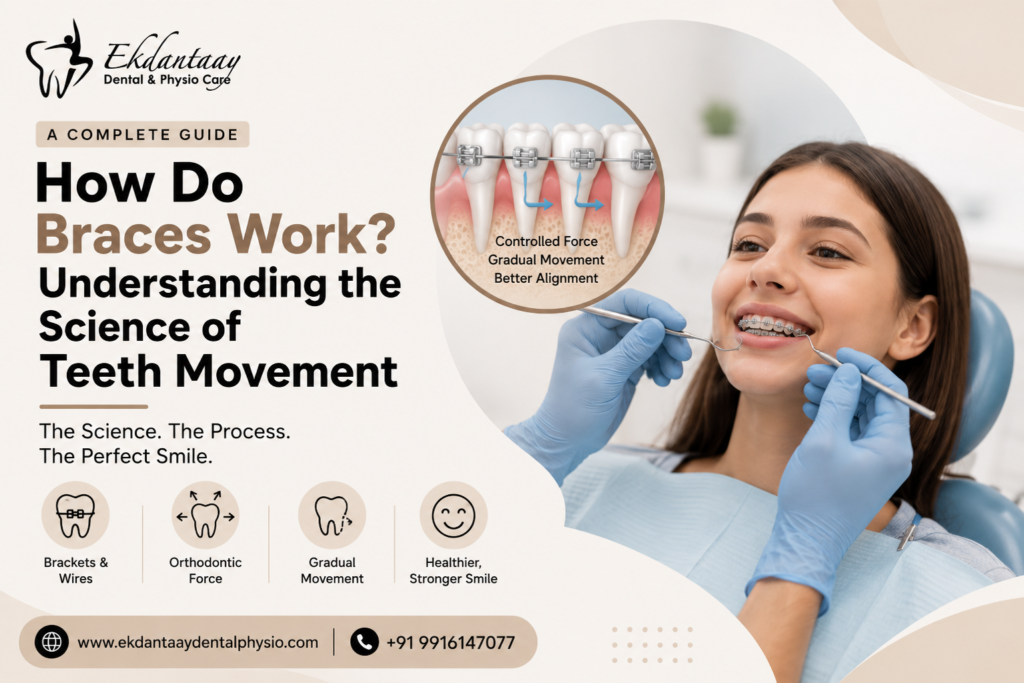
When you first see someone wearing braces, it may seem like the brackets and wires simply hold the teeth in place. Braces apply carefully controlled forces that gradually guide teeth toward more suitable positions. But how do braces work, and what actually happens to the teeth during orthodontic treatment?
The answer involves both orthodontic appliances and the natural tissues surrounding the teeth. Brackets, archwires, and other components work together to create controlled pressure on the teeth. Over time, this orthodontic force encourages gradual changes in tooth position.
Understanding the process can make orthodontic treatment easier to understand for teenagers, parents, and adults considering braces. It also explains why treatment takes time and why regular orthodontic appointments are an important part of the process.
What Are Braces and Why Do People Use Them?
Braces are orthodontic appliances used to gradually move teeth into planned positions. Orthodontists use braces when teeth are crowded, spaced apart, rotated, or not aligned as desired.
The purpose of braces is not simply to make teeth appear straighter. Orthodontic treatment focuses on tooth positioning and alignment as part of improving the overall relationship between the teeth.
The exact treatment approach depends on an individual’s orthodontic needs. An orthodontic assessment determines whether braces are appropriate and what movement may be required.
To understand how do braces work, it helps to first understand the basic components that make the system function.
How Do Braces Work?
Braces work by applying controlled forces to teeth over time. The brackets attached to the teeth interact with an archwire, which provides guidance and force that can gradually influence the position of individual teeth.
Supporting tissues and bone surround the teeth, making the process gradual. Applying an appropriate force causes changes in the tissues around the tooth, gradually moving the tooth.
This means that teeth movement braces is not an instant process. Orthodontists adjust the orthodontic system over time so the teeth move progressively toward their planned positions.
The process can be simplified into three connected elements:
- Brackets are attached to the teeth.
- Archwires connect the brackets and provide guidance and force.
- Orthodontic force encourages gradual tooth movement.
Together, these components form the basic braces mechanism.
The Science Behind Teeth Movement
Why Can Teeth Move?
Teeth are not permanently fixed into one position without any ability to change. Surrounding tissues, including the periodontal ligament and the bone around each tooth’s root, support each tooth.
When clinicians apply controlled orthodontic force, the supporting tissues respond to that force. This biological response allows the tooth to gradually change position.
Orthodontic treatment progresses gradually, not immediately after braces are placed.
The movement involves the interaction between the orthodontic appliance and the body’s natural response to the applied force. The objective is to use controlled force to guide the teeth rather than move them suddenly.
How Does Orthodontic Force Move a Tooth?
Orthodontists apply controlled force during orthodontic treatment to influence tooth position.
When force acts on a tooth, different areas of the supporting tissues experience varying pressure and tension. The tissues and bone surrounding the tooth respond to these changes, allowing the tooth to gradually move.
This explains an important part of the braces mechanism. Braces do not physically push a tooth from one location to another in a single movement. Instead, they create conditions that allow gradual tooth movement through the body’s natural biological response.
The direction and amount of force are important. Orthodontic treatment therefore involves planned adjustments rather than applying uncontrolled pressure.
What Are the Main Parts of Braces?
Brackets
Brackets are small components attached to the surface of the teeth.
They provide an attachment point for the archwire and help transfer the force generated by the orthodontic system to the teeth.
The orthodontist positions each bracket according to the orthodontic treatment plan. The bracket’s position can guide how the tooth is moved during treatment.
Archwires
The archwire connects the brackets across the teeth. It provides the force and guidance needed to influence tooth position. As treatment progresses, the orthodontist can make adjustments to the orthodontic appliance to continue guiding the teeth toward their planned positions. The interaction between the archwire and brackets is a central part of how do braces work.
Elastic Bands and Other Components
Depending on the individual’s orthodontic treatment, braces may also include additional components such as elastic bands. These components can provide additional forces or directions of movement when required as part of an orthodontic treatment plan. Not every person wearing braces will need the same components. The appliance used depends on the individual’s orthodontic requirements.
How Do Braces Move Teeth Into Better Positions?
The process of teeth movement braces can be understood as a gradual sequence rather than a single event. First, the braces are placed according to the treatment plan. The brackets provide attachment points, while the archwire connects them and creates the forces needed to influence tooth position.
The applied force affects the tissues supporting the teeth. The body’s natural response to that force allows the teeth to gradually change position. As treatment progresses, the orthodontist adjusts the appliance to continue guiding the teeth.
This gradual approach is important because tooth movement involves biological changes in the tissues surrounding the teeth. Braces therefore need to remain in place for an appropriate period while the planned movement takes place. The exact pattern and duration of movement vary from one person to another.
What Is the Braces Mechanism?
The braces mechanism refers to the way the different components of braces work together to guide tooth movement.
The brackets provide attachment points on the teeth. The archwire connects those brackets and applies controlled forces. Depending on the treatment plan, additional components can be used to introduce other forces or directions of movement. The force is transferred through the orthodontic appliance to the teeth and their supporting tissues.
The biological response of those tissues then allows gradual tooth movement. So, when asking how do braces work, the answer is not simply that a wire pushes teeth into place. Braces combine mechanical components with the body’s natural biological response to controlled force.
Why Do Braces Need Regular Adjustments?
Orthodontic treatment is progressive, so braces are generally monitored and adjusted throughout treatment.
Regular appointments allow the orthodontist to assess how the teeth are responding and make appropriate changes to the appliance when needed.
Adjustments may involve changes to the archwire or other components depending on the individual’s treatment plan.
These appointments are important because the objective of orthodontic treatment is controlled and planned tooth movement. Monitoring the progress allows the treatment to be managed according to the patient’s response.
The frequency of appointments can vary depending on the treatment and individual requirements, so there is no single schedule that applies to everyone.
How Long Does It Take for Teeth to Move With Braces?
One of the most common questions about orthodontic treatment is how long it takes for teeth to move.
There is no universal treatment duration because orthodontic treatment is individualized. The time required can depend on factors such as the type and complexity of tooth movement required and the individual’s response to treatment.
Teeth move gradually because the process involves changes in the tissues supporting them. This is one reason orthodontic treatment cannot be completed by simply applying stronger force for a shorter period.
The orthodontist monitors progress throughout treatment and makes adjustments according to the treatment plan.
Therefore, anyone considering braces should discuss their expected treatment duration with their orthodontist rather than relying on a general timeline.
What Does Wearing Braces Feel Like?
It is normal for people to have questions about what braces feel like, particularly before beginning orthodontic treatment. Because braces apply force to the teeth, some people may notice pressure or temporary discomfort, particularly after braces are initially placed or adjusted.
The experience can vary from person to person. Patients should also understand that discomfort and treatment effectiveness are not the same thing. Stronger discomfort does not mean that teeth are necessarily moving faster or that treatment is working better.
If discomfort is unusual, severe, persistent, or concerning, the patient should discuss it with their orthodontic professional.
Braces vs. Aligners: How Is the Approach Different?
Braces and aligners are both orthodontic treatment options, but they use different appliance designs to influence tooth movement.
Traditional braces use components such as brackets and archwires that remain attached to the teeth during treatment. Aligners use a series of removable trays designed to gradually guide the teeth.
The appropriate option depends on the individual’s orthodontic needs and treatment plan.
If you want to understand another approach to orthodontic tooth movement, you can explore Ekdantaay’s Aligners Treatment service.
The important point is that orthodontic treatment should be selected according to the patient’s specific requirements rather than simply choosing the option that appears most convenient.
Who May Consider Orthodontic Treatment With Braces?
Orthodontic treatment is not limited to one age group. Teenagers and adults may both seek treatment for concerns involving tooth alignment and positioning.
For parents, understanding how do braces work can make it easier to discuss orthodontic treatment with a teenager and understand why treatment may require regular appointments and gradual progression.
Adults may also consider orthodontic treatment when they want to address existing alignment concerns.
However, the suitability of braces depends on the individual’s teeth, oral condition, orthodontic needs, and treatment objectives. An orthodontic assessment is therefore important before deciding on a treatment approach.
For more information about orthodontic care, you can explore
Conclusion
So, how do braces work? Braces work by combining orthodontic appliances with controlled forces and the body’s natural biological response. Brackets, archwires, and other components work together to guide teeth gradually toward planned positions.
The science behind teeth movement braces is therefore more than simply attaching wires to teeth. Orthodontic force interacts with the tissues supporting the teeth, allowing gradual movement over time. Regular monitoring and adjustments help manage this process throughout treatment.
Understanding the braces mechanism can help teenagers, parents, and adults approach orthodontic treatment with a clearer understanding of what happens during the process.
If you are considering braces or another orthodontic treatment option, an individual assessment with an orthodontic professional can help determine which approach is appropriate for your specific needs.
Frequently Asked Questions About How Braces Work
How do braces work to straighten teeth?
Braces use components such as brackets and archwires to apply controlled forces to the teeth. These forces interact with the supporting tissues around the teeth, allowing them to gradually change position.
How does orthodontic force move teeth?
Orthodontic force creates pressure and tension around the tooth and its supporting tissues. The body’s natural response to these forces allows gradual changes in tooth position.
How long does it take for braces to move teeth?
The duration varies between individuals. It depends on factors such as the type and complexity of the required tooth movement and the individual’s response to treatment. An orthodontist can provide a more appropriate estimate after assessing the patient.
Why do braces need adjustments?
Adjustments allow the orthodontic appliance to be monitored and modified as treatment progresses. This helps the orthodontist continue guiding the teeth according to the treatment plan.
Do braces move teeth permanently?
Braces are used to move teeth into planned positions, but maintaining the result after orthodontic treatment is an important part of orthodontic care. The orthodontist can explain the appropriate retention approach for each patient.
How are braces different from aligners?
Braces use brackets and archwires attached to the teeth, while aligners use a series of removable trays. Both are designed to guide tooth movement, but the appliances and treatment approach are different.